
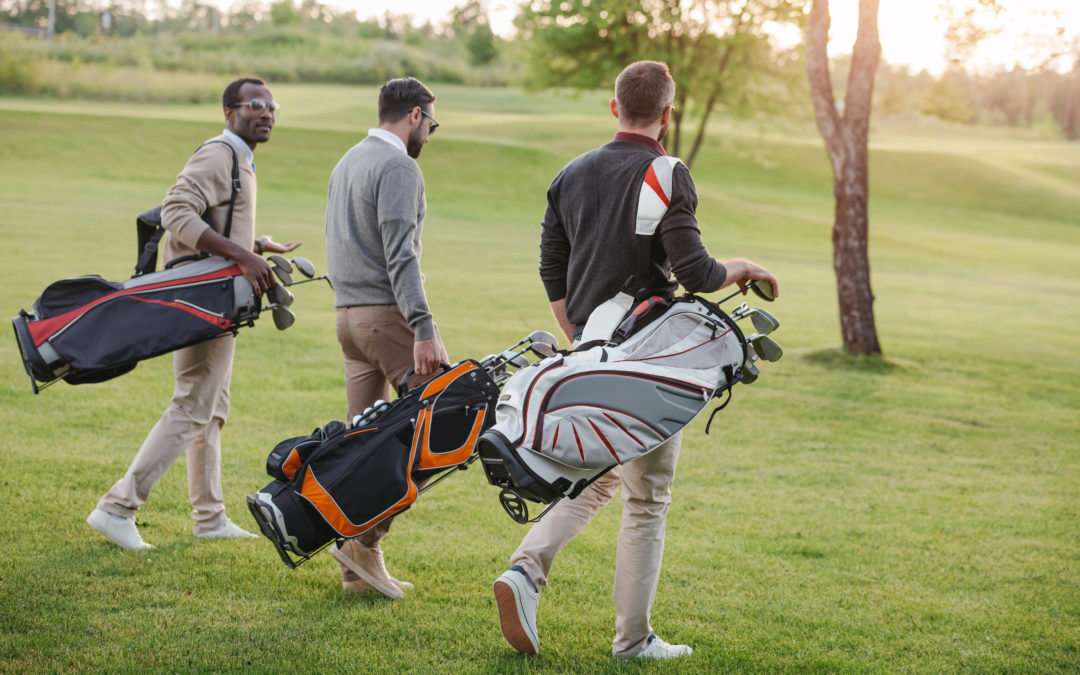
Carry a golf bag with both straps balanced, the bag close to your back, and the clubs facing safely away from your body.
Learning how to carry a golf bag is more than a comfort issue. The right method protects your shoulders, back, hips, and knees while helping you walk the course with less fatigue. After many rounds on foot, I have found that small changes in strap setup, bag position, and walking habits can make a major difference by the 18th hole.
Why Proper Golf Bag Carrying Matters
A golf bag can weigh 15 to 35 pounds when it holds clubs, balls, water, clothing, and accessories. That weight may not feel heavy at first, but carrying it for several miles can place steady stress on your body.
Poor carrying habits often lead to:
• Shoulder soreness
• Neck tension
• Lower back pain
• Uneven hip pressure
• Tired legs and poor posture
• Less focus during later holes
Knowing how to carry a golf bag helps spread its weight across stronger parts of your body. It also keeps the bag stable as you walk over hills, rough ground, and uneven paths.
A golf bag should feel like a fitted backpack, not a sack hanging from one shoulder. If the bag swings, pulls backward, or makes you lean to one side, the setup needs attention.

The Best Way to Carry a Golf Bag
The best method for most golfers is to use both shoulder straps. This spreads the load across your upper back and shoulders instead of placing all the pressure on one side.
Follow these steps:
-
Place the bag upright on the ground.
-
Loosen both shoulder straps before putting it on.
-
Slide one arm through each strap, just as you would with a backpack.
-
Pull the straps until the bag rests close to your upper back.
-
Check that the bottom of the bag does not hang far below your waist.
-
Keep the club heads above your shoulders and away from your neck.
-
Walk upright with your shoulders relaxed.
The bag should sit high enough to stay stable but not so high that it presses into your neck. The base should remain near your lower back or upper hip area.
When people ask how to carry a golf bag, I usually explain it with one simple image: the bag should move with your body, not against it. A loose bag swings from side to side. A tight bag becomes part of your walking motion.
How to Adjust Golf Bag Straps
Correct strap adjustment is one of the most important parts of learning how to carry a golf bag. Even a well-designed stand bag can feel uncomfortable when the straps are uneven.
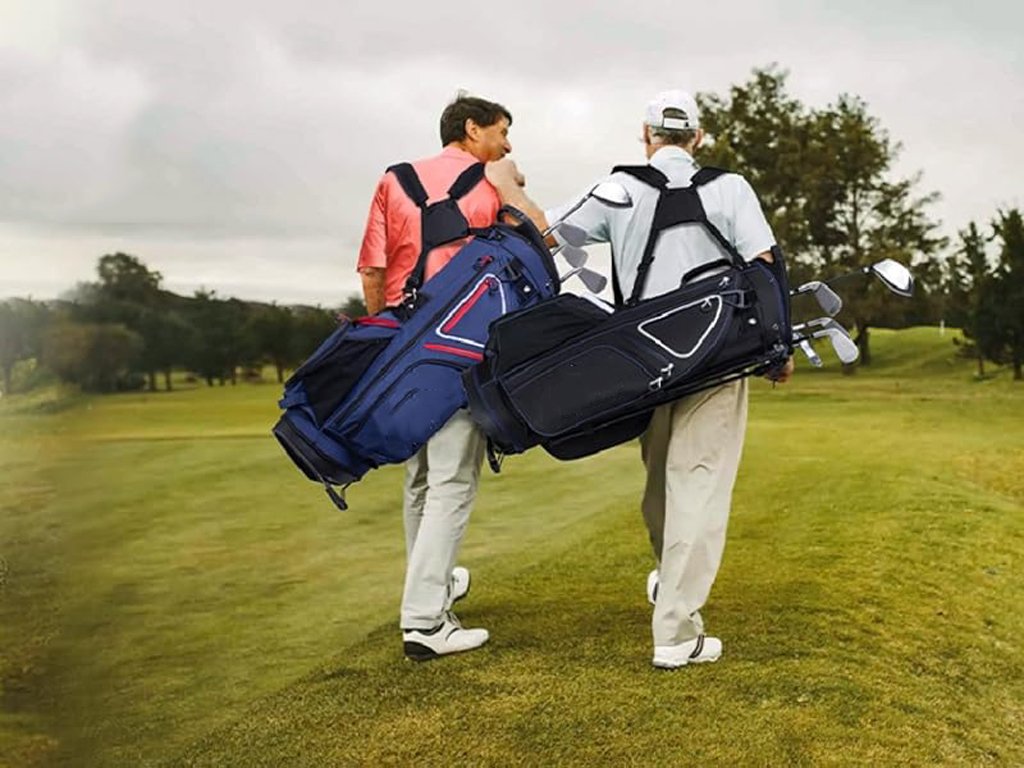
Start by adjusting both straps to the same length. Put the bag on and check whether the top sits near your shoulder blades. The bag should remain close to your back without pushing your head forward.
Use these strap checks:
• Both straps should share the weight evenly.
• The shoulder pads should rest on the thick part of your shoulders.
• The straps should not cut into your neck.
• The bag should not lean sharply to one side.
• You should be able to swing your arms naturally.
Many modern golf bags include a double strap that can be moved or rotated. Set it so the central connection rests comfortably between your shoulder blades. If the connection sits too high, it may rub your neck. If it sits too low, the bag may pull away from your body.
I once carried a bag with one strap noticeably shorter than the other. By the turn, one shoulder felt tight and my lower back was doing extra work. Equal strap length solved most of the problem before the next round.

One Strap or Two Straps: Which Is Better?
A single strap is useful for short distances. You may use it when walking from your car to the practice area or moving between a cart and the clubhouse. For a full round, however, two straps are usually the better choice.
A single strap places most of the bag’s weight on one shoulder. This can cause your torso to tilt and may create muscle fatigue over several hours.
Use a two strap system when:
• You plan to walk 18 holes.
• The course has hills or long distances between greens and tees.
• Your bag contains extra equipment.
• You have a history of shoulder or back pain.
• You want the most balanced posture.
A single strap may still work for a light Sunday bag. Keep the load low and switch shoulders during the round. This reduces one-sided strain, although it does not provide the same balance as a double strap.
For most golfers, how to carry a golf bag comes down to matching the strap system to the distance and weight. The longer the walk, the more important balance becomes.
How to Pack a Golf Bag for Easier Carrying
Carrying technique matters, but bag weight matters just as much. A poorly packed bag can feel heavy even when the total weight is reasonable.
Begin by removing items you do not use. Many golfers carry old gloves, too many balls, extra tools, and several drinks. A simple equipment check can reduce several pounds.
Pack your bag with balance in mind:
• Place heavier items near the spine side of the bag.
• Keep frequently used items in easy-to-reach pockets.
• Store balls and tees in smaller pockets.
• Put clothing in the larger pocket to cushion other items.
• Carry water in a secure pocket close to the bag’s center.
• Avoid filling every pocket just because space is available.
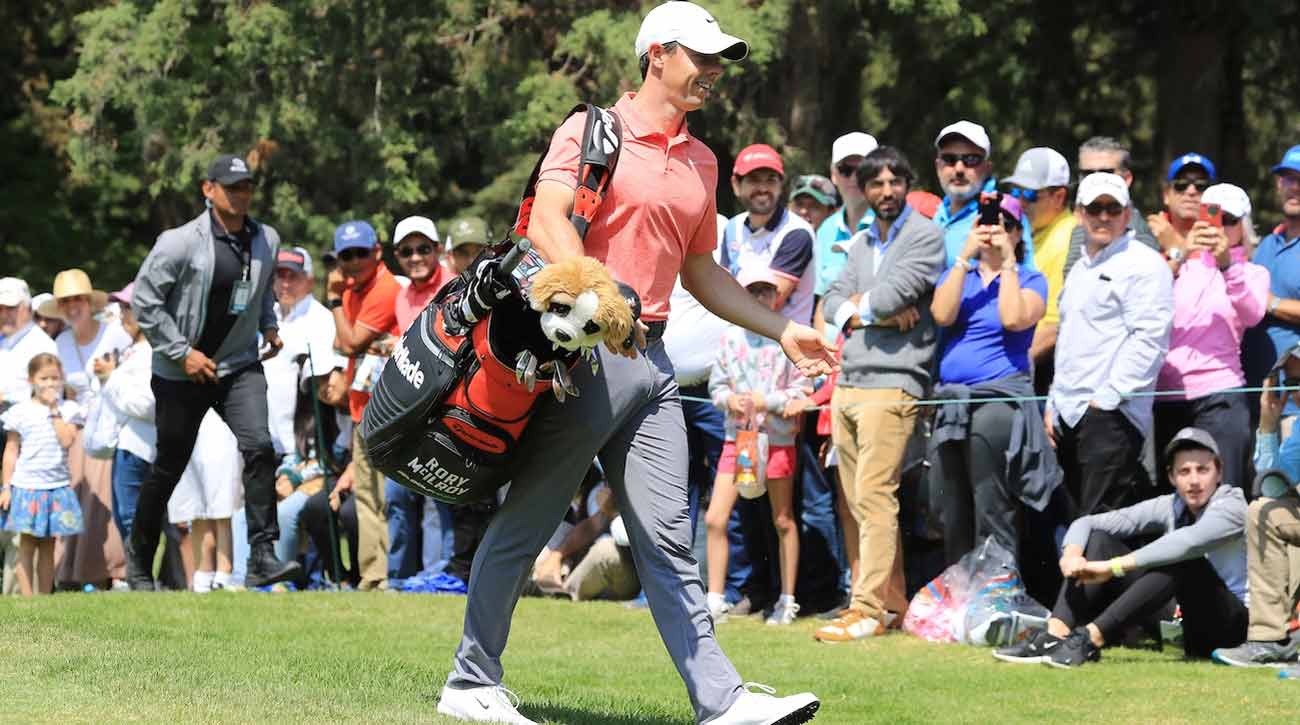
Club arrangement also affects comfort. Keep longer clubs in the back slots and shorter clubs near the front. This protects the shafts and keeps the bag’s center of mass closer to your back.
A stable bag feels lighter because it creates less movement. Think of it like carrying a full grocery bag close to your body. It is easier than holding the same weight at arm’s length.

How to Walk With a Golf Bag
Knowing how to carry a golf bag is only half the skill. You also need to walk in a way that limits strain.
Keep your head level and look ahead. Let your arms move naturally instead of holding them stiffly. Take shorter steps on hills, wet ground, and rough areas.
Use these walking habits:
• Keep your back tall but relaxed.
• Avoid leaning forward under the bag’s weight.
• Push through your feet instead of dragging them.
• Slow down on steep slopes.
• Take small breaks before you feel exhausted.
• Drink water throughout the round.
Do not rush between shots. A steady walking pace is easier on your joints and can help you maintain energy. Walking too fast early in the round often leads to heavy legs and poor posture on the final holes.
When walking uphill, shorten your stride. When walking downhill, keep your knees soft and avoid locking them. These small changes help your body absorb the ground’s movement.

How to Lift and Put Down a Golf Bag Safely
Lifting a golf bag from the ground can strain your lower back if you bend and twist at the same time. Use your legs and keep the bag close to your body.
To lift it safely:
-
Stand close to the bag.
-
Bend your knees and keep your back neutral.
-
Grip the bag near its handle or a strong strap point.
-
Lift with your legs.
-
Turn your whole body instead of twisting your spine.
-
Set the bag down with control.
Avoid pulling the bag upward with one arm while your body is turned. That motion can place sudden stress on your back and shoulder.
When taking off a golf bag, remove one strap at a time. Lean slightly forward and guide the bag to the ground. Dropping it may damage the stand, clubs, or strap connections.
These habits may seem minor, but repeated lifting happens many times during a season. Safe movement protects your body and your equipment.
Carrying a Golf Bag With Back or Shoulder Pain
If you already have back, neck, or shoulder pain, the right carrying method may not be enough. Pain that lasts, spreads, or causes weakness should be checked by a qualified health professional.
For mild discomfort, consider these changes:
• Carry fewer clubs and accessories.
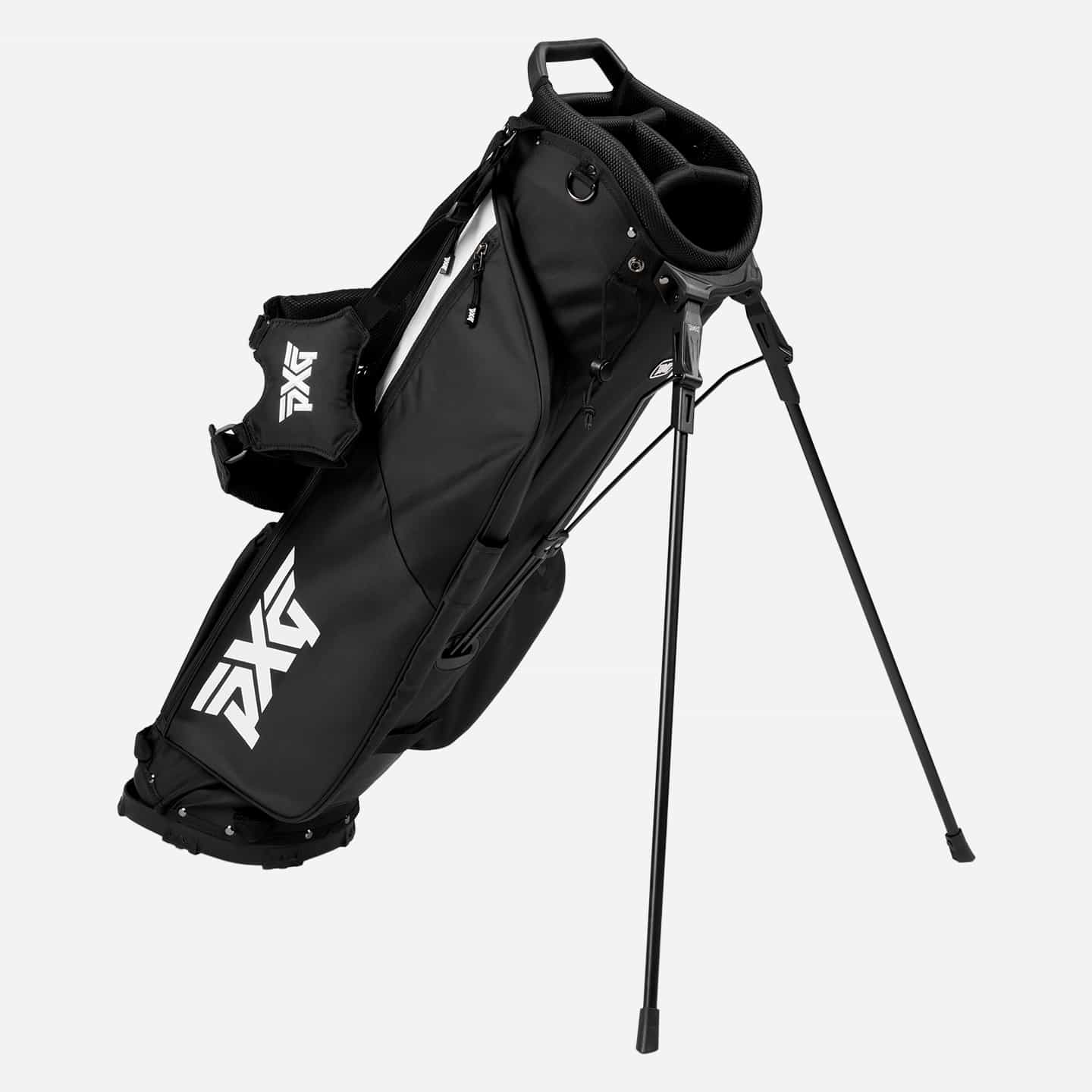
• Use a lighter stand bag.
• Adjust both straps before every round.
• Walk fewer holes at first.
• Use a push cart when the bag feels too heavy.
• Stop if pain becomes sharp or unusual.
A push cart is not a failure. It is a practical tool that lets you walk while reducing the load on your shoulders. Some golfers also alternate between carrying and using a cart during long practice sessions.
Medical advice can vary by person. A past injury, surgery, or joint condition may require a custom plan. General golf advice cannot replace an examination or professional diagnosis.
Common Mistakes to Avoid
Many golfers learn how to carry a golf bag by trial and error. Avoiding these common mistakes can save you discomfort.
Carrying the Bag on One Shoulder for Too Long
One shoulder carries the entire load while your spine adjusts to the imbalance. This may feel convenient, but it becomes tiring during a full round.
Wearing Loose Straps
Loose straps allow the bag to swing. Your body then works harder to control the movement, especially on hills.
Overpacking the Bag
Extra balls, drinks, clothing, and tools add weight quickly. Carry what you need for the course and the weather.
Letting the Bag Hang Too Low
A low bag pulls backward and may make you lean forward. Raise it so the base rests closer to your hips.
Ignoring Early Pain
Mild fatigue is normal. Sharp pain, numbness, or increasing soreness is a signal to stop and adjust your method.
Carrying Clubs That You Do Not Need
A full set may be allowed under golf rules, but you do not always need every club for practice or a casual round. A lighter setup can make walking easier.
How Heavy Should a Golf Bag Be?
There is no single safe weight for every golfer. Fitness, age, body size, course terrain, walking distance, and medical history all matter.
A light Sunday bag may weigh less than 5 pounds before clubs. A standard stand bag can weigh 5 to 8 pounds empty. Once filled with clubs and gear, the total can become much heavier.
As a practical guide:
• Keep casual walking bags as light as possible.
• Weigh your fully packed bag if it feels difficult to carry.
• Remove items that do not support your round.
• Use a push cart for heavy loads or long walks.
• Choose a bag with wide, padded straps.
The goal is not to prove how much weight you can carry. The goal is to enjoy the round, stay balanced, and finish with enough energy to play well.
A Simple Pre-Round Checklist
Before teeing off, take one minute to check your equipment and carrying setup.
• Are both straps adjusted evenly?
• Does the bag sit close to your back?
• Are the club heads secure?
• Is the bag free of unnecessary items?
• Do you have enough water?
• Are the stand legs and straps working properly?
• Do you feel any pressure on your neck or shoulders?
If the answer to any of these questions is no, fix the issue before you start. It is easier to adjust your bag beside the first tee than after several miles of walking.
This short check is one of the most useful parts of learning how to carry a golf bag. Good preparation prevents small problems from becoming round-ending discomfort.
Frequently Asked Questions About How to Carry a Golf Bag
Is it better to carry a golf bag with one strap or two?
Two straps are better for most full rounds because they spread weight across both shoulders and help maintain balance. One strap can work for short walks or very light bags.
Where should a golf bag sit on your back?
The bag should sit close to your upper and middle back, with the base near your lower back or upper hips. It should not hang far below your waist or press into your neck.
How do I stop my golf bag from hurting my shoulders?
Tighten both straps evenly, use padded shoulder sections, and remove unnecessary equipment. If pain continues, switch to a push cart or ask a health professional for advice.
Should the golf bag be carried on the front or back of the body?
A golf bag should normally be carried on your back with the clubs pointing upward. Carrying it across your front can restrict movement and make walking less stable.
Can I carry a golf bag with back pain?
You may be able to carry a light bag for a short distance, but persistent or sharp pain requires caution. A push cart can let you walk the course while reducing pressure on your back.
How can I make my golf bag lighter?
Remove unused balls, old gloves, extra clothing, duplicate tools, and unnecessary accessories. You can also choose a lighter bag or carry fewer clubs for practice rounds.
Conclusion
The best way to carry a golf bag is to use both straps, keep the bag close to your body, balance the load, and walk with relaxed posture. Pack only what you need, adjust your straps before every round, and treat pain as a warning rather than something to ignore.
A comfortable bag can help you walk farther, stay focused, and enjoy the final holes with more energy. Try these adjustments during your next round, then share your favorite golf carrying tips or explore more guides to improve your time on the course.

Zayden Halbrook is a travel enthusiast and gear researcher passionate about making every journey smoother and more enjoyable. With a keen eye for practical travel essentials and real-world tips, he helps readers choose the right gear and travel smarter. When he’s not testing travel kits or exploring new destinations, Zayden shares simple, reliable advice to make every trip stress-free.