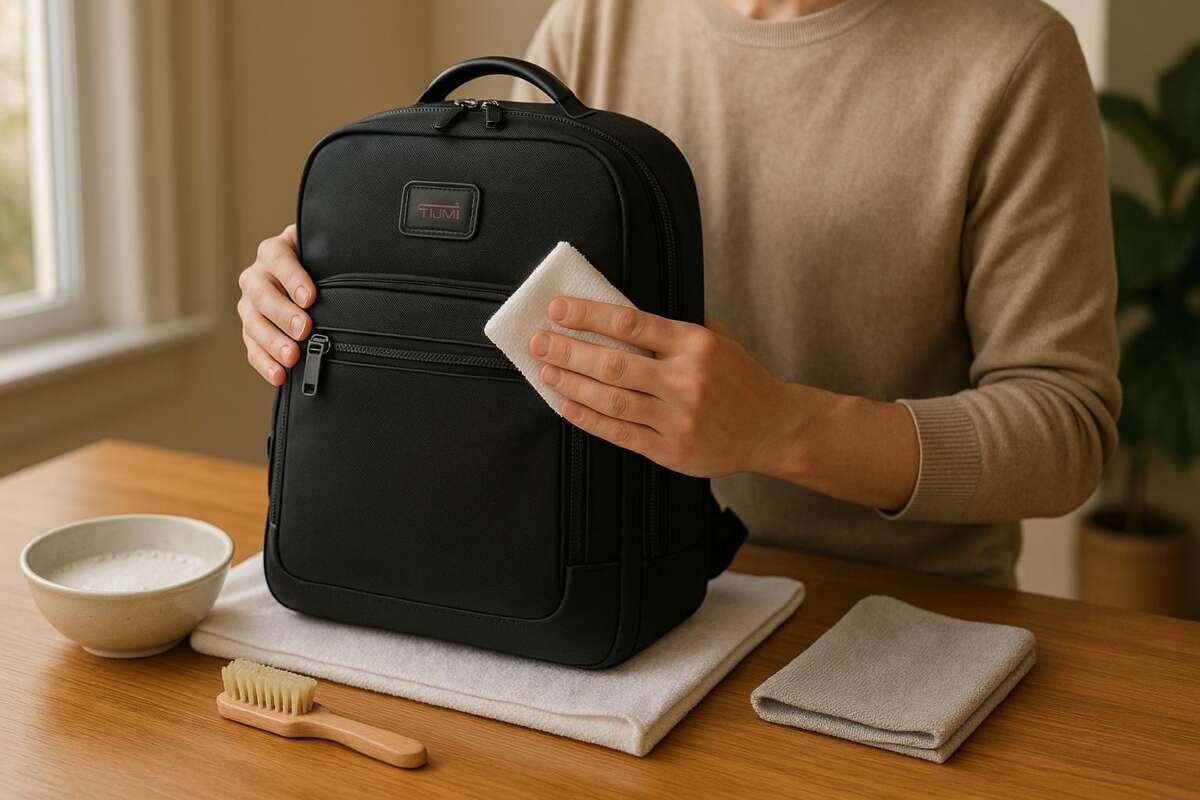
For most TUMI backpacks, the safest way to clean the bag is to empty it, remove loose dirt, spot-clean the fabric with a soft cloth and mild soapy water, then let it air-dry fully. Do not put the backpack in a washing machine, use bleach, or soak it unless the care instructions for your exact model allow it.
A careful clean can remove dust, food marks, light stains, and daily grime without harming the fabric, leather trim, zippers, or lining. Since TUMI makes backpacks from several materials, always check the care label or product instructions before using any cleaner.

What You Need Before Cleaning a TUMI Backpack
Gather simple supplies before you begin:
- A vacuum with a soft brush attachment, or a clean soft-bristle brush
- Two or three white microfiber cloths
- A small bowl
- Lukewarm water
- A small amount of mild liquid soap
- A clean, dry towel
- Cotton swabs for seams and zipper areas
- A soft toothbrush for hard-to-reach spots
- A suitable leather cleaner or conditioner, only if your backpack has leather parts and TUMI permits its use
Use a white cloth when possible. Colored cloths can transfer dye to light fabric, especially when wet.
Choose the cleaner with care
A mild soap solution is usually enough for surface dirt. Mix a few drops of mild liquid soap into a bowl of lukewarm water. The water should feel only slightly soapy, not thick with suds.
Avoid these products:
- Bleach
- Ammonia
- Acetone or nail polish remover
- Alcohol-based solvents
- Strong degreasers
- Abrasive powders
- Disinfectant wipes with harsh chemicals
- Fabric softener
- Household stain removers made for carpets or upholstery
These products may fade the fabric, weaken coatings, dry out leather, or damage the finish on metal hardware.
Check the material first
TUMI backpacks may include ballistic nylon, recycled nylon, polyester, leather, suede, coated canvas, mesh, rubber, and metal parts. Each material reacts differently to water and cleaning products.
| Backpack area | Safer cleaning method | Main caution |
|---|---|---|
| Ballistic or woven nylon | Wipe with a damp, soapy cloth | Do not scrub hard or soak |
| Polyester or recycled fabric | Gentle spot cleaning | Test first for color transfer |
| Leather trim | Dry wipe, then use approved leather care | Never saturate leather |
| Suede or nubuck | Use a dry suede brush | Do not use regular soap and water |
| Mesh panels | Gentle blotting with mild soap | Avoid pulling or stretching |
| Lining | Light surface wipe | Do not flood the inside |
| Metal hardware | Damp cloth, followed by drying | Keep moisture away from seams |
| Zippers | Dry brush or lightly damp cloth | Do not force a dirty zipper |
If you cannot identify a material, clean a hidden area first or contact TUMI customer service for model-specific advice.

How to Clean a TUMI Backpack Step by Step
Follow this order to reduce the chance of spreading dirt or pushing stains deeper into the fabric.
1. Read the care label and inspect the backpack
Look inside the backpack for a care label, model information, or material details. TUMI has used different fabrics and trims across its backpack lines, so a method that is safe for one model may not suit another.
Inspect the bag for:
- Food or drink spills
- Ink marks
- Oil or grease
- Mold or mildew
- Peeling coatings
- Loose threads
- Damaged zippers
- Cracked leather
- Wet electronics or battery packs
If the backpack has a strong chemical smell, visible mold, or a large unknown stain, pause before cleaning. A professional cleaner may be safer than repeated home treatment.
2. Empty every compartment
Remove everything from the main compartment, laptop sleeve, front pockets, side pockets, and small organizer sections. Check for:
- Pens
- Receipts
- Gum
- Food wrappers
- Cables
- Power banks
- Travel documents
- Coins
- Small electronics
Open every zipper and turn the backpack upside down over a towel or clean floor. Shake it gently. Do not shake it hard, because loose hardware or a damaged seam may worsen.
Remove detachable accessories if the care label allows it. Keep leather tags, removable straps, and electronic accessories away from the cleaning water unless their instructions say otherwise.
3. Remove dry dirt and dust
Use a soft brush or a vacuum with a soft brush attachment. Work from the top of the bag downward.
Clean these areas carefully:
- Bottom corners
- Stitch lines
- Zipper tracks
- Laptop compartments
- Bottle pockets
- Handle attachment points
- The space beneath interior flaps
Do not press the vacuum nozzle directly against thin lining fabric. Suction can pull loose threads or damage a worn seam.
Dry cleaning comes first because water can turn loose dust into muddy streaks.
4. Test the cleaning solution
Dip a white cloth into the mild soap solution and wring it out well. The cloth should be damp, not dripping.
Test it on a hidden area, such as the underside of a flap or the back of a seam. Wait until the spot dries. Check for:
- Color loss
- Dark rings
- Fabric texture changes
- Sticky residue
- Dye transfer onto the cloth
If the test area changes, stop and use plain water on the test spot. Contact TUMI before cleaning the visible surface.
5. Spot-clean the fabric
Press the damp cloth onto the stain. Use short, gentle strokes instead of hard scrubbing.
Work from the outside of the mark toward the center. This helps limit the spread of the stain. Rinse the cloth often in clean water so you do not move dirt from one area to another.
For a broad dirty area, clean one small section at a time. Do not wet the entire backpack at once.
6. Blot away soap
Use a second cloth dampened with plain water. Wring it out well, then wipe the cleaned area to remove soap residue.
Soap left in the fabric can attract more dirt. It may also leave a dull or stiff patch after drying.
Blot with a dry towel. Do not twist, wring, or press the backpack under heavy weight.
7. Clean the lining with limited moisture
For a lightly dirty lining, use a nearly dry cloth with a small amount of mild soap solution. Support the fabric with your other hand as you wipe.
Do not pour water into the interior. Excess moisture can reach:
- Padding
- Foam
- Adhesive layers
- Laptop protection panels
- Hidden cardboard stiffeners
- Interior coatings
If a spill soaked into the lining, leave all compartments open and allow the bag to dry in a well-ventilated place. Do not pack it away while the inside still feels cool or damp.
8. Clean zippers and hardware
Use a dry soft toothbrush to lift dirt from zipper teeth and tracks. If needed, use a barely damp cotton swab.
Wipe metal pulls and hardware with a damp cloth, then dry them right away. Keep water out of the zipper ends and seam openings.
Never force a zipper that catches. Dirt may be the cause, but forcing it can bend the slider or split the teeth.
9. Dry the backpack correctly
Place the backpack upright or lay it flat on a clean towel. Open all pockets and leave zippers partly open so air can reach the lining.
Let it air-dry at room temperature. Keep it away from:
- Radiators
- Clothes dryers
- Hair dryers
- Direct high heat
- Strong, prolonged sunlight
- Heated car interiors
Heat can warp padding, shrink some materials, dry leather, or affect adhesives. Drying may take several hours, depending on how much water you used and how well air moves around the bag.
10. Restore the shape and inspect it
When the backpack is fully dry, gently reshape it by hand. Check the fabric, lining, stitching, zippers, and leather trim.
If the bag still has a mark, repeat a gentle spot treatment once. Repeated scrubbing can cause more harm than the original stain.

How to Remove Common TUMI Backpack Stains
The best stain method depends on what caused the mark. Treat stains as soon as practical, but avoid aggressive cleaning when the material is unknown.
Food and drink stains
Blot fresh spills with a dry cloth. Do not rub, since rubbing can spread the liquid and push it into the weave.
Next, use a damp cloth with mild soap. Blot from the outer edge toward the center. Follow with a plain-water cloth to remove soap, then air-dry the area.
Sugary drinks can leave a sticky film. A second light wipe with plain water may be needed after the first treatment dries.
Oil and grease
Oil stains are harder to remove from nylon and woven fabric. First, blot the area with a clean dry cloth. Do not add water right away, because water alone does not dissolve oil.
Do not apply kitchen degreaser or solvent to a TUMI backpack. These products may strip color or damage a water-resistant finish. If the mark remains, ask TUMI or a professional cleaner for advice based on the exact material.
Ink
Ink can spread quickly. Avoid rubbing it and do not use nail polish remover or alcohol unless a qualified cleaner confirms that the material can tolerate it.
Blot around the outside of the mark, keep the area as dry as possible, and seek model-specific advice. Ink on leather, coated fabric, and light-colored lining often needs professional treatment.
Makeup
Remove loose powder with a dry brush. For a liquid or cream product, blot with a dry cloth first.
Then try a small amount of mild soapy water on fabric after a hidden-area test. Do not use this method on suede or untreated leather.
Mud and road salt
Let mud dry before brushing it away. Removing wet mud can spread the stain.
For winter salt marks, use a lightly damp cloth and wipe several times with clean water. Salt residue can remain as a pale ring if the cloth is too wet or if soap is not removed.
Mold or mildew
Do not simply cover mold with fragrance or disinfectant. Mold may indicate that the backpack stayed damp inside.
Isolate the bag from other fabric items. Avoid shaking it indoors, and contact TUMI or a professional cleaner for guidance. A backpack with deep mold growth may not be safely restored through ordinary spot cleaning.

How to Clean Leather Parts on a TUMI Backpack
Clean leather trim with less moisture than fabric. Wipe dust away with a dry, soft cloth first. If the care instructions permit leather cleaner, apply a very small amount to the cloth—not directly to the leather—and test a hidden spot.
Do not use fabric soap on leather. Do not soak leather, leave it wet, or dry it with heat. Water spots, darkening, cracking, and color change can occur.