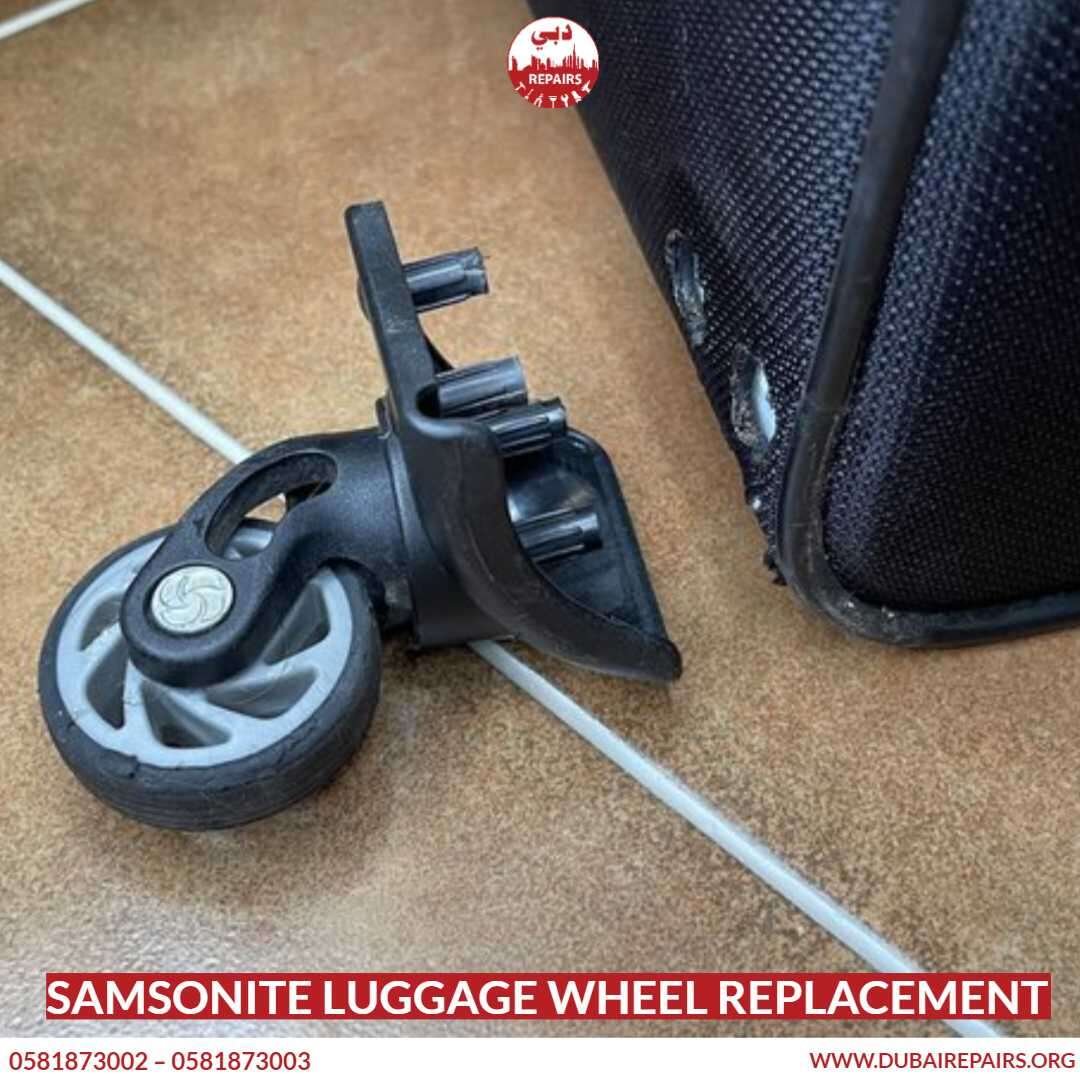
You can change Samsonite luggage wheels at home if the wheel uses screws or a removable axle. First, find your exact bag model and check how the wheel is attached. Some Samsonite cases use screw-on wheel housings, while others use rivets or sealed parts that need a repair shop.
For U.S. travelers, the safest approach is to confirm the part with Samsonite’s U.S. support team before buying a replacement. A wheel that looks right may still have the wrong axle width, housing shape, or mounting holes.

What You Need Before You Start
Changing a suitcase wheel requires the right replacement part and a few basic tools. The exact tools depend on the wheel design.
Basic tools
Gather:
- A replacement Samsonite wheel or matching wheel assembly
- Phillips and flat-head screwdrivers
- Small socket set or adjustable wrench
- Allen keys, if used on your model
- Needle-nose pliers
- Measuring tape or ruler
- A flashlight
- A clean cloth
- A small tray for screws
- Work gloves
- Penetrating oil for a seized metal axle, if needed
You may also need:
- A drill and metal bit for a riveted wheel
- Replacement bolts, washers, and lock nuts
- A file for smoothing a rough hole
- Thread-locking compound for metal screws
Do not drill into the case until you confirm that the wheel cannot be removed another way. Drilling can damage the shell, nearby fabric, wiring, or internal frame.
Find the correct replacement wheel
The best replacement is the wheel made for your exact Samsonite model. Look for the model name or product code on:
- The inside lining
- The back of the suitcase
- The luggage tag
- The warranty label
- The original receipt
- The product registration record
If you cannot find the model, measure the old part before ordering. Record:
| Measurement | What to measure |
|---|---|
| Wheel diameter | Across the wheel from edge to edge |
| Wheel width | The width of the rolling wheel |
| Axle diameter | The thickness of the axle or bolt |
| Axle length | The usable length between the housing sides |
| Mounting-hole spacing | Distance between screw holes |
| Housing shape | Left, right, corner, or universal assembly |
Measure in millimeters when possible. A difference of only a few millimeters can make a wheel rub against the case or sit at the wrong angle.
Check the wheel type
Samsonite luggage commonly has one of these designs:
- Single fixed wheel — The wheel rolls forward and backward but does not swivel.
- Double fixed wheel — Two wheels share one housing.
- Spinner wheel — The wheel assembly rotates in several directions.
- Removable wheel assembly — The housing comes off with screws.
- Riveted or sealed assembly — The wheel is held by permanent rivets or a closed housing.
The first four types may be repairable at home. The last type often needs a replacement housing, special tools, or professional service.

How to Remove a Screw-Mounted Samsonite Wheel
A screw-mounted wheel is the easiest type to replace. Work on a flat surface so the suitcase does not shift.
1. Empty and clean the suitcase
Remove all clothing, packing cubes, and loose items. Open every compartment and check the wheel area from inside the case.
Place the suitcase on its side or upside down. Protect the shell with a towel. Keep small screws in a tray so they do not disappear into the lining.
2. Inspect the wheel from both sides
Look for:
- Screws on the outside of the wheel housing
- Screws under a fabric flap
- Nuts inside the luggage
- A plastic cover over the mounting screws
- A pin or bolt through the wheel
- Signs that the wheel is part of a larger spinner unit
Do not pull hard on the wheel. Some housings connect to the case with hidden screws.
3. Remove the wheel housing
Use the correct screwdriver bit. Press down firmly while turning to prevent the screw head from stripping.
If a screw is tight, apply a small amount of penetrating oil to the metal threads. Keep oil away from fabric, plastic, and the wheel tread. Wait a few minutes, then try again.
If the screw turns but does not come out, hold the nut on the other side with pliers or a wrench.
4. Remove the wheel from the housing
Some wheels have a separate axle. Others require replacement of the complete housing.
For a separate axle:
- Remove the axle bolt or retaining clip.
- Slide out the axle.
- Remove the old wheel and washers.
- Clean dirt from the axle channel.
- Compare the new wheel with the old one.
Keep the washers in the same order. They may prevent side-to-side movement.
5. Install the new wheel
Place the new wheel in the housing. Reinstall the washers and axle in their original positions.
Tighten the axle until the wheel is secure but still spins freely. A wheel that is too tight may stop turning. A wheel that is too loose may wobble or scrape the housing.
Next, attach the housing to the suitcase. Tighten the mounting screws evenly. Do not use excessive force on a plastic shell.
6. Test the repair
Before packing the bag:
- Spin the wheel by hand.
- Check for side-to-side wobble.
- Roll the empty suitcase in a straight line.
- Turn the case left and right.
- Listen for clicking, scraping, or grinding.
- Test the handle while rolling the case.
The wheel should turn without rubbing the shell. The suitcase should not lean toward the repaired side.

How to Replace a Riveted or Sealed Wheel
A riveted wheel does not come off by turning a normal screw. It may have a smooth metal pin, a pressed rivet, or a closed plastic housing.
You have two practical options:
- Replace the full wheel assembly through Samsonite or a luggage repair shop.
- Drill out the old rivet and install a matching bolt-and-nut system.
The second option is more difficult and can void warranty coverage.
Before drilling
Confirm all of the following:
- The wheel cannot be removed from inside the case.
- The replacement part matches the original housing.
- You can reach both sides of the mounting point.
- The case will remain strong after the repair.
- No zipper, lining, frame, or cable sits behind the drilling area.
If the shell is cracked near the wheel, do not rely on a new wheel to fix it. The damaged shell may fail again under load.
Basic rivet-removal method
If you choose to remove the rivet:
- Support the wheel housing on a stable surface.
- Cover nearby fabric and plastic with a cloth.
- Use a drill bit slightly smaller than the rivet head.
- Drill slowly through the rivet head.
- Stop once the head separates from the shaft.
- Push out the remaining rivet with a punch or small screwdriver.
- Smooth sharp metal edges with a file.
- Fit the new wheel assembly.
- Secure it with a bolt, washers, and a lock nut.
Use a bolt that matches the original axle diameter. The bolt should not protrude into the wheel path or the inside of the luggage.
A nylon lock nut can help prevent loosening. Check it after the first short trip. Do not use glue as the only way to hold a wheel in place.

How to Choose Between a Wheel and a Full Wheel Assembly
Replace only the wheel when the housing is sound and the axle can be removed. Replace the full assembly when the housing is cracked, bent, worn, or permanently sealed.
| Problem | Part usually needed |
|---|---|
| Flat or split wheel tread | Wheel only, if removable |
| Loose axle | Axle, washers, or wheel |
| Cracked wheel bracket | Complete wheel assembly |
| Broken swivel base | Complete spinner assembly |
| Missing mounting screws | Correct screws and washers |
| Bent metal support | Full assembly or professional repair |
| Cracked suitcase shell | Repair assessment before wheel replacement |
A new wheel will not solve a bent housing. It may roll for a short time, then wear unevenly.
For spinner luggage, replace the entire spinner unit if the swivel plate is damaged. Trying to fit a fixed wheel into a spinner mount can change the case height and make the suitcase unstable.

How to Check That the New Wheel Fits
A replacement wheel fits only when its size and mounting design match the suitcase.
Check these points before final installation:
Wheel clearance
Leave enough space between the wheel and the case. The wheel must not touch the shell during a turn.
Axle alignment
The axle should sit straight through the housing. If it angles upward or downward, the wheel may wear on one side.
Mounting holes
The screw holes must line up without forcing the housing into place. Do not enlarge holes just to make an uncertain part fit.
Case height
Compare the repaired side with the other side. If one corner sits higher, the replacement wheel may be too large.
Swivel movement
For spinner luggage, rotate the wheel assembly through its full range. It should turn freely without hitting the case or nearby hardware.

Common Problems After Replacing a Samsonite Wheel
Most problems come from an incorrect part, poor alignment, or loose hardware.
The wheel does not spin
Possible causes include:
- The axle is too tight.
- A washer is in the wrong position.
- The wheel is too wide.
- The housing is bent.
- Dirt is trapped around the axle.
Loosen the axle slightly and test the wheel again. If it still sticks, remove it and compare the replacement with the original.
The suitcase wobbles
A wobble often means the wheel is loose, the axle is bent, or the housing is not sitting flat.
Check the mounting screws and axle. Place the case on a level floor and compare the repaired corner with the others.
The wheel scrapes the case
The wheel may be too large or installed off-center. Stop using the suitcase until you correct the problem. Continued rubbing can damage the shell and wear through the wheel.
The screws keep loosening
Check whether the screws are the correct length. A screw that is too short may not hold the housing. One that is too long may press into the case or lining.
For metal-to-metal hardware, a small amount of removable thread-locking compound may help. Do not apply it to plastic threads unless the product instructions allow it.
The new wheel wears quickly
Fast wear may point to: