Introduction
Yes, tea bags can go stale—but they usually lose flavor and aroma before they become unsafe to drink. In the United States, most packaged tea has a “best by” date that marks peak quality, not an exact safety deadline. A dry tea bag stored in a cool, dry place may remain usable after that date, while one exposed to moisture, heat, odors, or pests may need to be discarded sooner.
The key question is not only how old the tea is. Check how it was stored, whether the package is damaged, and whether the tea shows signs of mold or contamination.

What Does “Stale” Tea Mean?
Stale tea has lost some of its original taste, smell, or strength. Dry tea does not usually spoil in the same way as milk, meat, or other moist foods because it contains very little water. However, air, light, heat, and moisture can slowly change the tea’s compounds.
Over time, tea may:
- Smell weak or flat
- Taste dull or papery
- Lose its normal color
- Brew more lightly
- Develop a stale, dusty, or cardboard-like flavor
This is mainly a quality problem, not an immediate safety problem.
Tea contains flavor compounds and aromatic oils. These can fade or change during storage. Green tea often loses its fresh, grassy character sooner than more heavily processed teas, while black tea may keep its basic flavor longer. Still, the package, storage conditions, and type of tea matter more than a fixed rule.
Stale tea versus spoiled tea
These terms are not the same:
| Condition | What it means | What to do |
|---|---|---|
| Stale | Flavor or aroma has weakened | Drink it if it looks and smells normal |
| Damp | Moisture has entered the package | Inspect closely; discard if clumped or questionable |
| Moldy | Visible growth or musty, mold-like odor | Throw it away |
| Contaminated | Insects, droppings, chemicals, or foreign material are present | Do not use it |
| Rancid or oily | Unusual sour, greasy, or paint-like odor | Discard it |
A tea bag does not need to smell terrible to be past its best. If it tastes flat but has no signs of moisture or contamination, it is usually simply old.
How Long Do Tea Bags Last?
Tea bags often remain drinkable beyond the printed date when they stay dry and sealed. Their best flavor usually lasts for a limited period, but there is no single expiration period that applies to every tea.
Many brands print a best-by date based on expected quality. The date may vary by tea type, packaging, and manufacturer. The U.S. Department of Agriculture explains that food date labels generally relate to quality rather than safety, except for infant formula. The U.S. Food and Drug Administration also notes that date labeling can vary and does not automatically mean a food is unsafe after the date.
Use the package date as a quality guide, not as the only test.
General quality guide
The following ranges are practical estimates, not guarantees:
| Tea type | Best quality depends on | What may happen with age |
|---|---|---|
| Black tea bags | Dry storage and sealed packaging | Flavor may become weaker or dull |
| Green tea bags | Freshness, low heat, and protection from air | Fresh notes may fade sooner |
| Oolong tea bags | Packaging and storage conditions | Aroma may flatten |
| White tea bags | Low moisture and limited air exposure | Delicate flavor may fade |
| Herbal tea bags | The specific herbs, flowers, fruit, or spices | Aroma and color may decline |
| Flavored tea bags | Protection from air and heat | Added flavor may become faint |
| Tea with dried fruit or oils | Tight packaging and very dry storage | Quality may change faster |
A sealed, individually wrapped tea bag usually has better protection than loose tea bags stored in an open cardboard box. The wrapper limits exposure to air, humidity, kitchen odors, and handling.
Does the expiration date matter?
In the United States, a date printed on tea is commonly a best-by date rather than a strict expiration date. The label wording matters:
- Best by or best before: Usually indicates peak quality.
- Sell by: Helps stores manage inventory.
- Use by: May signal stronger manufacturer guidance, but the meaning still depends on the product and label.
- Expiration date: A clear safety warning is less common on ordinary dry tea than on foods that spoil quickly.
If the package has no date, judge the tea by its condition. If the package has been opened for years, smells unusual, or was stored in a humid place, replacing it is sensible.

How to Tell If Tea Bags Have Gone Bad
Inspect old tea before brewing it. A quick check can help separate harmless loss of flavor from a product that should go in the trash.
1. Check the packaging
Look for:
- A torn or open wrapper
- Damp spots
- Water damage
- A swollen or damaged package
- Insect holes or webbing
- Dust or droppings
- Signs that the box was stored near a sink, stove, or steamy area
A damaged package does not prove that the tea is unsafe, but it increases the chance that moisture or pests entered.
2. Look at the tea bag
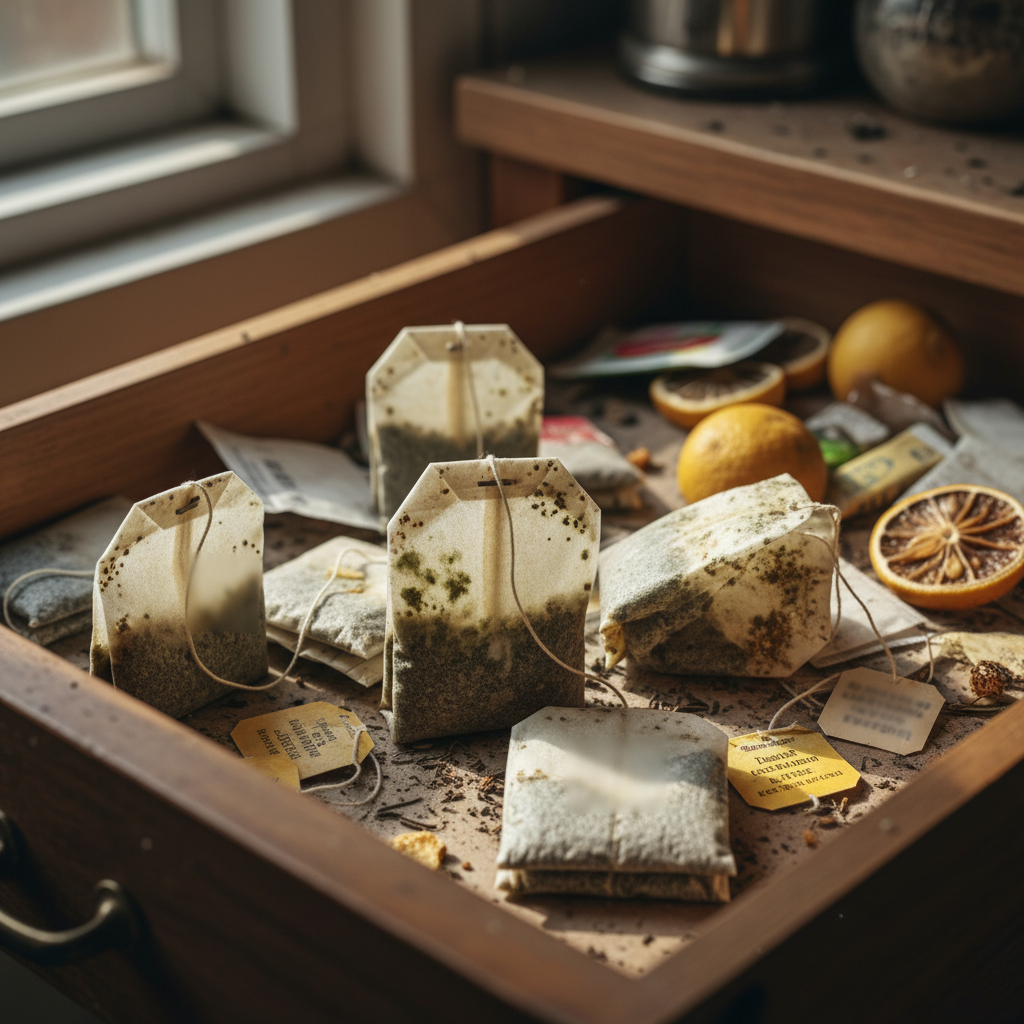
Normal dry tea may vary in color and texture. But discard the bag if you see:
- Fuzzy growth
- Green, blue, white, or black spots that were not part of the blend
- Wet clumps
- Unusual residue
- Insects or insect parts
- Tea leaves stuck together from moisture
Do not scrape off mold and use the rest. Mold can spread beyond the visible area, especially after moisture enters a porous product.
3. Smell the tea
A normal tea bag should smell like its ingredients. Depending on the blend, that may mean a tea, herb, flower, fruit, spice, or mild roasted scent.
Throw it away if it smells:
- Musty
- Moldy
- Sour
- Chemical-like
- Greasy or paint-like
- Like a strong household cleaner
- Like another food stored nearby
Tea can absorb odors from its surroundings. A bag stored beside coffee, spices, detergent, or smoke may taste unpleasant even if it is not spoiled.
4. Brew a small test cup
Only brew a test cup if the dry tea passes the visual and smell checks. Do not taste tea that shows mold, moisture damage, insects, or chemical contamination.
If the cup tastes flat but otherwise normal, the tea is probably stale rather than spoiled. If it tastes sour, moldy, sharply chemical, or otherwise wrong, stop drinking it and discard the remaining bags.

Can You Drink Tea Bags After the Best-By Date?
Usually, yes, if the tea stayed dry, the package is intact, and the tea looks and smells normal. The best-by date does not automatically make a dry tea bag unsafe on the following day.
However, an old tea bag may produce a weaker drink. You may notice less aroma, less depth, and a more papery taste. Adding more bags may increase strength, but it will not restore lost freshness.
Use extra care with:
- Tea stored in a humid room
- Tea kept in an opened box
- Unwrapped tea bags
- Herbal blends with many delicate ingredients
- Tea exposed to heat or sunlight
- Packages with damaged seals
- Tea that has been stored near strong odors
If you have a weakened immune system, are preparing tea for an infant, or are unsure whether a blend was contaminated, do not take chances with questionable tea. Discard it and use a fresh package.
Is old tea safe for iced tea?
Old tea that passes the same inspection can be used for iced tea, but brewing and storage require care. Brew the tea with clean equipment, follow the product’s brewing directions, and refrigerate the finished tea promptly if you are not drinking it right away.
Do not leave brewed tea at room temperature for long periods. Dry tea is shelf-stable; brewed tea contains water and can support microbial growth. The safety question changes after brewing.

How to Store Tea Bags So They Stay Fresh
Store tea bags in a cool, dry, dark place in an airtight container or their original sealed package. The goal is to limit four main threats: moisture, heat, light, and odor.
Good storage practices include:
- Keep tea away from the sink, dishwasher, and stove.
- Use an airtight container after opening the box.
- Store tea away from coffee, spices, soap, and cleaning products.
- Keep tea out of direct sunlight.
- Avoid storing it in a damp pantry or garage.
- Close resealable bags and containers after each use.
- Keep individually wrapped bags in their wrappers until needed.
- Store different teas separately if you want to protect their aromas.
A glass jar can work if it has a tight seal and stays in a dark cabinet. A clear jar on a sunny counter is less suitable because light can damage quality over time.
Should you refrigerate or freeze tea bags?
Usually, no. Refrigerators contain moisture and strong odors, both of which can harm dry tea. Freezing can also create condensation when the package is opened and warmed.
Room-temperature storage in a dry, sealed container is normally the simpler choice. Freezing is not needed for ordinary household tea bags.
Can tea bags absorb odors?
Yes. Dry tea can pick up nearby smells, especially when stored in an open box or thin wrapper. This is one reason tea kept beside spices, coffee, onions, or cleaning supplies may taste strange even when it is not moldy.
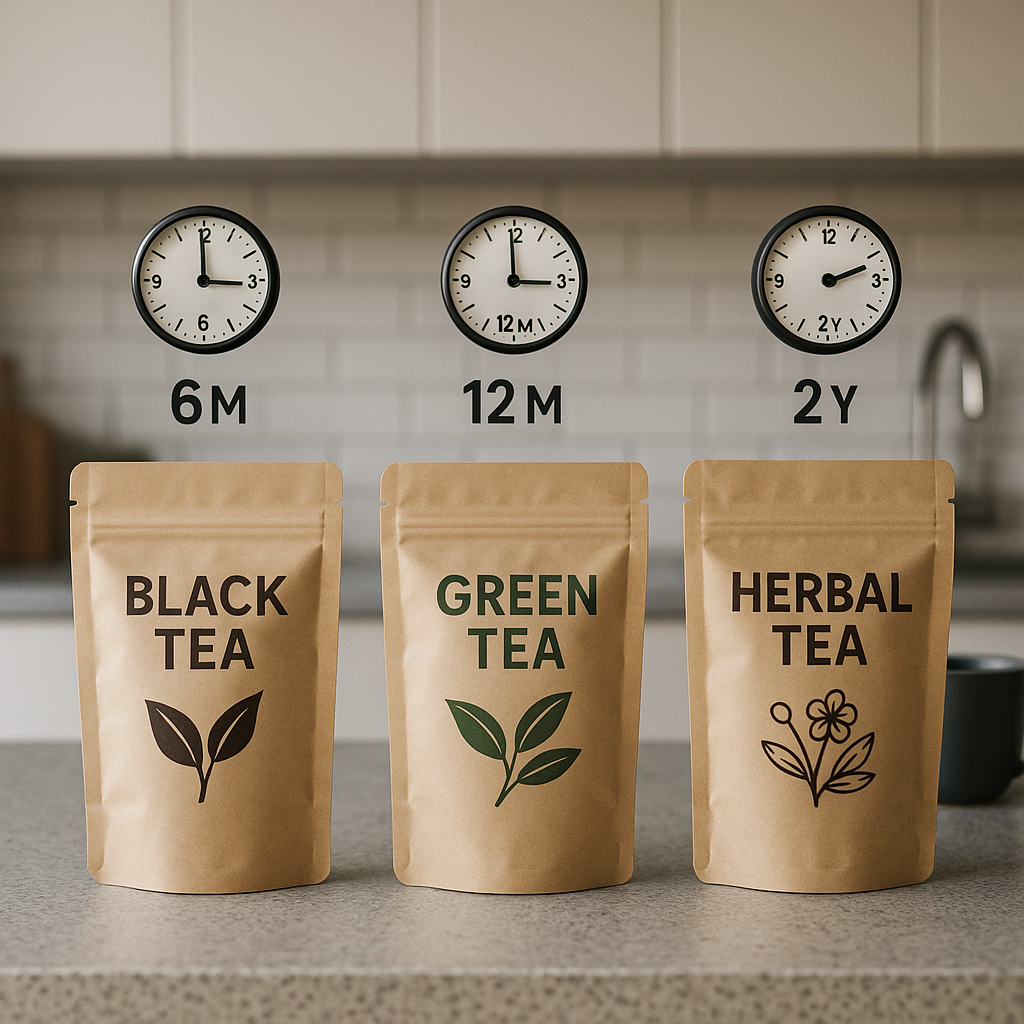
Does the Type of Tea Change Its Shelf Life?
Yes. Tea type affects how noticeable aging becomes, but storage still has the largest practical effect.
Black tea
Black tea is fully oxidized and often has a strong flavor. It may remain recognizable for a long time, but its aroma and richness can fade. Old black tea is often safe to drink if it stayed dry and clean.
Green tea
Green tea has delicate flavors that can decline with heat, light, and air. Old green tea may taste flat, grassy in an unpleasant way, or slightly stale. It may be drinkable but no longer enjoyable.
Herbal tea
Herbal tea is not always made from the Camellia sinensis tea plant. It may contain herbs, flowers, fruit, roots, or spices. Because each blend differs, check the package and inspect it carefully.
Herbal ingredients can lose aroma over time. A blend with dried fruit, citrus peel, flowers, or fragrant oils may change more noticeably than plain black tea.
Flavored tea
Flavored teas often rely on added oils or flavor compounds. These can fade or change during long storage. If a flavored tea smells sour, greasy, or chemical-like, discard it.

Common Mistakes With Old Tea Bags
Several habits can make tea go stale faster or lead to unsafe use.
Mistake 1: Treating the date as a safety switch
Tea does not suddenly become bad at midnight on its best-by date. Check the package and the tea itself. A date is useful, but it is not a substitute for inspection.
Mistake 2: Assuming dry means safe
Dry tea is less likely to support microbial growth than wet food, but moisture can still cause mold or spoilage. Damp tea bags should not be treated as normal dry tea.
Mistake 3: Using a tea bag with visible mold
Do not try to remove mold from the surface. Discard the affected bag. If several bags in the same package are damp or moldy, discard the package.
Mistake 4: Storing tea above the stove
Heat and steam can enter the package each time you cook. A cabinet away from heat is a better choice.
Mistake 5: Keeping brewed tea at room temperature
Once tea is brewed, it is no longer a dry shelf-stable product. Refrigerate leftovers in a clean container and discard tea that has been left out or develops an off smell.
Mistake 6: Blaming old tea for every bitter cup
A bitter cup may result from water that is too hot, steeping for too long, or using too many tea bags. Test the brewing method before deciding that the tea is stale.

How to Make Old but Safe Tea Taste Better
If the tea passes the safety checks but tastes weak, you can improve the cup in simple ways:
- Use the water temperature listed on the package.
- Steep for the recommended time.
- Use a clean cup and fresh water.
- Try one extra tea bag if the flavor is simply weak.
- Add lemon, milk, or a small amount of sweetener when suitable for the blend.
- Combine a mild old tea with a fresher tea of the same general type.
These steps can improve a weak cup, but they cannot fix mold, contamination, or a chemical smell. Do not use flavorings to hide a suspicious taste.