If you are flying within or from the United States, you generally cannot pack a fueled lighter in a checked bag. A standard disposable lighter or Zippo-style lighter may travel in your carry-on bag or on your person, subject to safety rules. An empty lighter with no fuel may usually go in checked baggage, but special lighter types have stricter limits.
The Transportation Security Administration (TSA) screens your bags, while the Federal Aviation Administration (FAA) sets many of the hazardous-material rules for aircraft. Your airline may also apply stricter limits.

Can a lighter go in checked baggage?
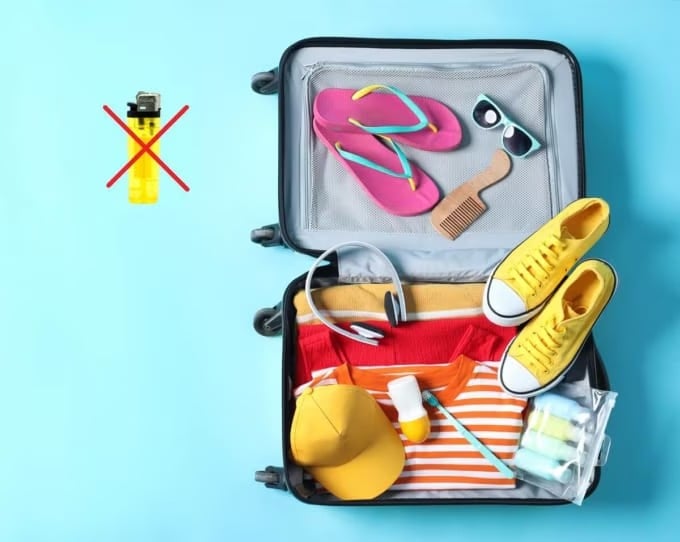
A lighter with fuel should not go in your checked bag. This rule covers common disposable lighters, refillable lighters, and Zippo-style lighters that contain liquid fuel.
Here is the simple breakdown:
| Lighter type | Checked bag | Carry-on bag or on your person |
|---|---|---|
| Disposable lighter with fuel | No | Usually yes |
| Zippo-style lighter with fuel | No | Usually yes |
| Refillable lighter with fuel | No | Usually yes |
| Empty lighter with no fuel | Usually yes | Usually yes |
| Torch or jet-flame lighter | No | No |
| Arc, plasma, or electric lighter | No | Usually yes, with protection |
| Up to two fueled lighters in an approved case | May be allowed under a narrow FAA exception | Check airline rules |
The safest choice is to leave a fueled lighter out of your checked luggage. If you need to bring a permitted lighter, keep it in your carry-on bag or on your person.
Why checked bags are different
Checked bags travel in the aircraft’s cargo compartment. A lighter can leak fuel, release flammable vapor, or ignite if it is damaged or activated. These risks are harder to detect or control in the cargo hold.
A carry-on bag remains near the passenger and cabin crew. That is why U.S. rules generally allow certain small lighters in the cabin but restrict them in checked luggage.
What types of lighters are allowed on a U.S. flight?
The lighter’s design and fuel source affect the answer. “Lighter” is not one single category under the travel rules.
Disposable and Zippo-style lighters
A normal disposable lighter or traditional Zippo-style lighter with fuel is generally allowed in a carry-on bag or on your person. It is not allowed in a checked bag under the normal rule.
Keep the lighter protected from accidental activation. Do not place it loose beside keys, coins, chargers, or other objects that could press its ignition button.
An empty disposable or Zippo-style lighter is generally allowed in checked baggage. However, proving that a lighter is fully empty can be difficult during screening. If the lighter is not essential, leaving it at home is the simplest option.
Refillable lighters
A refillable lighter that contains fuel follows the same basic rule: carry-on or on your person, not in checked luggage.
Extra lighter fuel is a separate concern. Fuel canisters and bottles of lighter fluid are generally not allowed in passenger baggage. Do not pack a fuel refill container in either your checked bag or carry-on unless the relevant authority and airline specifically allow it.
Torch and jet-flame lighters
Torch lighters, jet-flame lighters, and cigar lighters produce a concentrated flame. They are generally not allowed in checked baggage or carry-on baggage.
They may look like ordinary lighters, but their stronger flame makes them a different category. A lighter marketed for cigars, pipes, welding-style use, or wind resistance may fall under this restriction.
Do not assume that removing the fuel makes every torch lighter acceptable. The design itself may lead to extra screening or refusal. Contact the airline before traveling if you need to transport one.
Arc, plasma, and electric lighters
Arc lighters and plasma lighters do not use a conventional flame, but they still contain a battery and can activate by mistake. They are generally allowed in carry-on baggage, not checked baggage, when protected against accidental activation.
Use the following precautions:
- Turn the lighter fully off.
- Use a safety lock if the lighter has one.
- Keep it in a protective case or cover.
- Prevent pressure on the ignition switch.
- Keep it away from metal objects that could cause damage.
- Do not use or charge it on the aircraft.
An arc lighter with a removable lithium battery may be subject to additional battery rules. If the battery can be removed, carry spare lithium batteries only in your carry-on bag and protect the terminals.

How should you pack a permitted lighter?
Pack a permitted lighter so that it cannot turn on by accident. The safest location is usually on your person or in an easily accessible part of your carry-on bag, rather than buried under clothing or gear.
Follow these steps:
- Identify the lighter. Decide whether it is disposable, refillable, torch-style, arc, or another type.
- Check the fuel status. Do not place a fueled lighter in checked luggage.
- Protect the ignition. Use the factory cap, a safety lock, or a sturdy protective case.
- Place it in your carry-on bag or keep it with you.
- Remove it from your checked bag before bag drop.
- Check the airline’s rules. The airline may restrict a lighter even when federal rules allow it.
- Follow the TSA officer’s instructions at the checkpoint.
Do not wrap a fueled lighter in clothing and place it in a checked bag. Wrapping it does not change the rule.
What if your lighter is already in a checked bag?
Tell the airline or airport staff before the bag is loaded if you realize that a fueled lighter is inside. Do not open a checked bag in a restricted area unless staff tell you that you may do so.
If the bag has already been screened or loaded, ask an airline representative or TSA officer for instructions. Do not try to hide the lighter or move it through security without guidance.
A screening officer may remove a prohibited item. If that happens, the traveler may not get it back.
What does “empty” mean?
For a fuel lighter, “empty” should mean that it contains no usable fuel and cannot release flammable vapor under normal handling. A lighter that has only been used several times may still contain fuel.
Do not puncture, crush, burn, or dismantle a lighter to empty it. Those actions can create a fire or injury risk. If you need to dispose of a fuel lighter, follow local household hazardous-waste guidance.
Can you bring a lighter in a checked bag inside a special case?
There is a narrow U.S. exception for certain fueled lighters placed in a Department of Transportation-approved lighter case. The case must meet the applicable design and safety requirements.
This exception does not mean that any plastic box, pouch, or hard case is acceptable. A normal travel case is not automatically a DOT-approved case.
Before relying on this exception:
- Confirm that the case is specifically approved for transporting fueled lighters.
- Check the current FAA and airline requirements.
- Confirm how many lighters the case may hold.
- Make sure the lighter type is eligible.
- Ask the airline before arriving at the airport.
For most travelers, carrying one permitted disposable or Zippo-style lighter in a carry-on bag is simpler and less risky than using the checked-bag exception.
What happens if TSA finds a lighter in your checked bag?
TSA may remove a lighter that violates the baggage rules. The result can depend on the lighter type, whether it contains fuel, and the circumstances of the screening.
Possible outcomes include:
- The lighter is taken from the bag.
- You are asked to remove it.
- The bag is delayed for inspection.
- The airline or TSA tells you that the item cannot travel.
- You must leave the item behind or return it to someone at the airport.
TSA screening rules do not guarantee that a permitted item will pass in every situation. Officers may make the final decision at the checkpoint when an item’s type or condition is unclear.
If your lighter has an unusual design, bring a copy of the relevant airline or FAA guidance and contact the airline before your trip. Documentation may help explain the item, but it does not override an officer’s decision.
Checked bag versus carry-on: quick decision guide
Use this guide before packing:
You have a standard disposable lighter with fuel
Put it in your carry-on bag or keep it on your person. Do not place it in checked baggage.
You have a Zippo-style lighter with fuel
Carry it in the cabin or on your person. Do not pack it in a checked bag unless you have confirmed that a specific approved-case exception applies.
You have an empty standard lighter
It is generally allowed in checked or carry-on baggage. If you are not certain that it is empty, treat it as fueled.
You have a torch lighter
Do not pack it in checked or carry-on baggage. Contact the airline if you believe a special transport arrangement applies.
You have an arc lighter
Keep it in your carry-on bag and protect it from accidental activation. Follow the airline’s battery rules.
You have lighter fluid
Do not pack it in passenger baggage. Ask the airline or hazardous-materials authority about lawful transport options.
Common mistakes to avoid
Putting a lighter in a toiletry bag inside checked luggage
A toiletry bag does not make a fueled lighter safe or legal in checked baggage. The location inside the suitcase does not change the rule.
Assuming every lighter is treated the same
Torch lighters and arc lighters do not follow the same rules as ordinary disposable lighters. Identify the type before you pack.
Packing several lighters
Even when a standard lighter is permitted in the cabin, limits may apply. Do not bring a collection of lighters without checking the current FAA and airline rules.
Carrying a lighter in a pocket without protection
A lighter carried on your person should not be able to turn on by accident. Use its safety cover or another suitable protective method.
Bringing fuel for a refillable lighter
Lighter fuel is not the same as the lighter itself. A permitted lighter does not mean that fuel bottles or refill canisters are permitted.
Forgetting the return flight
The rules of another country may differ from U.S. rules. Check the departure country, connection airports, airline, and destination before your return trip.
U.S. rules are not the only rules that matter
For a domestic U.S. trip, federal aviation rules and TSA screening rules are the main starting points. International trips involve more variables.
Your itinerary may include:
- A foreign airport with different security rules
- A connecting flight where you must pass security again
- An airline with stricter dangerous-goods policies
- A destination that bans a lighter type allowed in the United States
Check the airline’s baggage policy and the aviation authority for every country on your route. If there is a conflict, follow the stricter rule and ask the airline for written guidance before travel.
Official sources and what they establish
The FAA’s PackSafe guidance on lighters explains how lighter fuel, torch lighters, and approved cases are treated for air travel.
The TSA’s lighter guidance explains what passengers may bring through airport security in the United States. TSA also states that officers make the final decision about whether an item is allowed through a checkpoint.
The FAA PackSafe page on matches is also useful because matches and lighters are often confused. Match rules are not a substitute for lighter rules.
These sources describe U.S. aviation and screening requirements. They do not guarantee acceptance by a foreign airport or an individual airline.
FAQs
Can I put an empty lighter in checked luggage?
Usually, yes, if it is truly empty and contains no fuel. A lighter with remaining fuel or vapor should not go in checked baggage. When in doubt, leave it at home or carry it according to the applicable cabin rule.