Put your AirTag inside a secure inner pocket, near the top of your luggage, where it can send a clear signal.
Knowing where to put an AirTag in luggage can make travel less stressful. The best spot protects the tracker, keeps it easy to find, and helps nearby Apple devices detect its Bluetooth signal. After testing different luggage pockets and travel setups, I have found that a secure inner zipper pocket works better than an outside tag holder for most bags.
The Best Place to Put an AirTag in Luggage
The best place to put an AirTag in luggage is an inside zipper pocket near the top of the suitcase. This spot keeps the AirTag away from heavy pressure, sharp items, and rain while still allowing its signal to pass through the fabric or plastic shell.
An inner pocket also reduces the chance of losing the tracker when you unpack. If you place it under clothes at the bottom of a full suitcase, you may need to remove everything before checking the battery or playing a sound.
Use this simple setup:
- Place the AirTag inside a small pouch or key ring holder.
- Put it in an interior zipper pocket.
- Choose a pocket near the upper half of the bag.
- Make sure the pocket closes fully.
- Avoid packing metal items directly around it.
This location is useful for checked bags, carry-ons, backpacks, and duffel bags. It gives your AirTag a layer of protection without burying it under dense items.
Why AirTag Placement Matters
An AirTag is not a GPS tracker. It sends a Bluetooth signal that can be detected by nearby Apple devices in the Find My network. Those devices can then report the AirTag’s approximate location to your iPhone.
Because of this design, the signal needs a reasonable path through the luggage. Fabric, leather, and common suitcase plastic usually cause little trouble. Thick metal, foil-lined materials, and large electronic devices may reduce the signal.
The right place to put an AirTag in luggage should offer three things:
• Protection from damage
• A clear path for Bluetooth signals
• Easy access when you need to check it
Think of the AirTag as a small beacon inside your suitcase. It does not need to sit in the open, but it should not be locked inside a metal box either.
Where to Put an AirTag in Checked Luggage
For checked luggage, place the AirTag inside the main suitcase, preferably in a zipped pocket close to the top. A side pocket inside the suitcase can also work well if it is secure and not packed tightly.
Avoid placing the AirTag in an outside pocket. Outside pockets can open during handling, catch on conveyor belts, or expose the tracker to rain and impact. An external holder may also attract unwanted attention or become separated from the suitcase.
Before checking your bag, confirm that:
• The AirTag appears in the Find My app.
• The battery is not showing a low-battery warning.
• The AirTag is secured inside a closed pocket.
• The luggage tag has your current contact details.
• Your suitcase is easy to identify.
The best place to put an AirTag in luggage is not always the same for every suitcase. A hard-shell case may have fewer pockets, while a soft-sided bag may have several. Pick the safest interior pocket that is not covered by thick metal or foil.

Where to Put an AirTag in Carry-On Luggage
You can place an AirTag in a carry-on bag, backpack, or personal item. The best location is usually a small interior zipper pocket that you can reach without unpacking the entire bag.
For a backpack, place the AirTag in a protected compartment near the top or center. For a carry-on suitcase, use an interior mesh pocket or the zipper panel. Do not place it loose beside a laptop, power bank, or water bottle.
A carry-on AirTag can help you find your bag if you leave it at an airport gate, place it in an overhead bin, or accidentally pick up a similar-looking suitcase. It can also help you check whether your bag is still nearby when you wait at baggage claim.
I once tested an AirTag in a crowded airport by placing it deep inside a backpack. It still updated when other Apple devices passed nearby, but the location updates were not always instant. That experience reinforced an important lesson: an AirTag works best as a location aid, not as a live tracking screen.
Where to Put an AirTag in a Suitcase Without Losing It
A loose AirTag can slide under clothes, fall from an open pocket, or become trapped inside the suitcase lining. For better protection, attach it to a small luggage strap, key ring, or AirTag holder before placing it inside the bag.
Do not attach the holder to a thin fabric loop unless the loop is strong. A weak loop can tear during baggage handling. A compact holder with a closed ring is safer than a clip that can open under pressure.
Good places include:
• An interior zipper pocket
• A sewn-in luggage strap
• A strong compartment divider
• A small pouch attached to the suitcase lining
Avoid attaching the AirTag to a removable toiletry bag. You may take that pouch out at your destination and forget that the tracker is inside it.
The best place to put an AirTag in luggage should stay with the suitcase from packing to arrival. A fixed inner pocket is often the simplest choice.

Should You Put an AirTag in the Luggage Tag?
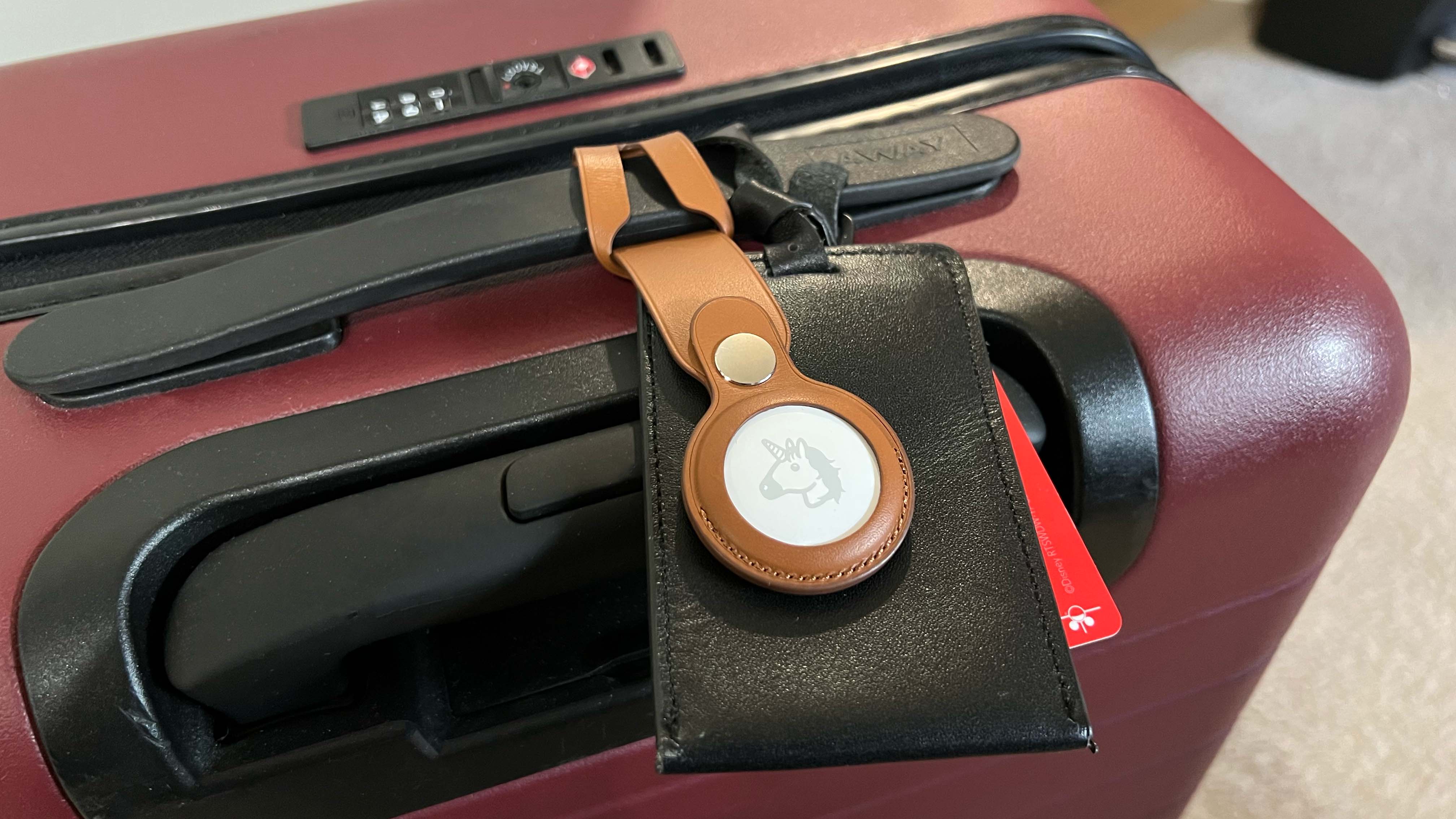
You can place an AirTag in a luggage tag holder, but this is not usually the safest option. A luggage tag sits on the outside of the bag, where it can be exposed to rain, impact, and accidental removal.
An outside AirTag holder may be helpful if it is made for travel and attached securely. However, it can make the tracker easier for someone to see and remove. It may also hit hard surfaces as the bag moves through airport equipment.
For most travelers, putting an AirTag inside the luggage is a better choice. Keep a normal identification tag on the outside, and use the AirTag as a hidden backup.
This two-layer approach works well:
• External tag for quick human identification
• Internal AirTag for Find My location updates
• Phone number or email on both when possible
Do not write your full home address on a public luggage tag. A phone number or email is usually enough for airline staff or another traveler to contact you.
Can an AirTag Go Inside Checked Baggage?
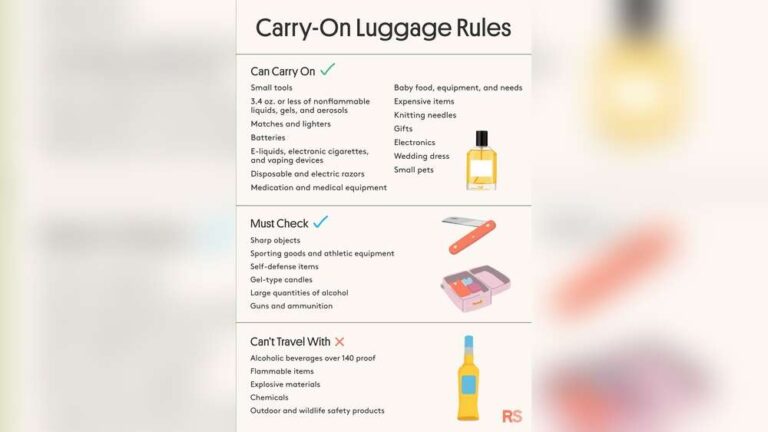
In general, AirTags are designed to travel in checked baggage because they use a small lithium coin-cell battery. Aviation rules allow many small personal electronic devices and low-power lithium batteries in checked bags, but airline policies can vary.
The Federal Aviation Administration permits certain devices with small lithium batteries in checked baggage when they are protected from damage and accidental activation. The International Air Transport Association also provides guidance for portable electronic devices and batteries.
Before flying, check:
• Your airline’s current baggage rules
• The departure country’s aviation rules
• Whether the AirTag is undamaged
• Whether the battery is properly installed
• Whether the AirTag is protected from crushing or sharp objects
Never pack a loose spare lithium battery where it can contact metal objects. If you carry spare batteries, protect each one in its original package or a separate plastic case.
An AirTag is not a reason to ignore airline instructions. Rules can change, and the airline or airport has the final say on what may travel.

AirTag Placement in Hard-Shell and Soft-Sided Bags
Hard-shell luggage often has a smooth interior and fewer pockets. In this case, place the AirTag in the zipped divider panel or in a small holder attached to an interior strap.
Do not tape the AirTag to the outside of a hard case. Tape can fail in cold, heat, or rain. It can also leave the tracker exposed to knocks and removal.
Soft-sided luggage usually offers more storage choices. Use a small internal pocket, but avoid areas that receive constant pressure from shoes, books, or toiletry bottles.