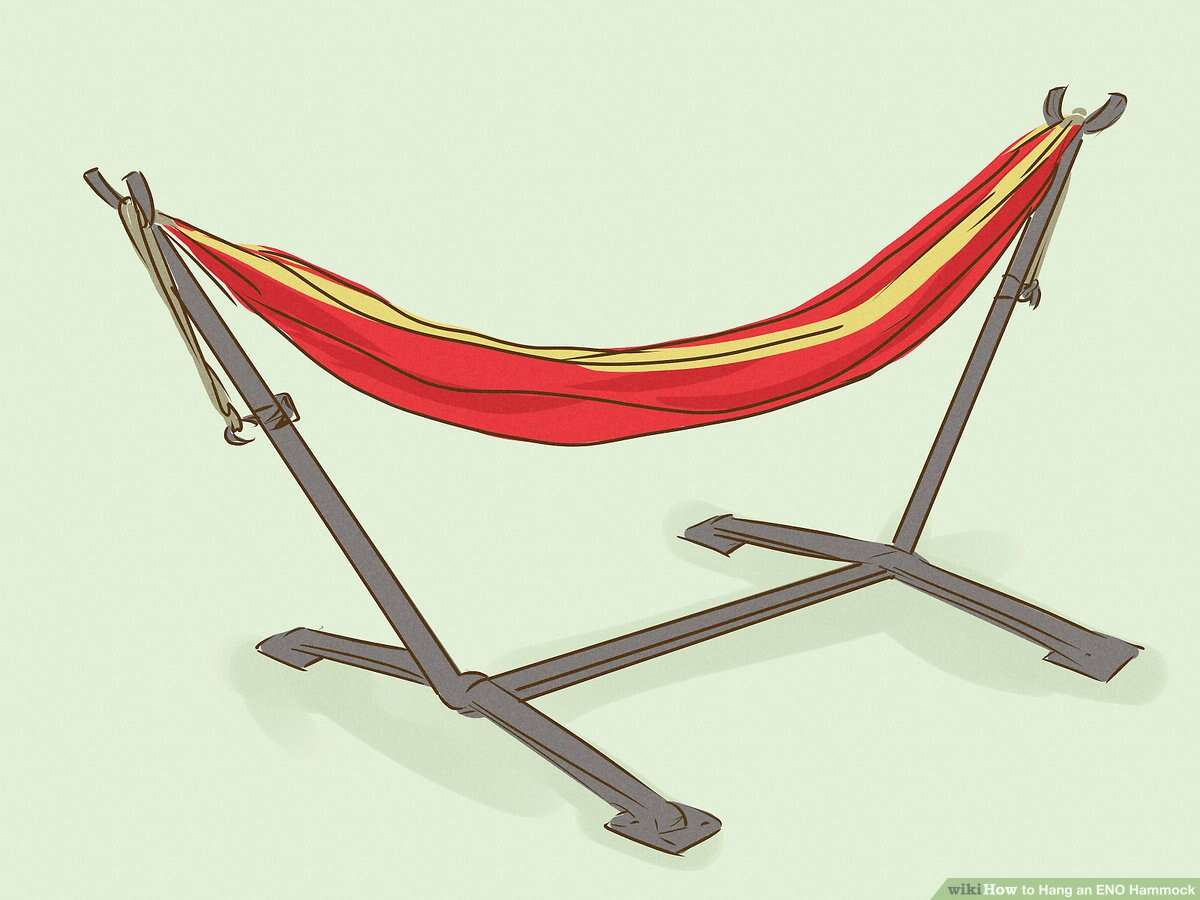
Attach the hammock’s end loops to matching stand hooks, then check its curve, height, and stability before relaxing.
Learning how to attach a hammock to a stand is simple when you match the hammock length to the stand, use the right hanging points, and test the setup with care. This guide explains the process from start to finish, including common mistakes, safe hanging heights, adjustment tips, and ways to fit different hammock styles.
What You Need Before You Start
Before learning how to attach a hammock to a stand, check that you have the correct hammock, stand, and attachment parts. Most hammock stands include curved hooks or hanging arms at both ends. Your hammock may have fabric loops, metal rings, ropes, carabiners, or suspension straps.
You usually need:
• A compatible hammock stand
• A hammock with strong end loops or hanging hardware
• Suspension straps, chains, or adjustable ropes if the stand requires them
• A tape measure
• A soft brush or cloth for cleaning contact points
Read the stand and hammock instructions first. Product designs vary. Some stands use fixed hooks, while others use adjustable chains with several links. The manufacturer’s weight limit is the safest guide because stand shape, steel thickness, welds, and hardware all affect strength.

Check Hammock and Stand Compatibility
The first key step in how to attach a hammock to a stand is checking the hammock’s overall length. Measure from one end loop to the other while the hammock is relaxed. Then compare that length with the stand’s recommended hammock size.
A hammock that is too short may pull the stand inward. A hammock that is too long may hang too low or touch the ground. Many stands are made for a specific range, such as a 9.5 to 14 foot hammock, but always follow the product guide.
Check these points before setup:
• Confirm that the hammock fits the stand’s length range.
• Check the weight rating of the stand, hammock, straps, and hooks.
• Look for bent metal, rust, torn fabric, loose stitching, or damaged chains.
• Make sure both stand feet sit flat on firm ground.
• Confirm that the hooks face inward and are at the same height.
Never combine parts that are not designed to work together. A strong hammock can still be unsafe if its stand, hook, or strap has a lower weight rating.

How to Attach a Hammock to a Stand
Once the parts pass inspection, follow these steps. This method works for most spreader-bar hammocks, gathered-end hammocks, and standard fabric hammocks designed for stands.
1. Place the stand on a level surface
Set the stand on a firm, flat surface. Concrete, a solid deck, or compact soil works well. Avoid steep slopes, loose sand, wet ground, or soft mud.
Give the stand room on every side. The hammock may swing, and the stand can shift slightly as you get in. Keep it away from walls, sharp furniture, grills, pools, and tree roots.
2. Find both hammock ends
Identify the hanging loop, ring, or rope at each end of the hammock. Lay the hammock between the stand’s two upright ends.
Keep the fabric clear of the ground. Do not twist the hammock before connecting it. A twist can create uneven pressure and make the fabric sit poorly.
3. Connect the first end
Place one hammock loop or ring over the stand’s hook. If the stand uses a chain, connect the hammock to one chain link with the approved connector.
Make sure the attachment sits fully inside the hook. It should not rest on the sharp tip of a hook or hang partly over the edge. If you use a carabiner, close and lock its gate if it is a locking model.
4. Connect the second end
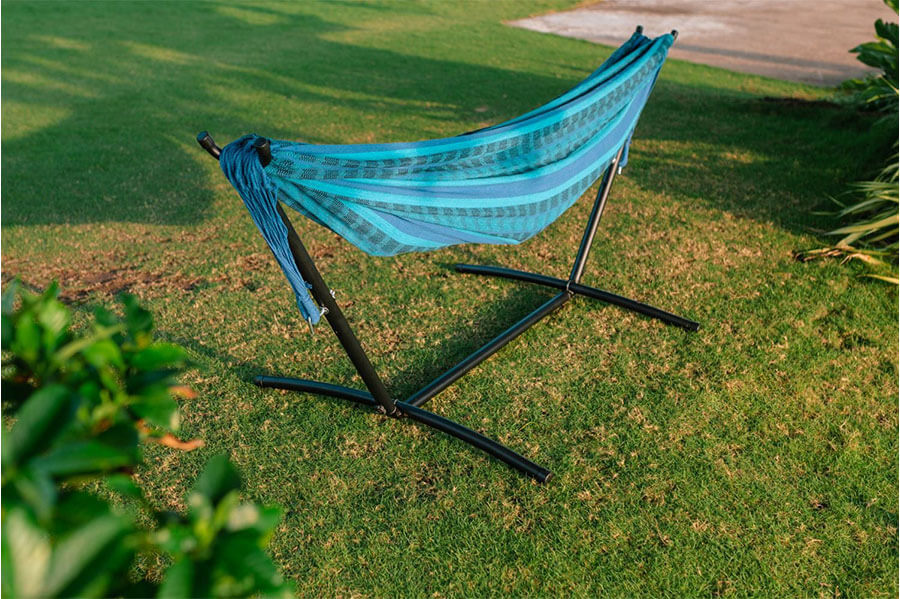
Attach the other end in the same way. The hammock should now form a gentle curve between the two stand hooks.
Do not pull the fabric tight like a clothesline. A hammock normally hangs with a deep, relaxed curve. This curve helps spread your weight and reduces stress on the stand.
5. Center the hammock
Stand back and check that the hammock is centered from left to right. The fabric should not pull toward one side.
If the hammock uses chains or adjustable straps, place both ends at the same height to start. You can make small changes later if one side feels higher.
6. Test it slowly
Press down on the center with one hand. Then sit in the middle while holding the stand or a nearby stable object.
Pause and watch the hooks, chains, feet, and fabric. If everything stays firm, lie down slowly. This careful test is one of the most important parts of how to attach a hammock to a stand safely.

Set the Right Hammock Height and Curve
Correct height makes a hammock more comfortable and helps prevent falls. A common starting point is to place the hammock’s lowest point about 18 inches above the ground when you sit in it. The exact height depends on your body size, hammock type, and personal comfort.
When empty, the hammock may hang higher than expected. It will sag once you enter it. This is normal.
Use these adjustment tips:
• Raise both ends if the hammock touches the ground.
• Lower both ends if your feet cannot reach the ground when seated.
• Move one chain link at a time for small changes.
• Keep the hammock’s curve balanced on both sides.
• Avoid stretching the hammock completely flat.
A deep curve is often called a banana shape. Think of it as a soft smile, not a tight bridge. If the hammock is too flat, you may slide out or place more force on the stand ends.
How to Attach Different Hammock Types
The basic process for how to attach a hammock to a stand changes slightly by hammock design. Knowing the difference helps you avoid forcing the wrong hardware onto a hook.
Gathered-end hammocks
A gathered-end hammock has fabric bunched at each end. It usually connects with a loop, rope, or metal ring.
Attach each end to the stand hook or approved strap. These hammocks often need more sag than spreader-bar models. Keep the lowest point high enough to avoid ground contact.
Spreader-bar hammocks
A spreader-bar hammock has wooden or metal bars at the head and foot. It looks flat and open when empty.
Attach the end loops or rings to the stand hooks. Use extra care when entering because spreader-bar hammocks can feel less forgiving if they are hung too high or too tight.
Hammocks with chains
Some stands include short chains for length adjustment. Connect each end to a matching link.
Use the same link on both sides as a starting point. If the hammock is uneven, adjust only one side by one link at a time.
Hammocks with suspension straps
Some fabric hammocks use straps with sewn loops. Pass the strap around the stand’s approved hanging point and connect the loop to the hammock end.
Never wrap a strap around a sharp edge. Do not use thin cord, plastic rope, or improvised hardware in place of a rated suspension strap.
Common Mistakes to Avoid
Many problems with how to attach a hammock to a stand come from small setup errors. The hammock may look secure but still sit poorly or place too much force on one point.
Avoid these mistakes:
• Hanging a hammock that is too short for the stand
• Using a stand with a lower weight limit than the hammock
• Connecting only part of a loop to a hook