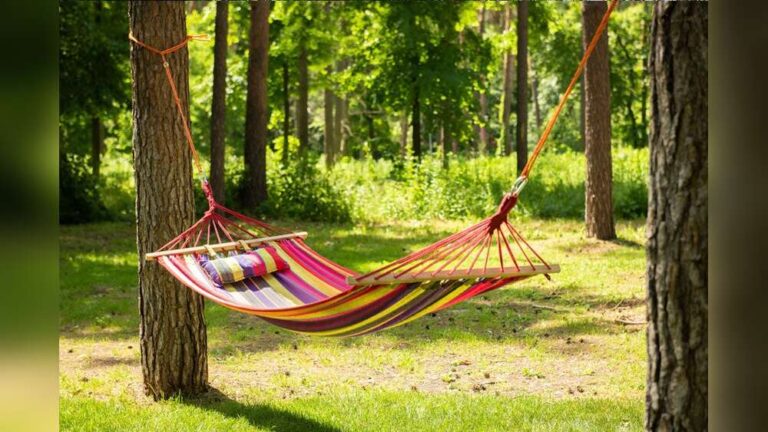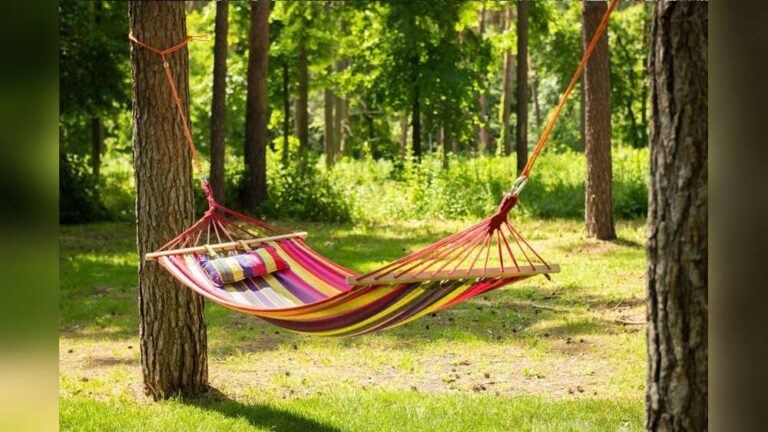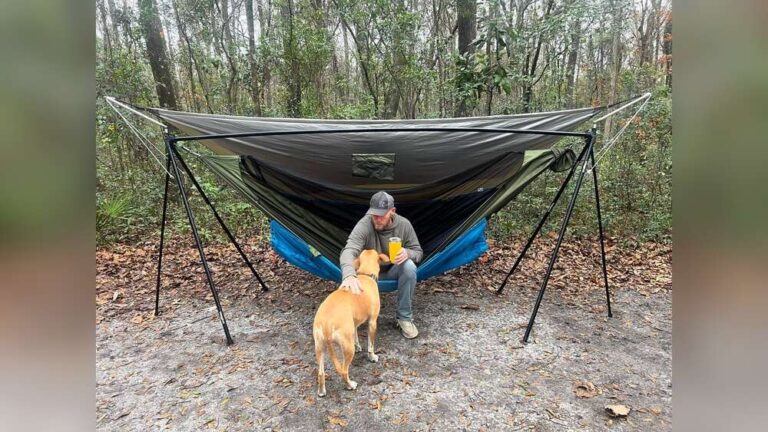
Use a stand, posts, or straps to anchored structures to hang a hammock without trees.
I’ve built stands, anchored beams, and drilled posts to safely hang a hammock without trees. I’ve tested gear, learned what fails, and helped friends set up backyard and indoor hammocks. This guide explains how to hang a hammock without trees, step by step, with safety tips, tools, DIY plans, and real-world lessons. Read on and you’ll have a comfortable, secure hammock setup whether you’re on a patio, balcony, or living room.
Why hang a hammock without trees?
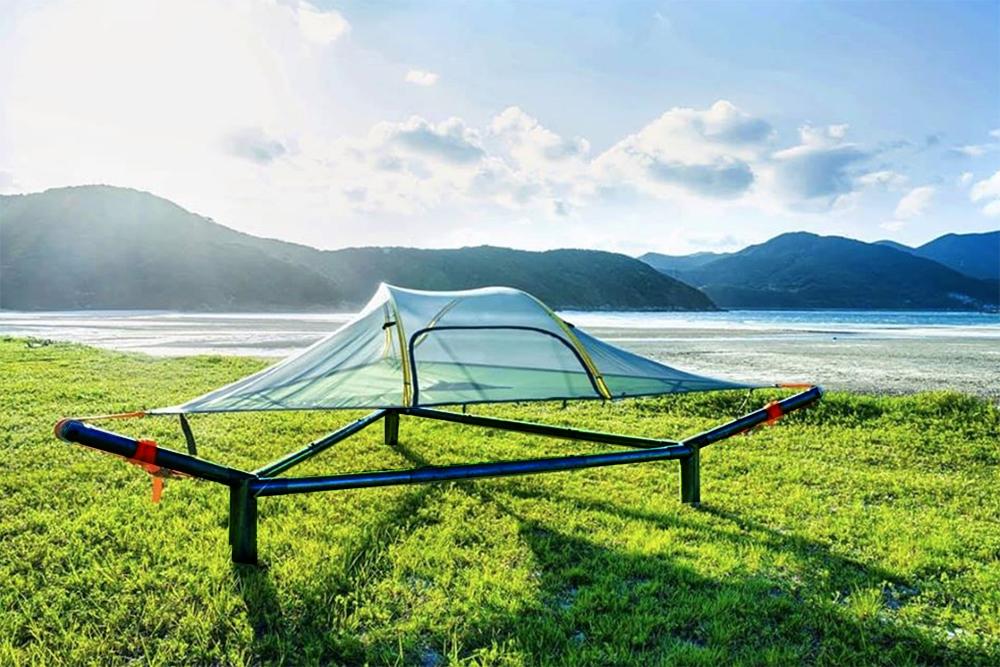
There are many reasons to learn how to hang a hammock without trees. You might live in an apartment, have a bare yard, want an indoor chill spot, or need a temporary camp setup. Learning tree-free methods makes hammocks more versatile. You get the same comfort and relaxation without hunting for the perfect tree pair.

Methods to hang a hammock without trees
There are reliable, common ways to hang a hammock without trees. Each method has different costs, tools, and permanence. Choose based on location, budget, and how long you want the setup to last.
- Hammock stand
- Freestanding, portable, simple to set up.
- Purpose-built frame
- Steel or wood frames that bolt together for yards or decks.
- Fixed posts
- Buried or concrete footed posts for a permanent backyard hanger.
- Porch or beam anchors
- Use joists, beams, or rafters with proper hardware and load checks.
- Strap to heavy objects
- Anchor to posts, columns, or strong railings with webbing straps.
- Indoor wall anchors
- Bolts into studs or masonry anchors for ceilings and walls.
- Temporary rigs
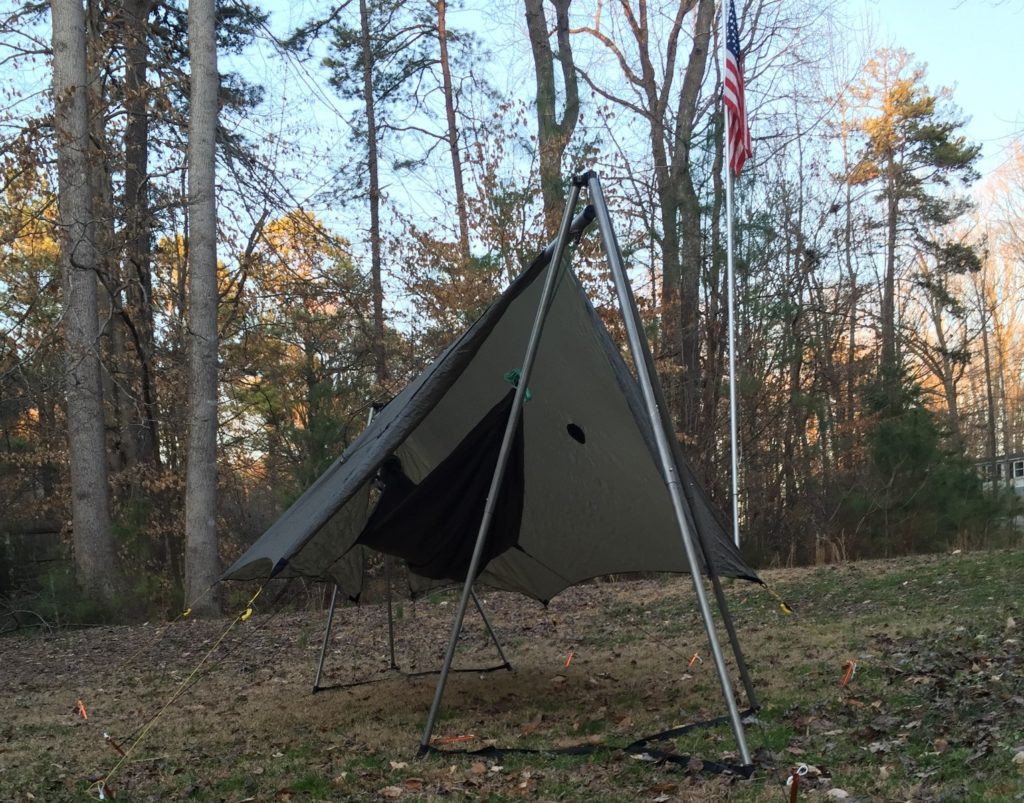
- A-frame or tripod frames for camping or events.
I’ll break down the top picks. I’ll focus on practical, safe ways to hang a hammock without trees. Pick one based on how permanent and portable you need it.

Tools and materials you’ll need
Gather the right gear before you start. Using proper parts keeps your hammock safe and long-lasting.
- Hammock and suspension system
- Hammock with proper end loops or spreader bars and rated carabiners.
- Stand or frame (if using)
- Choose a stand rated for your hammock size and weight.
- Straps and webbing
- Wide tree straps or industrial webbing rated for at least 2,000 lbs.
- Anchors and hardware
- Eye bolts, lag bolts, or expansion anchors rated for overhead loads.
- Post materials (if building)
- Pressure-treated 4×4 or 6×6 posts, concrete, gravel.
- Tools
- Drill, wrench, post-hole digger, level, tape measure, safety gear.
From experience, cheap carabiners and thin cords are the most common failure points. Buy rated hardware. Spend a little more now to avoid trouble later.

How to hang a hammock without trees using a hammock stand — step by step
A hammock stand is the easiest, most foolproof option for how to hang a hammock without trees.
- Unpack and inspect
- Lay out all parts and check for missing pieces or damage.
- Read the manufacturer’s load and installation notes.
- Assemble the frame
- Follow the included instructions, tighten bolts, and level the base.
- Use washers and locknuts where provided.
- Attach the hammock
- Clip carabiners or hooks to the stand’s end points.
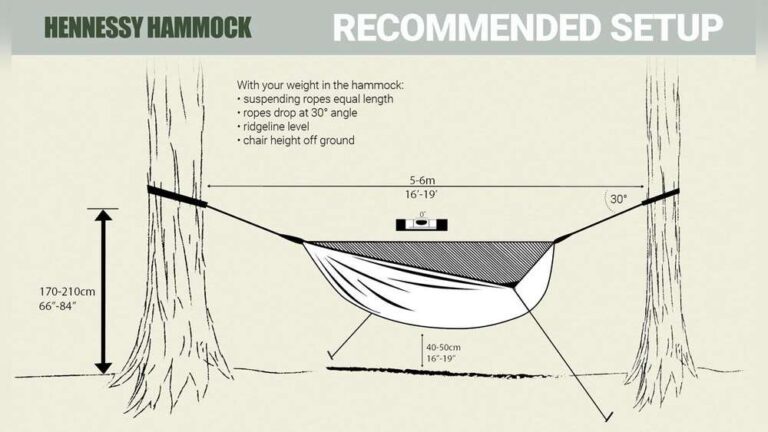
- Adjust chain or strap length to achieve a gentle sag (about 30° angle).
- Test before use
- Sit low and test weight slowly before fully lying down.
- Re-tighten bolts after first use.
I’ve used stands on patios and at the lake. They are quick, portable, and safe when rated correctly. For frequent moves, choose a lightweight but sturdy stand.

How to hang a hammock without trees using posts (DIY) — step by step
If you want a permanent backyard solution, posts are durable and tidy.
- Choose post location and spacing
- Measure your hammock length and add 2–3 feet per end for tie points.
- Typical distance is 10–15 feet depending on hammock size.
- Dig holes and set posts
- Dig holes at least 24 inches deep for 4x4s; deeper for taller posts.
- Set posts in concrete or compacted gravel for stability.
- Mount hardware
- Use heavy-duty eye bolts or hammock hangers screwed into the center of the post at about 4–6 feet high.
- Check that bolts are long enough to pass through the post and use washers and nuts for strength.
- Hang and test
- Attach straps or carabiners to the hardware and adjust sag to about 30 degrees.
- Test with body weight first, then lie in the hammock.
I once underestimated the concrete cure time. Wait full cure before loading. Proper footing prevents wobble and extends life.

How to hang a hammock without trees using straps to a porch beam or railing — step by step
Anchoring to existing structures works well on porches, garages, and balconies.
- Inspect the structure
- Confirm beam or joist is solid and not rotted or cracked.
- Check beams run perpendicular to the load and are part of the main structure.
- Use wide straps or install hangers
- Wrap wide webbing straps around beams when possible to avoid drilling.
- If drilling, use long lag bolts or structural eye bolts into the beam’s center.
- Adjust suspension
- Use carabiners or shackles to attach hammock to straps or bolts.
- Adjust sag for comfort and clearance.
- Safety check
- Check for deflection or creaks under weight.
- Re-check hardware periodically.
When I hung a hammock from a porch, I used straps to avoid drilling. That kept the beam intact and made removal easy.

Safety tips and weight limits
Safety is the top priority when you learn how to hang a hammock without trees. Use simple rules to reduce risk.
- Respect weight ratings
- Use hardware and stands rated above your intended load by at least 2x.
- Aim for proper angle
- A 30° hang angle gives comfort and safe tension on anchors.
- Check anchors often
- Inspect straps, bolts, and wood for wear, rust, or cracks.
- Use wide straps
- Wide webbing reduces strain and protects wood or fixtures.
- Mind clearance
- Allow enough space to avoid hitting hard surfaces below or nearby.
- Test slowly
- Sit before lying; listen for noises and watch for movement.
I once found a railing that felt solid but had hidden rot. I replaced it and installed posts. When in doubt, build a stronger anchor or choose a stand.

Maintenance, care, and storage
Proper care keeps your hammock and hardware safe and lasting longer.
- Regular inspection
- Look for frayed fabric, loose knots, or corroded hardware monthly.
- Clean and dry
- Wash fabric per instructions and dry fully before storage to avoid mildew.
- Store off-season
- Keep in a dry bag or box during winter or wet seasons.
- Replace worn parts
- Swap straps, carabiners, and bolts at the first sign of wear.
I learned the hard way: salt air corrodes hardware fast. I replace stainless components yearly near the coast.
Common mistakes to avoid
Avoid these frequent errors when you learn how to hang a hammock without trees.
- Using thin rope or untested carabiners
- Cheap rope fails and thin carabiners slip or break.
- Ignoring beam condition
- Old or soft wood will not hold heavy loads safely.
- Over-tightening anchors
- Too little sag increases stress on attachment points.
- Not checking angles
- Wrong angles cause excessive tension and earlier failures.
- Skipping testing
- Always test with your weight slowly before full use.
These mistakes are common among first-timers. Fix them early and your hammock will be safe and fun.
Frequently Asked Questions of how to hang a hammock without trees
How far apart should posts be to hang a hammock without trees?
Posts should be about the hammock length minus 1 to 2 feet, typically 10 to 15 feet apart. Adjust for the hammock’s sag and manufacturer recommendations.
Can I hang a hammock without trees indoors?
Yes. Anchor to studs, ceiling joists, or use a freestanding frame. Always use rated hardware and confirm the load path into structural members.
What is the safest way to hang a hammock without trees?
A rated hammock stand or anchored posts set in concrete are the safest. Both avoid uncertainty in building structure and give reliable load paths.
Do I need special straps to hang a hammock without trees?
Use wide webbing straps or industrial-rated slings for best safety. Thin rope can damage structures and is more likely to fail.
How much weight can a hammock stand or anchor handle?
Most quality stands and anchors are rated from 300 to 600+ pounds. Check product specs and aim for hardware rated above expected load.
Can I use eye bolts in my wall to hang a hammock without trees?
Yes, but only into solid studs or masonry with appropriate expansion anchors. Use long lag or structural eye bolts rated for overhead loads.
Is it okay to hang a hammock from a balcony railing?
Usually not unless the railing is engineered for such loads. Use a stand or anchor to structural posts instead of stressing light railings.
Conclusion
You can easily learn how to hang a hammock without trees by choosing the right method for your space. Whether you pick a portable stand, build sturdy posts, or anchor to a beam, follow the steps and safety tips here. Start simple: test hardware, aim for a 30° sag, and inspect often. Now pick a method, gather the tools, and set up a comfy spot to relax. If this guide helped, try a DIY post project or invest in a quality stand—and leave a comment about your setup or questions.

Zayden Halbrook is a travel enthusiast and gear researcher passionate about making every journey smoother and more enjoyable. With a keen eye for practical travel essentials and real-world tips, he helps readers choose the right gear and travel smarter. When he’s not testing travel kits or exploring new destinations, Zayden shares simple, reliable advice to make every trip stress-free.