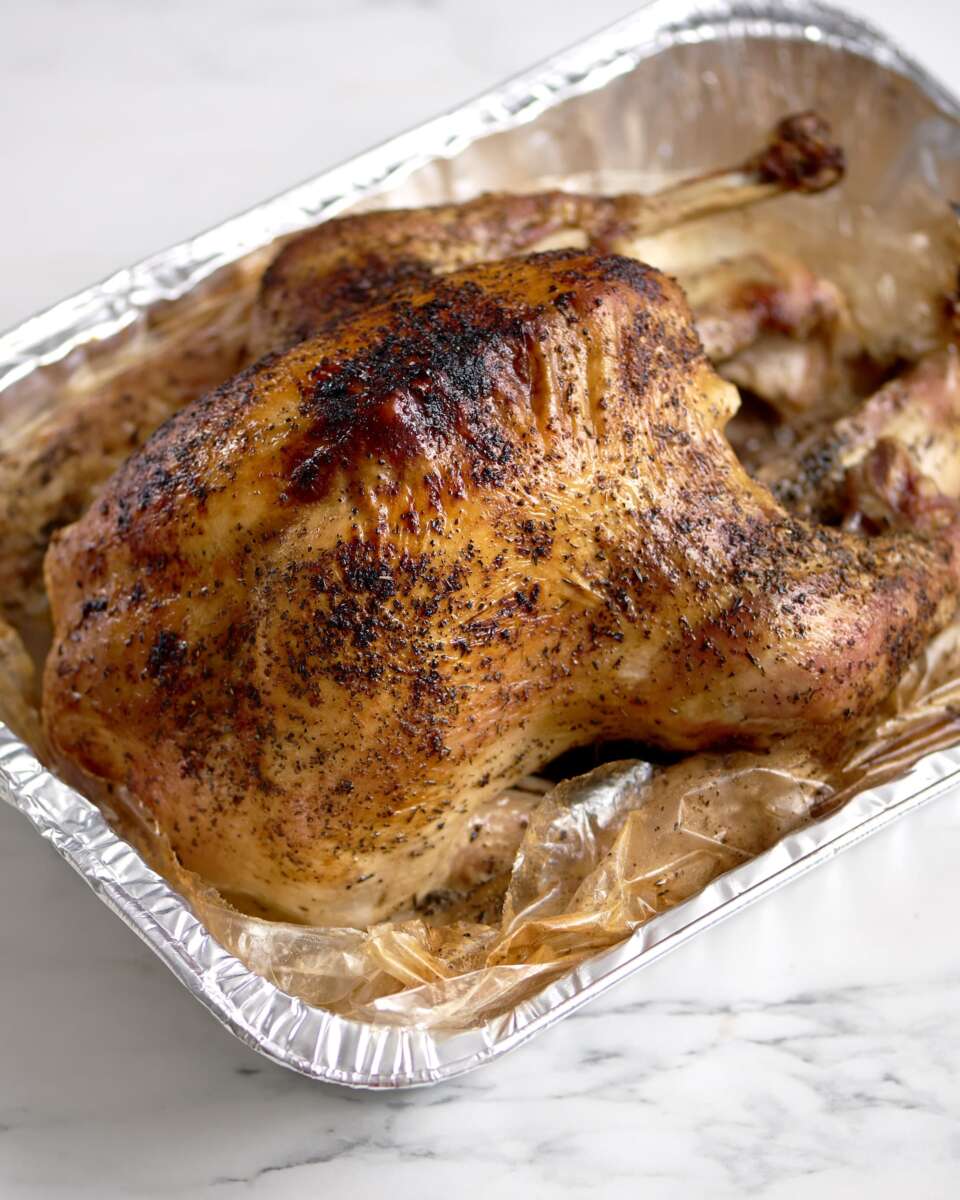
Cook a turkey in a bag by seasoning, sealing, and roasting for juicy, fast results every time.
I’ve cooked dozens of holiday birds and taught home cooks how to cook a turkey in a bag with consistent success. This guide walks you through why the method works, what to buy, step-by-step prep, safety tips, and fixes for common problems. Read on and you’ll learn exactly how to cook a turkey in a bag so your bird comes out moist, flavorful, and stress-free.

Why choose this method: benefits and trade-offs
Cooking a turkey in a bag traps steam and juices. That keeps meat moist. The method shortens roast time a bit and makes cleanup easier.
Benefits
- Moist meat from steam and trapped juices.
- Crisp skin possible if you cut the bag near the end.
- Less splatter in the oven and easier cleanup.
- Reliable internal temperature without constant basting.
Trade-offs
- Bag prevents deep browning unless you finish uncovered.
- You must follow bag safety rules for oven temps.
- Some people prefer dry rub textures you only get without a bag.
From my experience, the bag is a great tool when time is tight. It is ideal for busy hosts who want consistent results. Using a bag does not replace proper seasoning or safety checks when you learn how to cook a turkey in a bag.
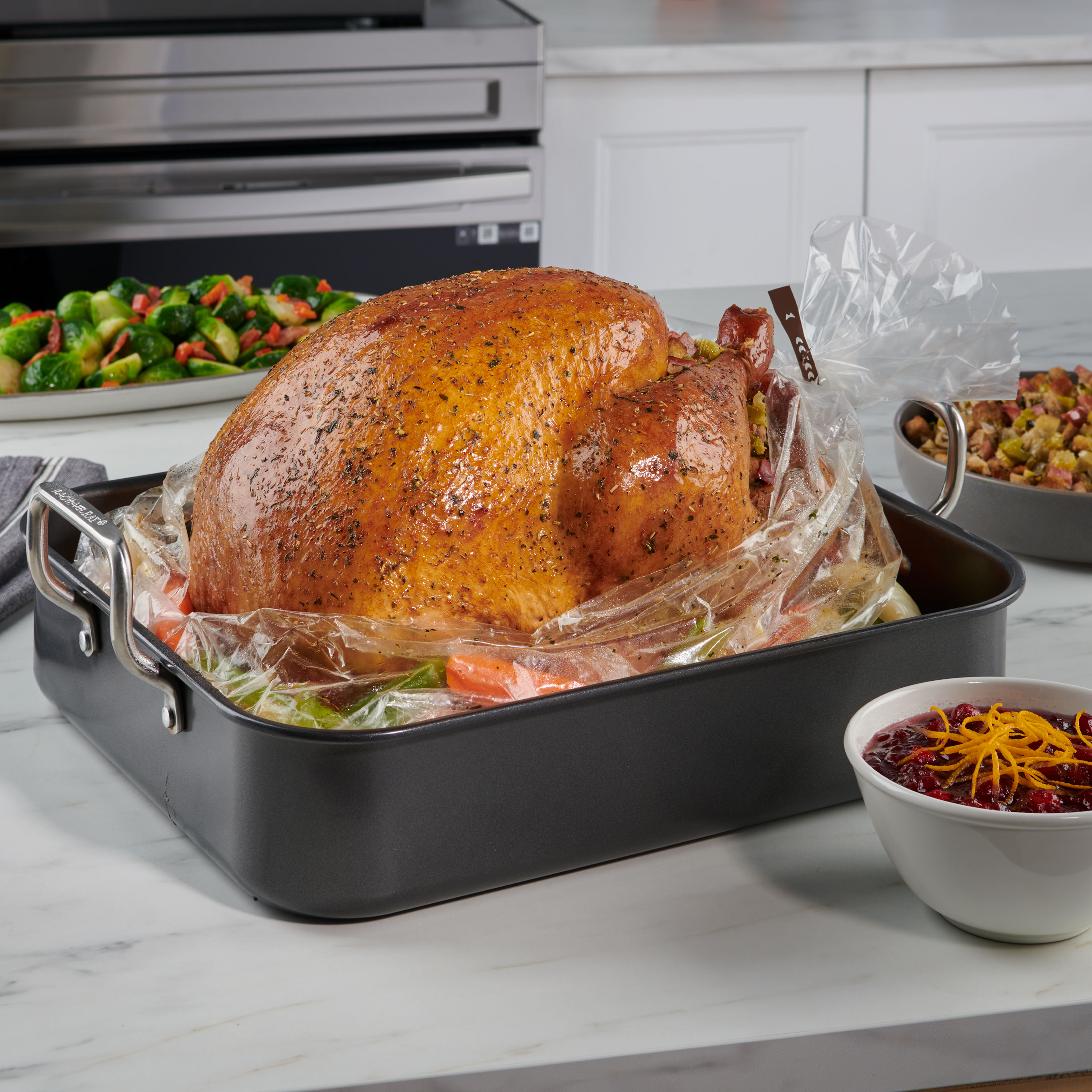
What you need to cook a turkey in a bag
Gather tools and ingredients before you start. This saves stress and keeps the cook time predictable.
Turkey and main items
- A thawed turkey sized for your table.
- An oven-safe roasting pan large enough for the bird.
- A high-quality roasting bag labeled oven-safe.
Seasoning and additions
- Salt, pepper, and aromatics like onion and herbs.
- Olive oil or butter for flavor and some browning.
- Optional vegetables for a simple pan roast base.
Tools and safety gear
- A meat thermometer or instant-read probe.
- Kitchen scissors to open the bag safely.
- Oven mitts and a rack for resting the turkey.
I always keep a second thermometer on hand. Trusting two readings avoids overcooking and ensures food safety when you cook a turkey in a bag.
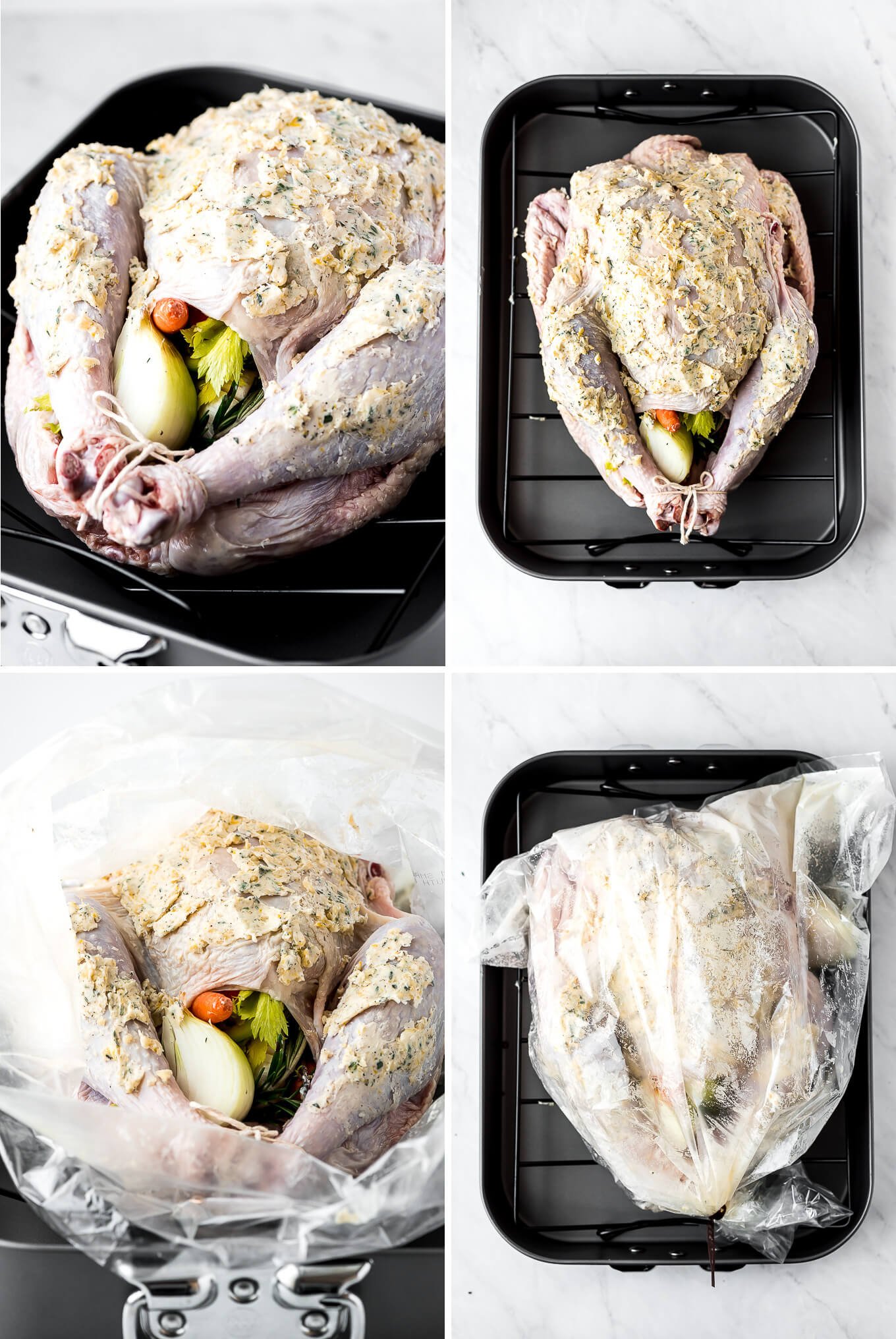
:max_bytes(150000):strip_icc()/23157-turkey-in-a-bag-step-04-2-28f3c67645fa4ea9b6e56a1c1675a9c7.jpg)
Step-by-step: how to cook a turkey in a bag
Follow these clear steps for the best result. Read the full list before you begin.
- Thaw and dry
- Thaw the turkey fully in the refrigerator for 1–2 days depending on size.
- Pat the skin dry with paper towels to remove excess moisture.
- Season the bird
- Rub salt and pepper under and over the skin.
- Add herbs, garlic, and aromatics into the cavity if desired.
- Rub the outside with oil or softened butter.
- Prepare the bag and pan
- Place a small amount of flour in the bag and shake to coat; this stops the bag from bursting.
- Put a rack or vegetables in the roasting pan to lift the turkey slightly.
- Place turkey in the bag
- Slide the turkey into the bag carefully. Tuck wings and tie the bag with the provided tie.
- Cut a few small slits in the top of the bag to release excess steam.
- Roast
- Preheat oven to 325°F unless the bag instructions say otherwise.
- Roast according to weight chart: roughly 13–15 minutes per pound as a start point. Check the thermometer.
- Start checking internal temp about 30 minutes before expected finish.
- Finish uncovered (optional)
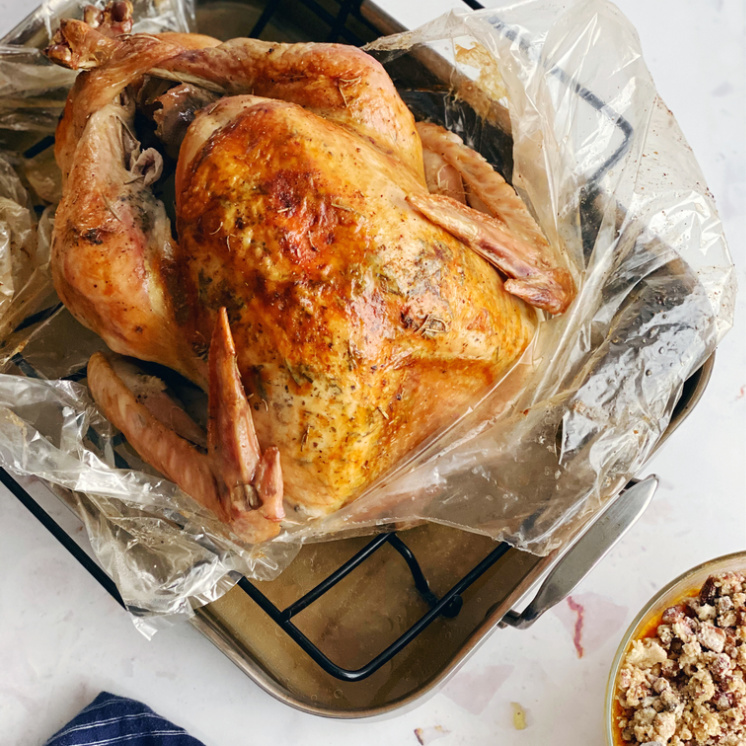
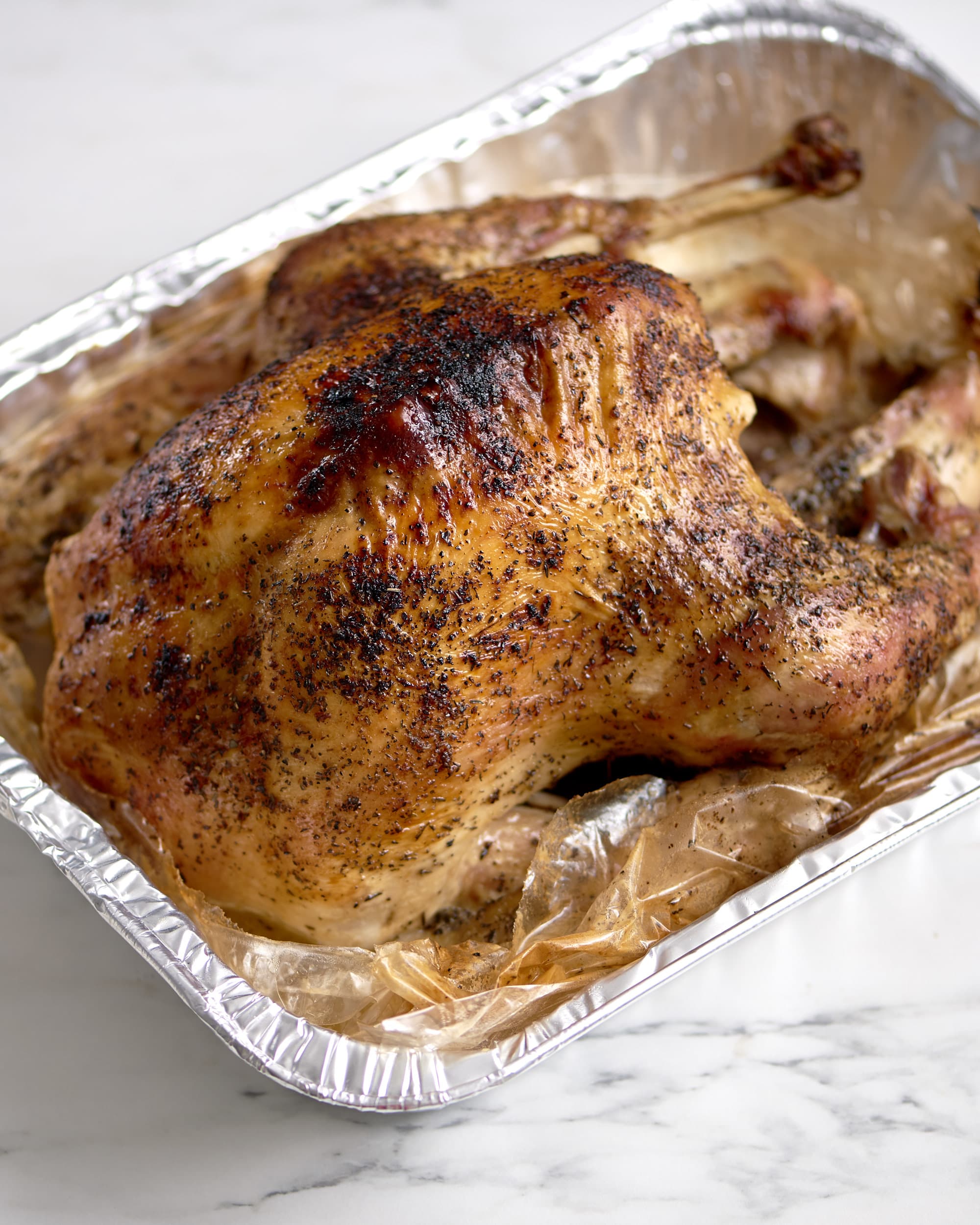
- For crisper skin, carefully cut the bag at the end of cooking and return the turkey to the oven for 10–20 minutes.
- Rest and carve
- Let the turkey rest 20–30 minutes in a warm place. This locks in juices.
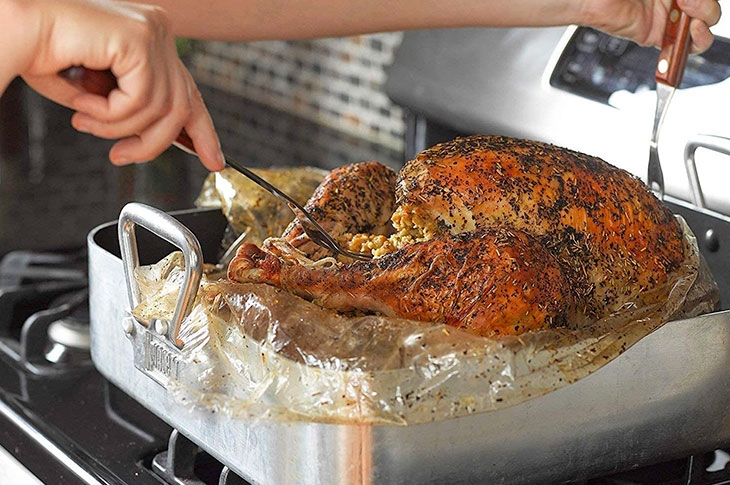
- Carve and serve warm.
I once rushed and did not rest the bird. The juices ran out and the meat dried. Resting is crucial when you learn how to cook a turkey in a bag.
Timing and temperature guidelines
Use a thermometer for safe and perfect results. Time per pound is only an estimate.
Safe internal temps
- Turkey breast: 165°F measured in deepest part.
- Dark meat: also reach 165°F but allow to rise slightly during rest.
Approximate roast times at 325°F
- 8–12 lb: 2.5–3.25 hours.
- 12–16 lb: 3–4 hrs.
- 16–20 lb: 4–4.5 hrs.
Cooking times vary by oven, bag brand, and whether bird is stuffed. Follow the thermometer, not the clock, when you cook a turkey in a bag.
Safety rules and food handling
Food safety matters more than convenience. Follow these rules every time.
Key safety tasks
- Thaw turkey only in the fridge or under cold running water.
- Wash hands and surfaces after handling raw turkey.
- Use oven-safe bags only and follow bag manufacturer rules.
- Do not exceed the recommended oven temperature for the bag.
Avoid cross-contamination by using separate plates and utensils for raw and cooked meat. I always label my prep area and rinse tools immediately to reduce risk.
Making gravy from the bag juices
The bag holds rich juices you can turn into gravy. Here’s a simple way.
Gravy steps
- After roasting, pour juices into a fat separator or a measuring cup.
- Skim fat and reserve pan solids.
- Heat the juices with a bit of broth, then whisk in a roux of butter and flour.
- Simmer until thick. Season to taste.
If juices are thin, reduce them over medium heat before adding roux. This makes a smooth, savory gravy from your turkey-in-bag roast.
Troubleshooting and common mistakes
A few fixes will save the meal if things go wrong.
Problem: Turkey undercooked
- Solution: Return to oven uncovered and monitor temp closely. Use probe thermometer for steady read.
Problem: Bag bursts
- Solution: Use recommended flour to coat bag interior. Check bag for tears before use.
Problem: Skin not crispy
- Solution: Finish uncovered under high heat for 10–20 minutes at 425°F. Watch closely.
Problem: Dry breast
- Solution: Tent breast with foil while dark meat finishes. Rest the bird to redistribute juices.
These tips come from real cooks I’ve helped. They work well when you learn how to cook a turkey in a bag and need quick fixes.
:strip_icc()/BHG-how-to-roast-turkey-in-a-bag-AAluGFy_aEtAlbc7j114rH-6e99df05a26344ea99308ee8aee1ab40.jpg)
Personal tips and lessons learned
I’ve cooked many turkeys in a bag for family and classes. Here are lessons I use every time.
Practical tips
- Season well under the skin for deeper flavor.
- Use a rack or vegs under the turkey to let heat move evenly.
- Start checking temps early; ovens vary a lot.
- Keep a clear carving plan to serve hot and tidy slices.
One holiday I overstuffed the cavity. The center stayed cold too long. Now I avoid heavy stuffing and cook it separately. That mistake taught me balance when you cook a turkey in a bag.

Frequently Asked Questions of how to cook a turkey in a bag
Can I use any roasting bag for my turkey?
Use only oven-safe roasting bags labeled for turkey. Check the bag instructions for maximum temperature and size limits.
Do I need to baste a turkey in a bag?
No. The bag traps moisture and keeps the bird juicy, so basting is not necessary and often adds mess.
Should I stuff the turkey when using a bag?
It’s safer and more even to cook stuffing separately. If you do stuff, use a light filling and check inner temp carefully.
How long should a turkey rest after cooking in a bag?
Rest the turkey 20–30 minutes. Resting lets juices redistribute and makes carving easier.
Is the cooking time shorter in a bag?
Times are similar or slightly shorter. Always rely on a thermometer rather than a strict time per pound.
Conclusion
You can reliably cook a turkey in a bag and get moist, flavorful results with less fuss. Follow the steps for prep, use an oven-safe bag, monitor internal temp, and allow the bird to rest. Try finishing uncovered for crisp skin and use the pan juices for a rich gravy. Now pick your seasonings, set your thermometer, and give this method a try—then share how it went or ask a question below.

Zayden Halbrook is a travel enthusiast and gear researcher passionate about making every journey smoother and more enjoyable. With a keen eye for practical travel essentials and real-world tips, he helps readers choose the right gear and travel smarter. When he’s not testing travel kits or exploring new destinations, Zayden shares simple, reliable advice to make every trip stress-free.