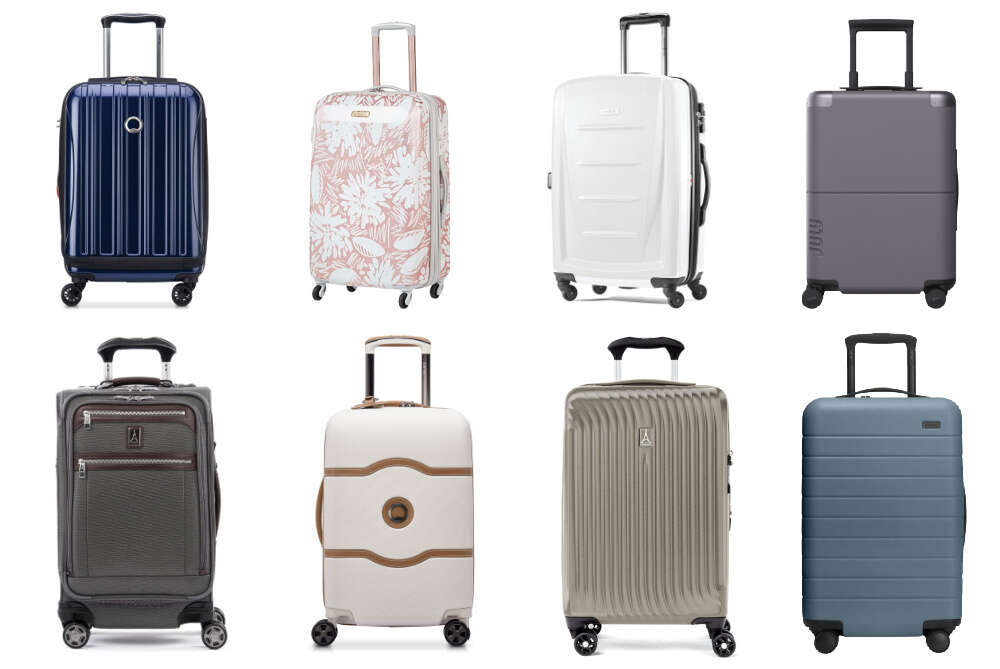
The lightest carry-on luggage is usually a travel backpack or soft-sided bag weighing about 1.5 to 4 pounds when empty. If you want a wheeled carry-on suitcase, look for one that weighs less than 5 pounds. A hard-shell spinner under 6 pounds is also considered light.
There is no single lightest bag for every traveler. The best choice depends on whether you need wheels, how much you pack, and the carry-on rules for your U.S. airline.
For most travelers flying within the United States, a lightweight soft-sided bag offers the best balance of low weight, useful space, and easy storage. A backpack is lighter still, while a hard-shell spinner gives better structure and protection but usually weighs more.

How Much Does Lightweight Carry-On Luggage Weigh?
Lightweight carry-on luggage usually falls into these ranges:
| Luggage type | Typical empty weight | Best for |
|---|---|---|
| Personal-item backpack | 1.5–3.5 lb | Minimal packers and short trips |
| Travel backpack | 2–5 lb | Travelers who want hands-free movement |
| Soft-sided wheeled carry-on | 4–6 lb | Most airline travelers |
| Lightweight hard-shell spinner | 5–7 lb | Travelers who prefer structure |
| Heavy-duty hard-shell spinner | 7–10 lb or more | Maximum protection and durability |
A bag that weighs 4 pounds empty gives you more usable packing weight than one that weighs 8 pounds. This matters when an airline has a strict weight limit.
For example, with a 22-pound carry-on limit:
- A 4-pound bag leaves about 18 pounds for clothing and gear.
- A 7-pound bag leaves about 15 pounds.
- A 9-pound bag leaves only 13 pounds.
That difference can equal several shirts, a pair of shoes, or a laptop charger.
The term “lightweight” is not a regulated luggage standard. A manufacturer may use it for a bag that weighs 6 pounds, while another brand may reserve it for a 4-pound model. Always check the listed empty weight and confirm the size in inches.
What Is the Lightest Type of Carry-On?
A personal-item backpack is normally the lightest carry-on option. Many weigh less than 3 pounds and can fit under the seat when packed carefully.
A soft-sided wheeled carry-on is the lightest practical choice for travelers who want a standard overhead bag. It can often weigh 4 to 5 pounds while still offering enough room for a short trip.
A hard-shell carry-on is rarely the absolute lightest option. Its frame, shell, wheels, handles, and corner protection add weight. However, a thin polycarbonate or polypropylene shell can still create a relatively light suitcase.
Backpack
A travel backpack can be the best option when you move through subway stations, walk on uneven sidewalks, or use stairs often. It has no wheel system, so less of its weight goes to hardware.
The trade-off is comfort. A backpack can feel heavy faster than a suitcase because the weight rests on your body. Look for padded shoulder straps, a chest strap, a waist belt, and a back panel that allows airflow.
Soft-sided spinner
A soft-sided spinner is often the best middle ground. It can be light, flexible, and easier to compress into a tight overhead compartment.
Soft luggage may also have outside pockets for a passport, tablet, or water bottle. Its main limits are lower impact protection and less resistance to rain than many hard-shell bags.
Hard-shell spinner
Hard-shell luggage protects the contents from crushing and keeps its shape when you pack it. It can also be easier to clean after a trip.
The cost is added weight. The shell, frame, four wheels, and telescoping handle can take up a large part of the bag’s total weight. A hard-shell bag is a good choice when protection matters more than carrying capacity.

What Is the Lightest Carry-On Suitcase With Wheels?
For a wheeled suitcase, a realistic target is 4 to 5 pounds empty. Bags below 4 pounds exist, but they may have smaller dimensions, fewer features, two wheels instead of four, or less padding around the frame.
Two-wheel carry-ons are often lighter than four-wheel spinners. Their wheels sit partly outside the case, but they use fewer moving parts. They also tend to roll better over rough sidewalks.
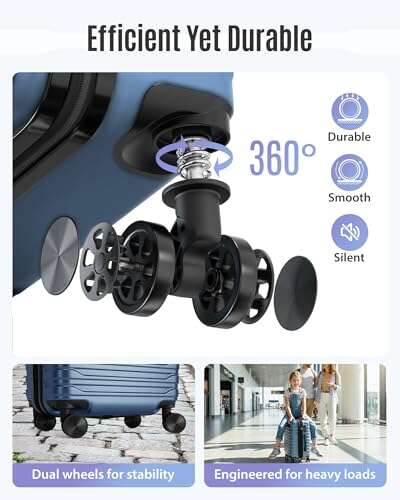
Four-wheel spinners are easier to turn in airports. You can push them beside you instead of pulling them behind you. However, spinner wheels can reduce interior space and may be more exposed to damage.
When comparing lightweight wheeled luggage, check these details:
- Empty weight
- Exterior dimensions, including wheels and handles
- Interior capacity
- Wheel type and size
- Handle length and stability
- Warranty terms
- Zipper and seam quality
- Water resistance
- Whether the bag expands
An expansion zipper can add useful space, but it may make the bag too deep for an airline when opened. Pack it unexpanded if the airline has a strict size limit.
How Do U.S. Airline Carry-On Rules Affect Your Choice?
U.S. airlines set their own carry-on size and weight rules. The Transportation Security Administration, or TSA, controls what may pass through security, but TSA does not set one universal carry-on suitcase size for all airlines.
Many major U.S. airlines use a maximum close to 22 x 14 x 9 inches, including wheels and handles. Some use a different width or depth. Basic economy fares may also limit overhead-bin access, while smaller aircraft may have smaller storage areas.
Before buying a bag, check the official baggage page for your airline and fare. Useful examples include:
- American Airlines carry-on bags
- Delta carry-on baggage
- United Airlines carry-on bags
- Southwest Airlines baggage information
Rules and aircraft limits can change. Measure the bag as sold, not only the fabric case. Wheels, handles, side pockets, and expansion panels count when an airline measures the outside.
Weight rules vary
Some U.S. airlines do not publish a standard weight limit for every domestic carry-on. That does not mean weight never matters. You may still need to lift the bag into the overhead bin without help.
International flights operated by a U.S. airline or partner airline may use a specific carry-on weight limit. A light bag gives you more room under that limit.
Size can matter more than weight
A 3-pound bag that is too large may be rejected at the gate. A 5-pound bag that fits the sizer may be more useful.
The safest approach is to prioritize:
- Airline-approved dimensions
- Empty weight
- Interior capacity
- Comfort and durability

How to Choose the Lightest Carry-On Luggage
The lightest bag is not always the best bag. Use this process before you buy.
1. Decide whether you need wheels
Choose a backpack if you often walk, use public transit, or travel with only a few outfits.
Choose a wheeled bag if you have back or shoulder limits, carry heavier items, or spend most of your time on smooth airport floors.
Choose a spinner if easy turning matters most. Choose a two-wheel bag if lower weight and better pavement performance matter more.
2. Set a useful weight limit
Use these targets:
- Under 3 pounds: very light backpack or personal item
- Under 5 pounds: very light wheeled carry-on
- 5 to 6 pounds: light for many standard carry-ons
- Over 7 pounds: likely heavy unless it offers special protection or features
Do not chase the lowest number if the bag lacks the support you need. A frame, padded straps, strong wheels, or a good handle may justify a few extra ounces.
3. Compare usable space, not just exterior size
A wide bag may look large but lose space to wheels, handles, dividers, and thick panels. A simple rectangular design often provides more usable room.
Look for:
- A broad main compartment
- Compression straps
- A flat packing area
- A laptop sleeve only if you need one
- Small pockets that do not consume too much interior space
Manufacturers may report capacity in liters, but measurements are not always made in the same way. Treat capacity claims as useful estimates, not exact comparisons.
4. Check the construction
Ultralight luggage uses less material. That can reduce long-term durability if you overfill it or drag it over rough ground.
Inspect the:
- Stitching around handles
- Wheel attachment points
- Zipper tracks
- Telescoping handle
- Bottom corners
- Fabric coating or shell thickness
A light bag with a weak handle can cost more in the long run than a slightly heavier bag with stronger hardware.
5. Weigh the bag yourself
Listed weights may differ by size, color, production run, and measurement method. If possible, weigh the empty bag on a home scale.
Pack it, then weigh it again. This tells you whether the bag meets your airline’s limit in real use.
Lightest Carry-On: Backpack vs. Suitcase
A backpack usually wins on weight. A suitcase usually wins on ease of packing and rolling.
| Feature | Backpack | Soft suitcase | Hard-shell spinner |
|---|---|---|---|
| Empty weight | Lowest | Low to medium | Medium |
| Carrying comfort | Depends on straps | Minimal carrying | Minimal carrying |
| Organization | Flexible | Often strong | Often structured |
| Rough surfaces | Easy to carry | Two-wheel models perform well | Spinner wheels may struggle |
| Impact protection | Low to medium | Medium | Medium to high |
| Under-seat use | Often possible | Sometimes possible | Less common |
| Best use | Light, mobile travel | General trips | Structured packing |
For a two- or three-day trip, a backpack may be all you need. For a week-long trip with shoes and bulkier clothing, a lightweight wheeled carry-on may be more comfortable.
The right choice is the bag that reduces your total travel burden. A suitcase may weigh more but save your back. A backpack may weigh less but become uncomfortable when fully packed.

What Materials Make Carry-On Luggage Light?
The material affects weight, flexibility, water resistance, and durability.
Nylon
Nylon soft luggage is often light and flexible. Ballistic nylon is strong but can weigh more than thin ripstop or standard woven nylon.
Polyester
Polyester is common in affordable soft-sided luggage. It can be light, but strength varies by fabric density, coating, and stitching.
Polycarbonate
Polycarbonate is a common hard-shell material. It can offer good impact resistance without being as heavy as some older shell materials.
Polypropylene
Polypropylene can be light and flexible. It may be a practical choice for travelers who want a hard shell without the weight of a thick case.
Aluminum
Aluminum luggage is rigid and durable, but it is usually heavier. It is not normally the best choice when minimum weight is the main goal.
Material names alone do not prove quality. A well-built bag with a basic fabric may last longer than a poorly built bag made from a premium-sounding material.
Common Mistakes When Buying Lightweight Luggage
The most common mistake is comparing only the number on the luggage tag. Empty weight matters, but it is only one part of the decision.
Buying an expandable bag without checking its open size
An expanded bag may exceed the airline’s depth limit. Use the expansion feature only when you know the bag will fit.