If you lost the key to your suitcase lock, start by identifying the lock type. A built-in combination lock may be reset through the luggage maker. A small keyed lock is best handled by a locksmith or replaced. If the bag is at a U.S. airport, ask the airline’s baggage desk for help before forcing anything.
Do not pry open the case or cut through the zipper unless you accept possible damage. Also, avoid online “master key” claims. TSA-approved locks are designed for authorized screening, not for public bypass.

Identify the Suitcase Lock First
The safest solution depends on the lock. Look closely at the front, side, and zipper pulls before trying anything.
| Lock type | What you may see | Best first option |
|---|---|---|
| Built-in combination lock | Three or four number wheels | Check the luggage manual or contact the brand |
| Keyed luggage lock | A keyhole and one or two zipper loops | Use a locksmith or replace the lock |
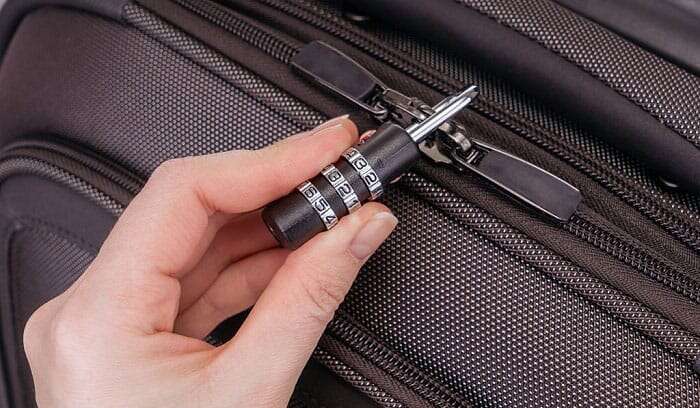
| TSA combination lock | A red diamond logo or “TSA” marking | Follow the maker’s reset instructions |
| TSA keyed padlock | Keyhole, often with a TSA mark | Contact a locksmith or replace it |
| Cable lock | Flexible metal cable through zipper pulls | Use the manufacturer or a locksmith |
| Broken zipper slider | Lock works, but the zipper will not move | Repair or replace the slider after opening |
A TSA-approved lock does not mean the owner has a public override key. The TSA uses authorized tools during security screening. A red diamond logo only shows that the lock is part of the Travel Sentry system.
Before doing anything else, check the bag for a brand name and model number. Common locations include the inside lining, luggage tag, warranty card, or a label near the handle.

What to Do if the Lock Uses a Combination
A combination lock can sometimes be opened without damage, but the correct process varies by brand and model. Do not assume that every three-digit lock uses the same reset method.
1. Check your records
Look for the combination in:
- A password manager
- A travel note on your phone
- A luggage manual
- An old photograph of the lock
- A retailer account or product registration
- A family member’s travel records
If you used a personal number, think of dates or numbers you often use. Do not spend too long trying random combinations. Repeated force can damage the wheels.
2. Check the maker’s instructions
Search for the exact brand and model followed by “lost combination” or “reset instructions.” Use the manufacturer’s own website when possible.
Most combination locks can be reset only when they are already open. A reset button, lever, or small switch usually changes the code; it does not normally unlock a closed bag.
3. Try only a documented factory setting
Some new locks ship with a factory combination. Use it only if the manufacturer lists it for that model. Do not assume that a common number works for every suitcase.
If the bag is used, the original owner may have changed the code. A factory setting may no longer apply.
4. Stop if the lock resists
Do not twist the dials with pliers, insert tools into the lock, or pull hard on the zipper. Those actions can break the lock and damage the suitcase shell.
A luggage repair shop or locksmith may be able to open the lock with less damage. Ask about the likely cost before authorizing work.
What to Do if the Lock Requires a Key
A keyed suitcase lock usually has fewer safe do-it-yourself options. The key may be a small tubular, flat, or wafer-style key, and the lock may be built into the luggage.
Try these steps:
- Look for a key code. Check the original key, packaging, warranty card, or lock body.
- Contact the luggage maker. Some brands can identify a replacement key from a code.
- Ask a locksmith. A locksmith can assess the lock and may open or remove it with limited damage.
- Use a luggage repair service. This is useful when the lock is built into the case.
- Replace the lock after opening. Do not keep using a lock with a missing key.
Do not copy a key code from an unknown online seller without confirming the lock brand and model. Many luggage keys look alike but do not work interchangeably.
A locksmith may ask for proof that the bag belongs to you. Bring a receipt, luggage tag, travel booking, warranty record, or photo of the suitcase with your belongings.
What to Do at a U.S. Airport
If your suitcase is at an airport, go to the airline’s baggage service office first. Explain that you lost the key and ask what process they use for locked baggage.
For a checked bag:
- Do not leave the airport without reporting the problem if the bag is still in the baggage area.
- Ask the airline whether a baggage agent can refer you to an approved repair service.
- Keep your baggage claim tag and identification available.
- Take photos of the lock and the suitcase before anyone works on it.
- Ask whether opening the lock may affect a damage claim.
The airline and TSA have different roles. The airline handles baggage service. TSA handles security screening. A TSA officer may not open a locked suitcase simply because a traveler lost a key.
If security must inspect a locked bag, the lock may be opened or removed under the applicable screening process. A passenger cannot demand that TSA provide a master key for personal use.
The Safest Order of Options
Use this order to reduce damage and cost:
- Find the combination or spare key.
- Read the luggage maker’s instructions.
- Contact the manufacturer with the model and lock code.
- Ask a luggage repair shop or locksmith to open it.
- Replace the lock if it cannot be opened economically.
- Use destructive removal only as a last resort.
The best choice changes with the value of the suitcase and its contents. A low-cost external padlock may be cheaper to replace than to repair. A built-in lock on expensive luggage may justify professional service.
| Situation | Practical choice |
|---|---|
| You need the contents today | Locksmith or luggage repair shop |
| The suitcase is still under warranty | Manufacturer support first |
| The lock is an external padlock | Replace it after professional removal |
| The lock is built into the case | Luggage repair service |
| The bag is at an airport | Airline baggage desk |
| The suitcase contains medicine or travel documents | Seek urgent professional help rather than forcing it |
What Not to Do
Several popular “quick fixes” can cause more harm than good.
Do not use a paper clip or hairpin
These items rarely open a modern luggage lock and can jam the cylinder. They may also bend inside the lock.
Do not force the zipper pulls
Pulling hard can bend the zipper slider, tear the fabric, or split the zipper teeth. The bag may then need a full zipper repair.
Do not pry the suitcase shell
Hard-shell luggage can crack around the frame. Soft-sided luggage can tear at the seam. Either repair may cost more than a new lock.
Do not drill without a plan
Drilling may destroy the lock and damage nearby parts. It can also scatter metal shavings inside the bag.
Do not use a claimed TSA master key
Unauthorized lock tools may be illegal in some situations and can create problems when the bag is inspected. More importantly, they are not a reliable solution for every TSA-approved lock.
How to Replace the Lock After Opening the Bag
Replace the lock if the key is permanently lost or the combination cannot be secured.
For an external lock:
- Choose a lock that fits the zipper pulls or cable size.
- Select a combination model if you do not want to carry another key.
- If you fly from or within the United States, consider a model identified as TSA-accepted for checked baggage.
- Set the new combination before your trip.
- Test it several times with the suitcase open.
- Store the code in a secure password manager or travel record.
For a built-in lock, replacement may require removing the interior lining or frame. Have a luggage repair shop do this if the lock is riveted, sewn into the case, or connected to the zipper housing.
A new lock does not protect the contents from every form of damage or inspection. It mainly prevents casual opening and keeps the zipper pulls together.
How to Prevent Another Lost-Key Problem
A small record can save a trip later. Store the lock code or key details in a secure place before traveling.
Useful steps include:
- Photograph the lock and its model number.
- Keep a spare key at home, not inside the suitcase.
- Record the combination in a password manager.
- Use a different code from your luggage tag or phone passcode.
- Test the lock before leaving for the airport.
- Pack essential medicine, identification, and valuables in your carry-on when allowed.
- Keep a simple luggage repair contact in your phone.
Do not write the full combination on the outside of the suitcase. If someone finds the bag, that label makes the lock ineffective.
Frequently Asked Questions
Can TSA open my suitcase if I lost the key?
TSA may inspect checked baggage under its security procedures, but it does not provide a general public lock-opening service. The airline baggage office is the right first contact when the suitcase is at an airport.
Can I reset a suitcase lock while it is locked?
Usually, no. Most reset levers and buttons work only after the lock is opened. Follow the instructions for the exact brand and model instead of forcing the reset mechanism.
Is there one master key for all TSA locks?
No. TSA-approved locks are made by different companies and use different designs. An authorized screening tool for one lock type may not work on another, and the public should not attempt to obtain or use such tools.
What if I forgot the combination?
Check your records and the manufacturer’s instructions first. If you cannot recover the code, use a luggage repair shop or locksmith. Avoid online methods that involve prying, decoding, or damaging the lock.
Should I call a locksmith or buy a new suitcase?
Call a locksmith or luggage repair shop when the suitcase is valuable, the lock is built in, or the contents are important. Replacing the suitcase may make more sense when the bag is inexpensive and the lock removal would cost nearly as much as a new case.
Conclusion
The safest way to open a suitcase lock after losing the key is to identify the lock, check the manufacturer’s instructions, and use professional help when the lock is keyed or built in. If the bag is at a U.S. airport, contact the airline’s baggage desk before trying to open it yourself.
Once the suitcase is open, replace the lock if needed and save the new combination or key information in a secure place.

Zayden Halbrook is a travel enthusiast and gear researcher passionate about making every journey smoother and more enjoyable. With a keen eye for practical travel essentials and real-world tips, he helps readers choose the right gear and travel smarter. When he’s not testing travel kits or exploring new destinations, Zayden shares simple, reliable advice to make every trip stress-free.