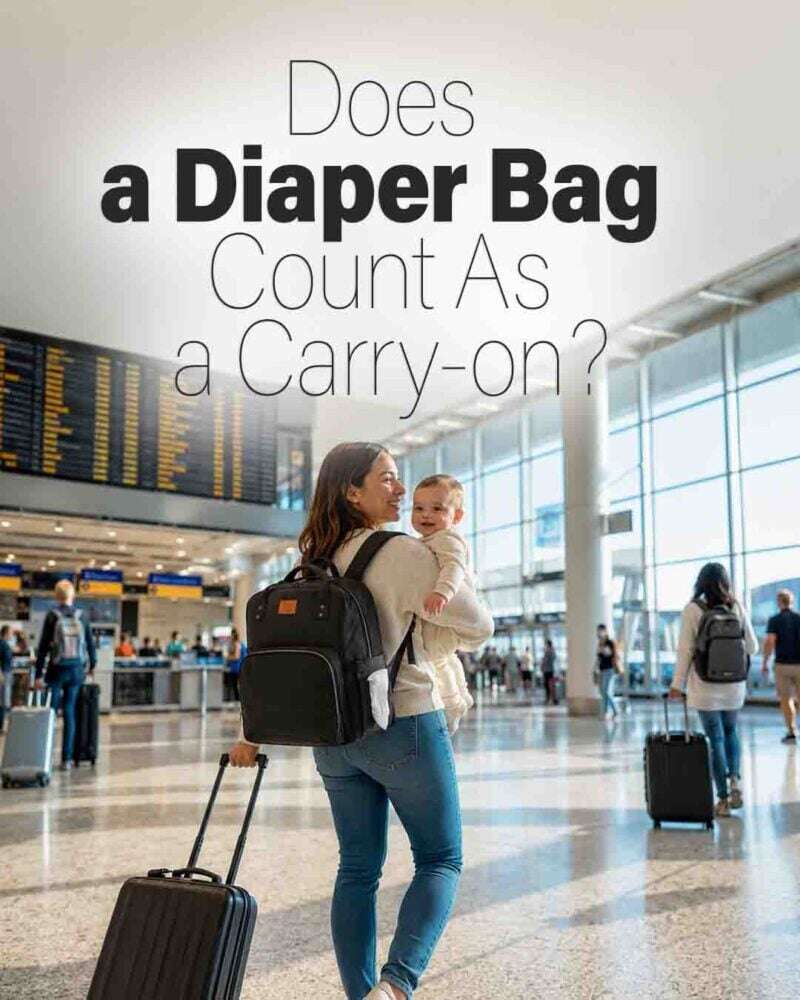
Usually, no. Many U.S. airlines allow one diaper bag in addition to your standard personal item and carry-on bag when you travel with an infant or child. However, the rule depends on the airline, the child’s age, and the type of ticket.
A diaper bag may count as your personal item if the airline does not offer a separate diaper-bag allowance, if you are traveling without a child, or if the bag does not meet the airline’s exception rules. Before you fly, check the baggage policy for your exact airline and ticket.

What Is a Personal Item on a Flight?
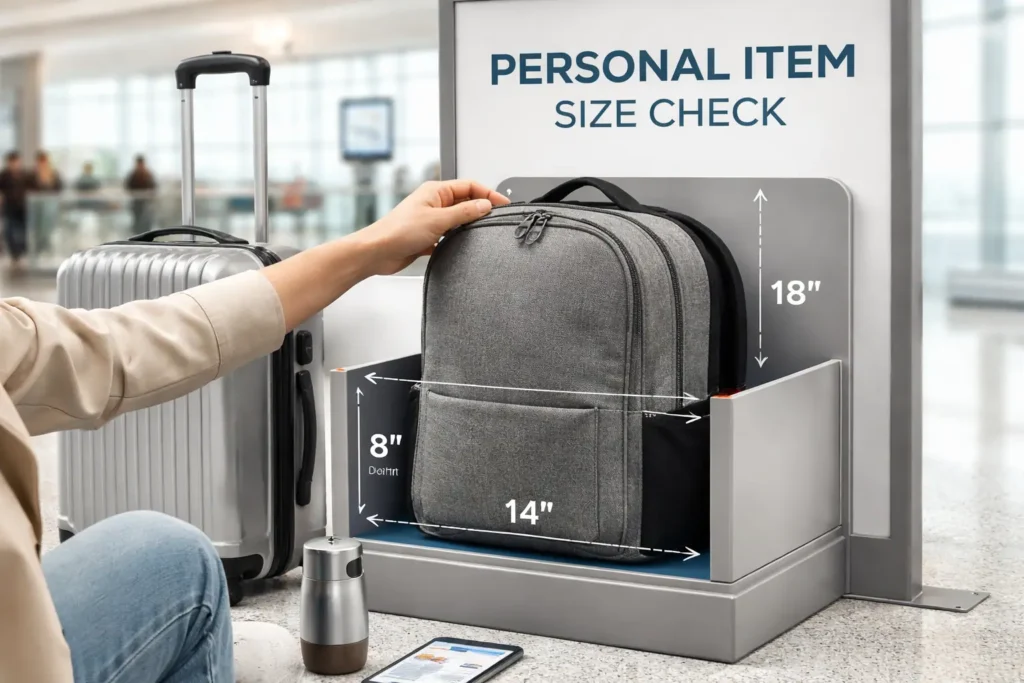
A personal item is a small bag that must usually fit under the seat in front of you. Common examples include:
- A purse
- A laptop bag
- A small backpack
- A briefcase
- A camera bag
- A compact tote
A personal item is different from a carry-on bag. A carry-on usually goes in the overhead bin, while a personal item stays under the seat.
A diaper bag can look like a backpack, tote, or small travel bag. The bag’s appearance does not decide how the airline classifies it. The airline’s baggage policy does.
Why airline rules can be confusing
Airlines often use terms such as “diaper bag,” “infant bag,” or “child-care items.” These terms may describe an extra item allowed for a child. They do not always mean that the bag is free for every passenger.
Some airlines also limit the exception to passengers traveling with:
- An infant under age 2
- A child traveling on the same reservation
- A lap infant
- A child with a purchased seat
Because policies differ, do not rely only on what happened on a previous flight.
Do Major U.S. Airlines Allow a Diaper Bag as an Extra Item?
Many major U.S. airlines allow a diaper bag in addition to the normal baggage allowance, but the details vary. The following table summarizes common policy language and points you should verify before departure.
| Airline | General diaper-bag treatment | What to check |
|---|---|---|
| American Airlines | A diaper bag may be allowed for each ticketed infant, in addition to the normal allowance | Whether the child is a lap infant and any size or weight limits |
| Delta Air Lines | A diaper bag is generally listed as an additional item for passengers traveling with an infant or child | Whether the rule applies to your route and ticket |
| United Airlines | A diaper bag may be accepted in addition to the standard carry-on allowance when traveling with an infant | Whether the bag must be carried on or can be checked |
| Southwest Airlines | A small, properly packed diaper bag is generally treated as a child-care item | Current size limits and whether the bag is separate from other child equipment |
| JetBlue | A diaper bag may be permitted for customers traveling with an infant | Fare restrictions and current carry-on rules |
| Alaska Airlines | Infant and child items may receive special allowances, including a diaper bag in some circumstances | Whether the bag is included as a personal item or an extra item |
These rules can change. Airlines may also apply different policies to international flights, basic or restricted fares, and codeshare flights.
Check the airline’s official baggage page before packing. Useful official sources include:
- American Airlines baggage allowances
- Delta carry-on baggage
- United carry-on bags
- Southwest carry-on and personal items
- JetBlue baggage information
- Alaska Airlines baggage information
If the airline’s website uses unclear wording, contact the airline before the trip. Save a screenshot or print the relevant policy page. A written policy can help if an airport employee applies the rule differently, although the airline’s current conditions of carriage control the final decision.

When Does a Diaper Bag Count as Your Personal Item?
A diaper bag usually counts as your personal item in four common situations.
1. You are not traveling with a child
Most diaper-bag exceptions exist for passengers traveling with an infant or child. If you use a diaper bag for your own belongings, the airline may classify it as your personal item.
For example, a parent flying alone may receive the child-care allowance. A friend carrying a diaper bag for someone else’s child may not.
2. Your airline does not list a separate diaper-bag allowance
Some airlines clearly list diaper bags as extra items. Others only mention child-care equipment or do not provide a separate allowance.
If the policy does not say that the diaper bag is extra, assume it must fit within your personal-item or carry-on allowance. This is the safest way to avoid a fee or a forced gate check.
3. The bag is too large or too full
An airline may allow a diaper bag but still require it to meet a size limit. A large backpack filled to the top may not fit under the seat. An employee could treat it as a carry-on bag or require it to be checked.
Do not assume that labeling a bag a “diaper bag” removes all size limits.
4. You have more than one child-care bag
A diaper bag exception does not always cover multiple bags. A separate breast pump bag, toddler backpack, snack bag, and toy bag may be counted as additional items.
The best approach is to combine child-care supplies where possible. Ask the airline whether a breast pump bag receives its own allowance before you travel.

How to Pack a Diaper Bag for Air Travel
Pack the diaper bag so that it can fit under the seat if the airline counts it as a personal item. Keep the items you need during the flight near the top.
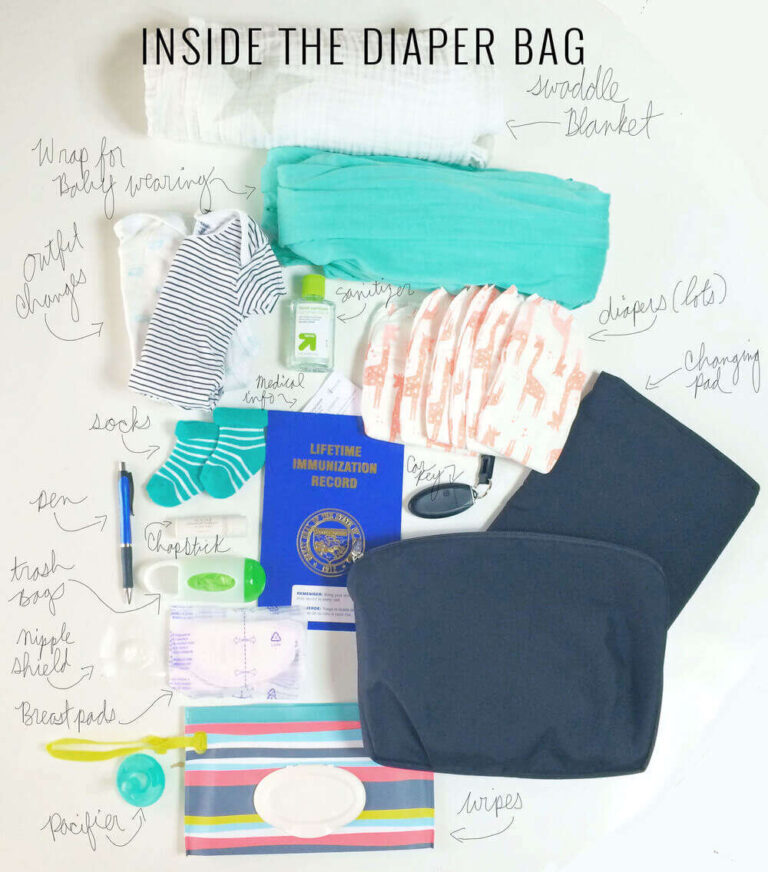
A practical in-flight setup may include:
- Diapers for the flight and delays
- Wipes
- Changing pads
- Diaper cream
- One or two changes of clothing
- Bibs and burp cloths
- Bottles or feeding supplies
- Formula or breast milk
- Pacifiers
- A small toy
- Plastic or reusable bags for wet clothing
- Any medicine your child may need
Use small pouches to separate feeding, changing, and clothing items. This makes the bag easier to inspect and helps you find supplies in a narrow airplane seat area.
Keep valuable items, passports, medication, and electronics in a place you can reach. Do not put essential medicine or irreplaceable documents in a bag that might be checked at the gate.
Leave room for security inspection
The Transportation Security Administration, or TSA, allows reasonable quantities of breast milk, formula, and juice for infants and toddlers. These items are not limited by the standard 3.4-ounce liquid rule when they are medically or nutritionally necessary for the child, but you should remove them from your bag and tell the TSA officer.
TSA may screen these items separately. The agency explains current procedures in its official guidance for traveling with children.
TSA rules and airline baggage rules are separate:
- TSA decides whether an item may pass through security.
- The airline decides how many bags you may bring and where they must fit.
A bag can pass through TSA and still exceed the airline’s baggage allowance.
Does a Diaper Bag Count as a Personal Item on a Lap Infant Ticket?
A diaper bag is often allowed for a lap infant, but the exact rule belongs to the airline.
A lap infant is generally a child under age 2 who travels without a separate seat. Some airlines allow a diaper bag for that child even though the child has no ticketed seat. Other airlines may apply different rules to children with their own seats.
Bring proof of the child’s age if the airline requires it. Acceptable documents may include a birth certificate or passport, depending on the route and airline.
A lap infant usually does not receive the same full baggage allowance as an adult passenger. The child’s ticket status matters, so check whether the airline lists the infant as:
- A lap child
- An infant in arms
- A ticketed child
- A child with a purchased seat
If you buy a seat for a child under age 2, the airline may apply the child’s normal baggage rules instead of the lap-infant rules.

Can You Bring a Diaper Bag, Personal Item, and Carry-On?
Often, yes. If your airline grants a separate diaper-bag allowance, you may be able to bring all three:
- A diaper bag
- A personal item
- A carry-on bag
For example, a traveler may place the diaper bag under the seat, store a small purse under the seat or inside the diaper bag, and place the carry-on in the overhead bin. The exact arrangement depends on the airline and available cabin space.
If the airline does not grant an extra diaper bag, you may have only:
- One personal item and one carry-on, or
- One personal item on a restricted or basic fare
Do not count on bringing a purse, backpack, diaper bag, breast pump bag, and carry-on unless the policy clearly permits those items.
A simple packing calculation
Suppose an airline allows:
- One personal item
- One carry-on
- One extra diaper bag for an infant
You could bring three bags. But if the airline allows only one personal item and one carry-on, you must combine the diaper supplies with one of those bags.
The number of bags matters, but so does where each bag fits. A personal item must usually fit under the seat. A carry-on must fit in the overhead bin. A diaper bag may have a special exception, but it may still need to fit in one of those spaces.

What Happens if the Diaper Bag Is Not Allowed?
If an airline employee says your diaper bag does not qualify as an extra item, stay calm and ask which published rule applies. Then choose the least costly option available.
Possible solutions include:
- Place the diaper bag inside your carry-on
- Move smaller items into your personal item
- Check the bag if time and fees allow
- Remove nonessential items
- Ask whether a breast pump or medical item has a separate allowance
- Ask for a supervisor if the policy appears inconsistent
Do not argue at the gate while boarding is active. A short, clear question works best: “Could you show me how this airline classifies a diaper bag for a child under 2?”
If you believe a fee was charged in error, keep the receipt, boarding pass, and a copy of the relevant policy. Contact the airline after the flight.
Common Mistakes to Avoid
Assuming every airline uses the same rule
Airlines can set different baggage allowances. A diaper bag that was free on one airline may count as a personal item on another.
Treating a stroller as a diaper bag
A stroller, car seat, and diaper bag are separate items unless the airline says otherwise. Check the airline’s rules for gate-checking strollers and child restraint systems.
Packing the bag too heavily
Some airline exceptions cover a diaper bag but do not guarantee unlimited weight or size. A large, heavy bag may be difficult to store and may not qualify.
Forgetting the return flight
The outbound and return flights may be operated by different airlines. This is common with codeshare bookings. Check the operating carrier, not only the airline that sold the ticket.
Relying on an old screenshot
Baggage policies change. Check the policy close to departure and again if your itinerary changes.
A Quick Decision Guide
Use this checklist before leaving for the airport:
- Are you traveling with an infant or child?
- Does the airline explicitly allow a diaper bag?
- Does the rule say the diaper bag is extra?
- Does the rule apply to your fare and route?
- Is the child a lap infant or traveling in a purchased seat?
- Does the bag meet the stated size or weight limit?
- Are you also carrying a purse, backpack, or breast pump bag?
- Does the return flight use the same operating airline?
- Can the bag fit under the seat if required?
If you answer “no” or “not sure” to the second or third question, pack the diaper bag as your personal item.