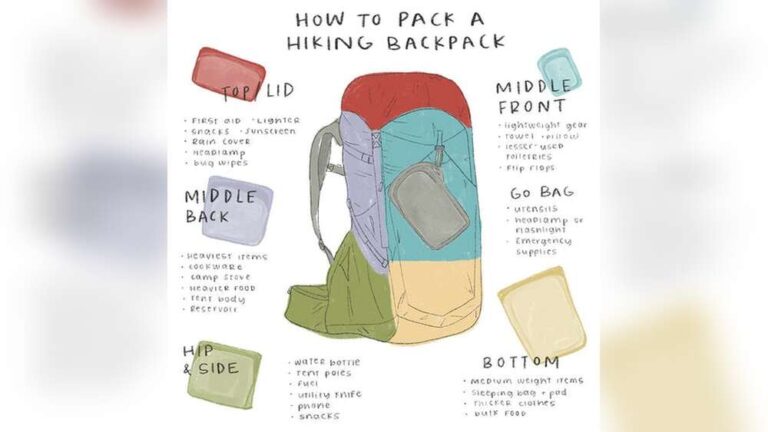
To pack a tent in a backpack, dry it first, remove the poles and stakes, divide the weight between pack members, and place the tent low and close to your back. Keep sharp parts protected, put items you may need soon near the top, and avoid overstuffing the pack.
For hikers in the United States, this method works well on weekend trips, long-distance trails, national forest routes, and backpacking trips in changing weather. The best setup may vary by tent type, pack size, and whether you hike alone or with a partner.
Introduction
Packing a tent well can make a big difference on a trail. A poorly packed shelter may shift, create sore spots, damage fabric, or force you to unpack your whole bag at camp.
Most backpackers in the U.S. use one of two methods: packing the tent inside the backpack or carrying part of it outside. Both can work. The right choice depends on rain, pack design, weight, and how soon you need the tent.
This guide explains how to pack a tent in a backpack, where to put the poles and stakes, how to pack a wet tent, and what to do when the shelter will not fit.
What You Need Before Packing a Tent
You need the tent body, rainfly, poles, stakes, and stuff sacks. You may also use a pack liner or a large waterproof bag to protect the shelter from rain.
Before you pack, check the following:
- The tent is as dry as possible.
- Dirt, sand, and pine needles are removed.
- The poles are folded into short sections.
- The stakes are clean and covered.
- The tent parts are not packed under sharp pressure.
- Your backpack has enough room for food, water, clothing, and safety gear.
A tent has several parts, and each part can go in a different place. You do not have to keep every piece in its original sack. In fact, separating the parts often saves space and spreads the weight better.
The main tent parts
- Tent body: The inner shelter, often made from mesh and floor fabric.
- Rainfly: The outer cover that helps block rain and wind.
- Poles: The frame sections that hold the tent up.
- Stakes: Small pins that anchor the shelter to the ground.
- Footprint: An optional ground sheet placed below the tent.
The original stuff sack is useful for storage at home. On the trail, it may be too small or too rigid. A loose pack liner or soft waterproof bag can often use space more efficiently.
How to Pack a Tent in a Backpack Step by Step
The easiest method is to pack soft tent parts inside the bag and place poles and stakes where they will not damage the fabric.
1. Dry and clean the tent
Shake off dirt before packing. Remove leaves, grit, and small stones from the tent floor and corners.
If the tent is wet, shake off extra water and wipe away heavy moisture with a clean cloth. Do not seal a wet tent in an airtight bag for longer than needed. Moisture can lead to mildew and unpleasant odors.
You can finish drying the shelter at your next rest stop or at camp. If the sun is strong, avoid leaving delicate fabrics in direct sunlight for long periods. Ultraviolet light can weaken some tent materials over time.
2. Separate the tent components
Remove the poles and stakes from the tent body. Pull stakes out by the stake itself, not by the guyline. Pulling hard on the cord can damage the attachment point.
Keep the poles together, but do not force them into the same bag as the tent fabric if the sharp ends could rub against it. Put stakes in a small pouch, clothing pocket, or protected corner of the pack.
3. Fold or loosely stuff the fabric
There are two useful ways to pack the tent fabric.
Folding makes a neat bundle and may fit well in a rectangular backpack. Lay the tent body and rainfly flat, fold them into long strips, and then roll them around the poles.
Loose stuffing often fills empty spaces better. Push the tent body and rainfly into the pack in small sections. Do not twist, compress, or force the fabric through a narrow opening.
Loose stuffing does not harm most modern tent fabrics by itself. The main risks are sharp objects, trapped grit, and extreme compression. Keep the fabric away from stove fuel, food spills, and dirty footwear.
4. Put the tent low in the pack
Place the tent body and rainfly near the bottom of the backpack if you do not need them during the day. A soft tent bundle can fill gaps around a sleeping bag or clothing.
For most backpacking loads, heavier items should sit close to your back and around the middle of the pack. A tent is often light enough to go low, but the poles may be better placed vertically along the back panel.
Do not put a hard pole bundle across the small of your back. It can create pressure and make the pack uncomfortable.
5. Pack the poles safely
Slide the folded poles inside the backpack along the back panel. Place them vertically if the pack allows it.
If the poles are too long for the main compartment, use a side pocket or a dedicated pole sleeve. Make sure the pole tips are covered and cannot push through the fabric.
Do not place poles on the side of the pack if they can catch on branches or scrape against rocks. A secure outside carry is better than a loose one.
6. Protect and store the stakes
Place the stakes in a small bag or wrap them in a spare piece of clothing. Keep them away from the tent floor and rainfly.
A stake pouch can sit near the top of the pack because you may need stakes soon after arriving at camp. It can also go in a side pocket if the pocket closes securely.
Never leave loose stakes near food, electronics, or thin water bladders. Their points can cause damage.
7. Use the rain cover or pack liner
A pack cover helps protect the outside of the backpack. A pack liner protects the contents from water that enters through the top, seams, or fabric.
A pack liner is usually more reliable for keeping the tent and sleeping gear dry. Fold the liner over the load before closing the pack. Do not depend on a rain cover alone during long, heavy rain.
If the tent is wet when you pack it, place it in a separate waterproof bag if possible. This keeps moisture away from your sleeping bag, spare clothes, and other items.
Where Should the Tent Go in a Backpack?
The best place for a tent depends on when you need it and how the pack carries the load.
| Tent part | Usual location | Main reason |
|---|---|---|
| Tent body | Bottom or middle of the pack | Soft, light, and easy to compress |
| Rainfly | Bottom or middle of the pack | Light and flexible |
| Poles | Vertical along the back panel | Keeps hard weight stable |
| Stakes | Top pocket or protected side pocket | Easy to reach and prevents damage |
| Footprint | With the tent or outside pocket | Flat and light |
| Wet tent | Separate waterproof bag | Protects dry gear |
Packing the tent inside the backpack
This is usually the cleanest option. It protects the shelter from branches, mud, and abrasion.
Keep the tent inside when:
- Rain is likely.
- The trail has thick brush.
- You are traveling through rocky terrain.
- The pack has enough space.
- The tent fabric is light or fragile.
The main drawback is access. You may need to remove other gear to reach the shelter.
Carrying the tent outside the backpack
You can attach poles to a side pocket and place the tent bundle in an external pocket. Use compression straps to hold the load in place.
This method can work when:
- The tent is dry.
- The outside pocket is secure.
- The trail is open.
- You need to save room inside the pack.
- The pack manufacturer allows external attachment.
Avoid hanging the tent from a loose cord. A dangling shelter can snag on branches, shift your balance, or fall into mud. Keep the load close to the pack and check the straps often.
How to Pack a Wet Tent
A wet tent should be packed for transport, then dried as soon as conditions allow. The goal is to protect the rest of your gear without trapping moisture for many hours.
Use this process:
- Shake off rain and loose water.
- Wipe large wet areas with a cloth if one is available.
- Separate the tent body from the rainfly.
- Put the wet pieces in a waterproof bag or liner.
- Keep the wet bag away from your sleeping bag and dry clothes.
- At the next safe break, spread the tent over a clean surface.
- Dry it fully before long-term storage.
Do not place a wet tent directly against a down sleeping bag. Even a small amount of trapped moisture can reduce warmth.
If you must camp again before the tent dries, set it up and let the rainfly, body, and footprint dry separately when possible. Do not store the shelter wet after the trip. Dry it at home before putting it away.
How to Pack a Tent for One Person or Two People
Sharing the tent parts can make a backpacking load more balanced. One person does not need to carry the entire shelter.
For two hikers
A common split is:
- Hiker one: Tent body and rainfly
- Hiker two: Poles, stakes, and footprint
The exact split should match the weight of each part. A scale can help if the difference matters. Keep the pieces together enough that setup is simple.
For a two-person tent, one hiker may carry the shelter fabric while the other carries the frame. This spreads the load without creating much confusion at camp.
For a solo hiker
Place the tent body and rainfly low or in the middle of the pack. Carry the poles vertically near the back panel. Put the stakes in a top pocket or another protected place.
If the tent is very small, you may be able to store all components in one waterproof bag. If the tent has long poles, carry them in a side pocket or diagonally inside the pack only if they do not press into your back.
How to Make a Tent Take Up Less Space
A tent often takes up less room when you stop trying to make one perfect, tight bundle.
Try these methods:
- Pack the tent body and rainfly separately.
- Remove the original stuff sack if it wastes space.
- Push fabric into open gaps around soft gear.
- Roll clothing around the poles if the poles are protected.
- Fold the footprint flat against the pack wall.
- Keep stakes in a small pouch.
- Use a pack liner instead of several bulky dry bags.
- Tighten the pack only after all items are inside.
Do not remove parts that the tent needs for safe use. Do not cut straps, discard the stuff sack, or leave out stakes simply to save space.
A smaller bundle is not always a better bundle. The pack should still close without crushing gear or making the frame bend.
Common Tent-Packing Mistakes
Packing a wet tent with dry gear
This can make your sleeping bag and clothing damp. Use a separate waterproof bag for the wet shelter.