Introduction
A luggage rack gives you a clean, raised place to set your suitcase in a U.S. hotel, motel, guest room, or home. To use one, open it fully, place it on a flat floor, check that the legs lock, and set your luggage across the straps or platform. Keep the case centered, stay within the rack’s stated weight limit, and never sit or stand on it.
A luggage rack keeps bags off the floor. That makes packing easier and can reduce contact with dirt, moisture, and pests. It also saves you from bending down every time you need something from your suitcase.

What Is a Luggage Rack?
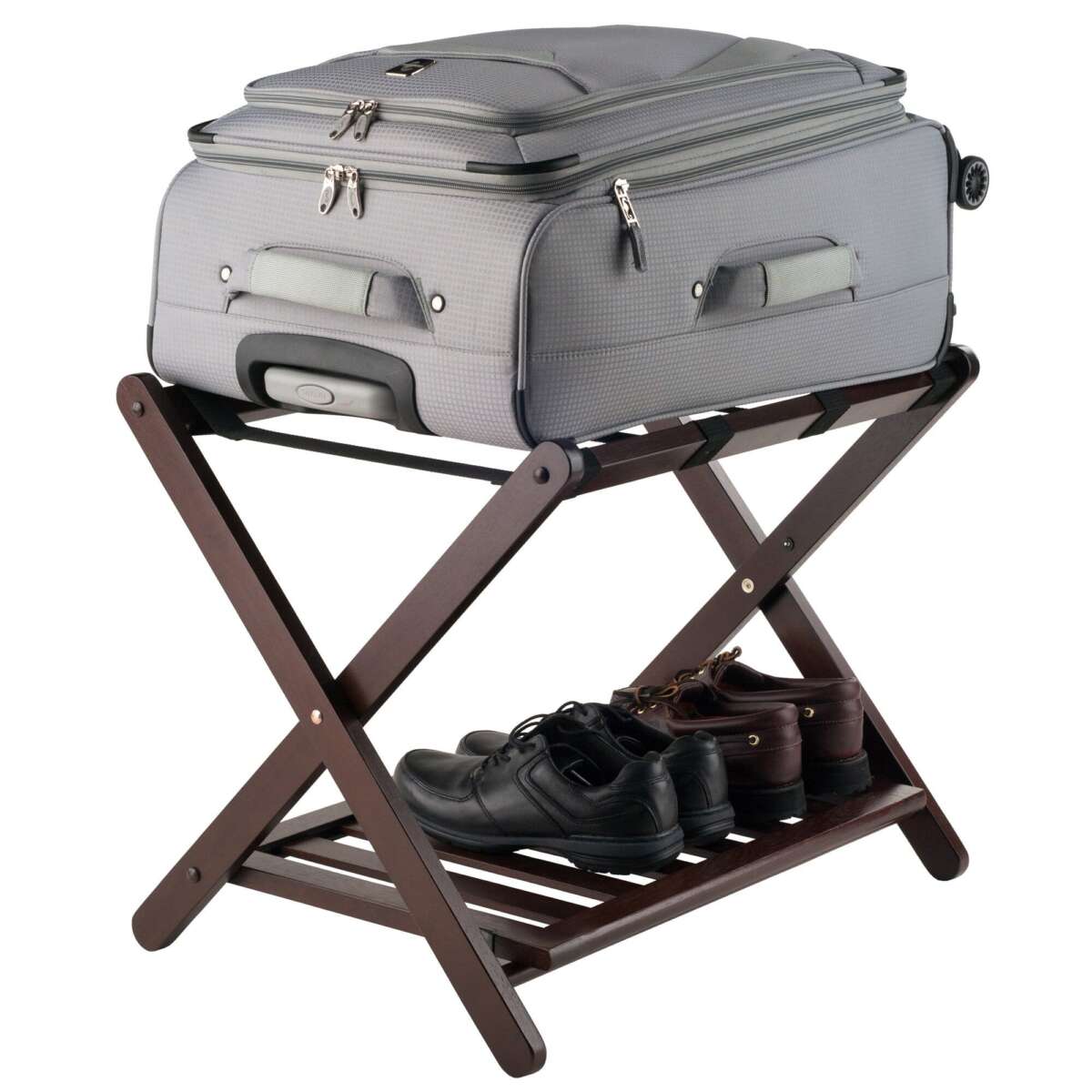
A luggage rack is a small stand made to hold a suitcase or travel bag above the floor. Many hotel luggage racks have two pairs of folding legs and several strong fabric straps. Some home models use a solid wood, metal, or plastic platform instead.
A luggage rack is also called a:
- Suitcase stand
- Hotel luggage rack
- Folding luggage stand
- Bag stand
- Valet rack
- Suitcase holder
This guide covers the free-standing rack used inside a room. It does not cover a car roof rack, hitch cargo carrier, or bicycle rack.
Most indoor luggage racks have these parts:
- Frame: The main metal, wood, or plastic structure.
- Legs: The supports that hold the rack above the floor.
- Hinges: The joints that let the rack fold.
- Straps or platform: The surface that supports the bag.
- Feet or pads: The parts that touch the floor and help prevent sliding.
- Safety locks or braces: Features that help keep the rack open.
How to Use a Luggage Rack: Step-by-Step
Use this sequence each time you set up a luggage rack.
1. Choose a safe location
Place the rack on a level, dry floor. A hard floor usually gives the most stable base, but a low-pile carpet can also work.
Keep the rack:
- Away from stairs and doorways
- Clear of heaters, fireplaces, and hot vents
- Away from wet areas
- Far enough from walls to let the legs open fully
- Out of the main walking path
Do not place it on a thick rug, uneven tile, or a sloped surface. An uneven base can make the rack rock or fold.
2. Inspect the rack before opening it
Look at the frame, hinges, straps, and feet. Do not use the rack if you see a cracked leg, loose screw, torn strap, bent frame, or sharp edge.
For a hotel rack, ask the front desk for a replacement if it looks damaged. Do not try to repair a hotel rack with tape or a temporary tie.
3. Open the legs completely
Hold the rack by its frame and unfold the legs until they reach their full open position. Some racks have a cross brace or locking bar. Make sure that part sits in its locked position.
A rack may look open even when the legs are not fully spread. Check both sides before adding a bag.
4. Test the rack with your hands
Press down gently on the center of the rack. It should stay level and should not twist, slide, or collapse.
If it moves, check these points:
- The legs may not be fully open.
- A brace may not be locked.
- One foot may be on an uneven spot.
- The rack may be overloaded or damaged.
Fix the problem before placing your luggage on it.
5. Set the suitcase on the center
Place the suitcase lengthwise across the straps or platform. Keep the case centered so its weight rests over the legs.
Do not let most of the suitcase hang over one end. An overhanging bag can shift the center of gravity and make the rack tip.
For a large suitcase, place the heavier side near the middle of the rack. If the case has wheels, keep them facing away from the edge when possible.
6. Keep the bag closed and stable
Close the suitcase before placing it on the rack. A closed case is less likely to spill items if it moves.
Use the suitcase’s handles to open it only when the bag is stable. Hold the lid or top panel as you open it so the case does not pull the rack toward you.
Avoid stacking a second suitcase on top unless the rack maker clearly allows it. A soft tote or small personal bag may be fine only if it does not make the rack unstable.
7. Check the setup again
After loading the bag, look at the rack from the side. The legs should remain straight, and the frame should stay level.
Stop using the rack if:
- The legs spread farther apart
- The straps sag sharply
- The frame bends
- The rack rocks
- The suitcase slides
- A hinge makes a cracking sound
Move the suitcase to the floor and replace the rack if needed.

Where Should You Put a Luggage Rack?
The best location is a flat area with clear space around it. In a U.S. hotel room, a spot near the closet or luggage area often works well. Keep enough room to stand beside the suitcase without blocking the path to the bathroom or exit.
A luggage rack should not sit:
- In front of an emergency exit
- Against a heater or radiator
- On a wet bathroom floor
- Directly beside a sharp furniture corner
- Where children or pets can pull it down
- Under a shelf that prevents the case from opening
If you are using the rack on carpet, test it before loading the bag. Thick carpet can hide an uneven floor and make the rack less stable.
How Much Weight Can a Luggage Rack Hold?
The safe load depends on the exact rack. There is no single weight limit that applies to every luggage rack.
Check for a label, manual, product page, or hotel instruction. If no limit appears, treat the rack as a light-duty stand. Do not guess that a rack can hold a heavy checked bag simply because it looks strong.
A useful way to think about the load is:
Total load = suitcase weight + anything placed on or inside the suitcase that the rack supports
For example, a 45-pound suitcase plus a 10-pound bag placed on top creates about 55 pounds of load. That total also sits above the rack, so movement can make the rack less stable than the number alone suggests.
Keep heavy items low and centered. Do not use a luggage rack to hold people, boxes, appliances, or furniture.
What if the suitcase is very heavy?
Use the floor instead if:
- You cannot lift the suitcase safely
- The bag is near or above the rack’s limit
- The rack bends or shifts
- The rack has thin straps or narrow legs
- You need to place another large bag on top
A rack is a convenience tool, not a lifting aid. Use safe lifting form: bend at the knees, keep the case close to your body, and ask for help with a heavy bag.

How to Open and Close Different Types of Luggage Racks
Luggage racks come in several designs. The basic safety checks stay the same, but the opening method can differ.
Folding strap luggage rack
This common hotel style has two folding leg frames and fabric straps.
To open it:
- Hold the upper frame.
- Pull the legs apart.
- Press the legs outward until the braces or hinges reach their open position.
- Confirm that the straps lie flat.
- Test the rack before loading it.
To close it, remove all bags first. Fold the legs inward only after checking that your fingers are clear of the hinges.
Solid-platform luggage rack
This type has a wood, metal, or plastic top.
Set it on a level surface and open or lock the legs as directed by the manufacturer. The solid top may feel firm, but it does not automatically mean the rack can hold more weight. Use the stated capacity.
Wall-mounted luggage rack
A wall-mounted rack folds down from a wall or cabinet. Before using it, check that it is fully extended and that its mounting hardware looks secure.
Do not use it if:
- The rack pulls away from the wall
- Screws are missing
- The support arms do not lock
- The wall panel is cracked
- The rack sags under light pressure
Because this type depends on the wall and its fasteners, do not exceed the manufacturer’s limit.
Built-in hotel luggage bench
Some hotel rooms have a fixed bench or shelf for luggage. Treat it like any other furniture surface. Keep the case centered, avoid blocking drawers or vents, and do not stand on the bench unless it is clearly designed for sitting or stepping.
How to Use a Luggage Rack for Packing
A luggage rack can make packing and unpacking much easier.
For unpacking
Place the closed suitcase on the rack. Open it while keeping one hand on the lid. Put clothes in the closet or dresser in small groups so the case stays balanced.
Keep shoes, toiletries, and other dense items near the center. This reduces the chance that one side of the suitcase will pull the bag off balance.
For packing
Pack the suitcase while it rests on the rack, but do not lean your full body weight on the case. Pressing hard on an open suitcase can push the rack sideways.
Before closing the bag:
- Remove items that do not fit
- Keep the weight spread across the case
- Check that no straps or clothing hang near the rack legs
- Close and secure the suitcase before lifting it
For a suitcase with wheels
A wheeled suitcase may roll if the rack is tilted. Set the case across the rack rather than lining it up with the rack’s length. Keep the wheels from resting on a rounded edge or loose strap.
If the suitcase continues to move, put it on the floor. A moving case can pull the rack over.

Common Luggage Rack Mistakes
Avoiding a few simple mistakes can prevent damage and falls.
Loading the rack before it is fully open
Partly open legs can fold when weight is added. Always inspect the hinges and braces first.