If you are sending a suitcase from the United States to another country, the simplest method is usually an international luggage shipping service or a major carrier such as USPS, UPS, FedEx, or DHL. You will need to pack the case securely, weigh and measure it, complete customs forms, check prohibited items, and keep the tracking number until delivery.
You can send an empty suitcase, a suitcase filled with clothes, or personal belongings packed in a shipping box. The best option depends on your destination, delivery deadline, suitcase size, insurance needs, and whether you are moving temporarily or permanently.
This guide explains how to send a suitcase overseas from the USA, how customs works, how to lower the cost, and what to do if the shipment is delayed.

Choose the Best Way to Send Your Suitcase
The right shipping method depends on whether you need convenience, low cost, speed, or extra help with customs. Compare the full service, not just the base shipping price.
| Method | Best for | Main advantage | Main drawback |
|---|---|---|---|
| USPS international shipping | Smaller, lighter suitcases and personal items | Wide U.S. access and familiar service | Size, weight, and destination limits vary |
| UPS, FedEx, or DHL | Door-to-door delivery and time-sensitive shipments | Detailed tracking and express options | Rates and fees can be high |
| Luggage shipping service | Travelers who want pickup and delivery | Designed for suitcases and travel dates | May cost more than arranging shipment yourself |
| Freight forwarder | Several suitcases, large loads, or a move | Useful for bulky shipments | More paperwork and slower handling |
| Airline checked baggage | Suitcase traveling with you | Often practical for one or two bags | You must travel on the same route and date |
Shipping the suitcase itself
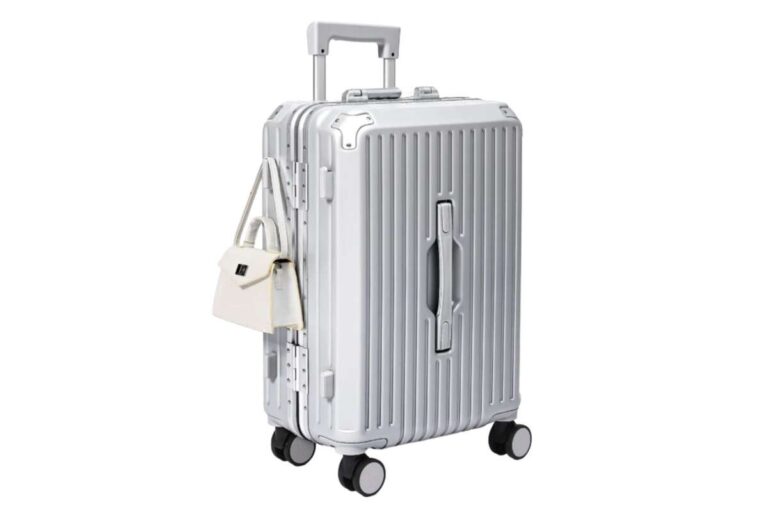
A hard-shell suitcase can sometimes be shipped without a box. However, many carriers prefer or require a protective box or shipping container. A suitcase can be scraped, dropped, or opened during transport, and its wheels and handles may break.
A cardboard box or luggage shipping carton adds protection. It may also increase the package’s size and dimensional weight, which can raise the price.
Using airline baggage instead
If you are flying to the destination, compare the shipping quote with your airline’s checked-bag fee. Airline baggage may be cheaper for a standard suitcase, especially when your ticket already includes checked luggage.
Shipping may be better when:
- You are not flying with the suitcase.
- You want the suitcase delivered before or after your trip.
- You are sending items to a student, military member, or family member.
- You want door-to-door delivery.
- You need to send several bags without carrying them through an airport.
Airline baggage is not the same as international parcel shipping. Airlines have their own size, weight, battery, and restricted-item rules. Check the exact airline rules before choosing this route.

Check Whether the Contents Can Be Shipped
Before you choose a box or buy postage, inspect every item inside the suitcase. International shipments are subject to carrier rules, U.S. export rules, and the import rules of the destination country.
Common items that may cause problems include:
- Aerosols, including spray deodorant and hairspray
- Perfume and cologne
- Nail polish and some cosmetics
- Lithium batteries and power banks
- Matches, lighters, and fireworks
- Knives and other weapons
- Paint, solvents, and cleaning chemicals
- Food, meat, dairy products, seeds, and plants
- Prescription drugs and controlled substances
- Alcohol, tobacco, and vaping products
- Flammable liquids and fuels
- Cash, precious metals, and valuable jewelry
A power bank should usually travel in carry-on baggage rather than in checked baggage or a parcel. Rules can vary by battery type, watt-hour rating, carrier, and destination.
Do not rely on the fact that an item is legal to buy in the United States. The destination country may restrict or ban it. For example, food, medicine, supplements, and plant products often face strict import controls.
Check these sources before packing:
- TSA What Can I Bring?
- U.S. Postal Service international mail rules
- The carrier’s dangerous-goods and restricted-items page
- The destination country’s customs or postal authority
- U.S. Customs and Border Protection
If an item is uncertain, remove it or ask the carrier before tendering the package. Never hide a restricted item in clothing.
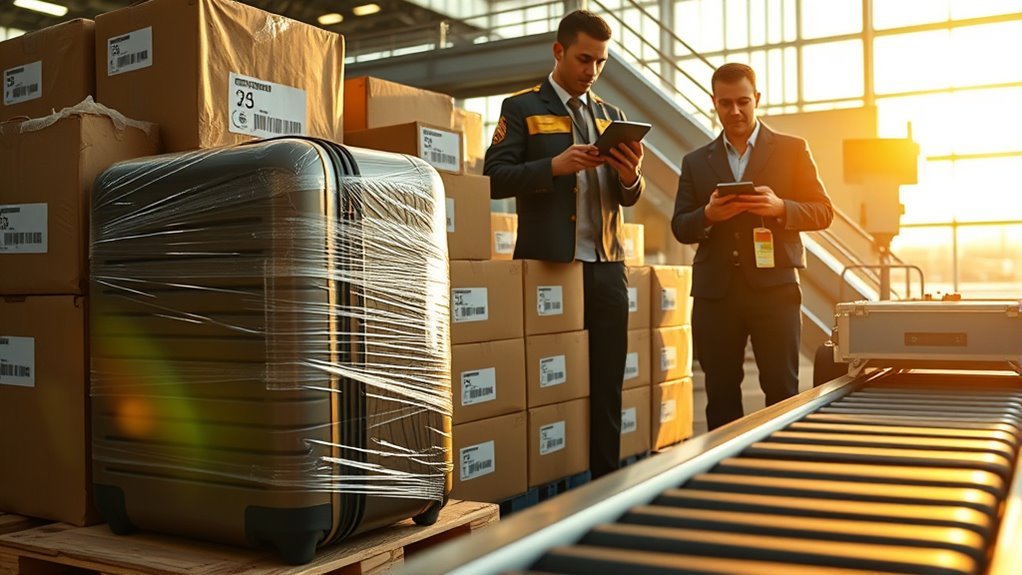
Prepare the Suitcase for International Shipping
A suitcase is not automatically ready for parcel handling. Prepare it as if it may be placed under other heavy boxes, moved by conveyor, and exposed to rain during outdoor transfers.
1. Empty every pocket
Check:
- Outside pockets
- Shoe compartments
- Toiletry bags
- Hidden lining pockets
- Small coin pockets
- Laptop sleeves
Remove old airline tags and barcode labels. Old labels can confuse automated sorting equipment.
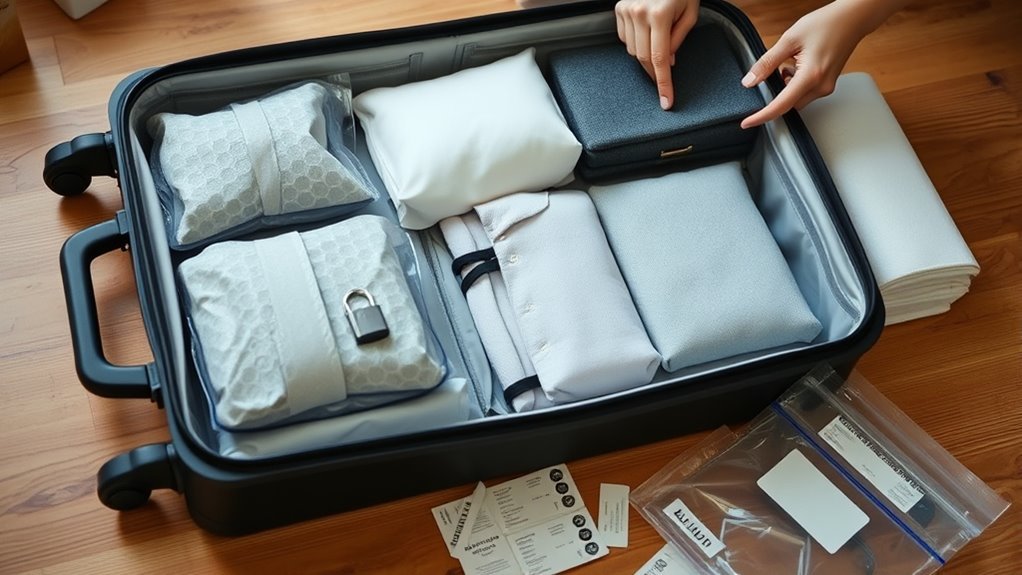
2. Protect fragile items
Wrap fragile items in clothing, bubble wrap, or foam. Place them near the center of the suitcase, away from the shell, wheels, and corners.
Do not pack glass, electronics, or fragile items loosely. Movement inside the case can cause damage even when the outside looks intact.
3. Reduce empty space
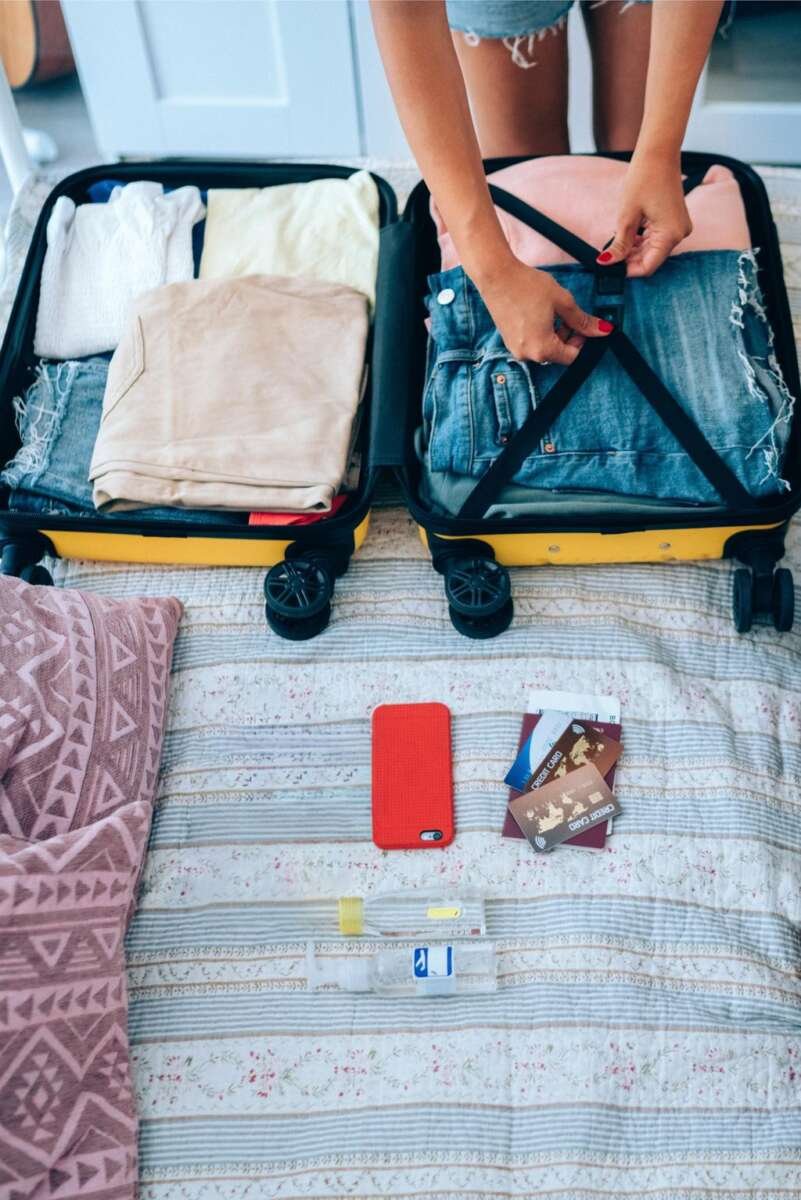
Fill gaps with soft clothing or packing paper. Avoid overfilling the case. A bulging zipper can fail, and a suitcase that cannot close flat may be rejected by the carrier.
4. Secure the contents
Use packing cubes, sealed bags, or internal straps to keep items in place. If the suitcase has a zipper, consider a tamper-evident seal or a compatible lock.
A TSA-recognized lock may help with security screening in the United States, but it does not guarantee that customs officials or foreign authorities will not open the package. Do not use a lock that prevents lawful inspection unless the carrier gives specific instructions.
5. Protect the outside
For a suitcase shipped without a box:
- Wrap it in a strong plastic cover or shipping film.
- Protect wheels and handles.
- Cover or secure loose straps.
- Place the shipping label on a flat surface.
- Add a duplicate address card inside the suitcase.
For better protection, place the suitcase inside a new, strong shipping box. Use enough padding to prevent movement, but do not make the package much larger than necessary.
Weigh and Measure the Package Correctly
The shipping price is based on the packed package, not the empty suitcase. Measure the suitcase after packing and after adding any box or outer protection.
Record:
- Length
- Width
- Height
- Total weight
- Number of pieces
- Declared value
Many carriers compare the actual weight with dimensional weight. Dimensional weight reflects the space a package takes in a vehicle or aircraft.
A common U.S. carrier formula is:
Dimensional weight = length × width × height ÷ dimensional divisor
The divisor and rounding rules vary by carrier, service, and destination. Use the carrier’s current calculator rather than assuming one universal formula.
Hypothetical example
Suppose a packed suitcase measures 30 × 20 × 12 inches.
- Volume: 30 × 20 × 12 = 7,200 cubic inches
- If a carrier uses a divisor of 139, dimensional weight is about 52 pounds
- If the actual package weighs 38 pounds, the carrier may bill using the higher chargeable weight
This is only an example. The actual divisor, rounding rule, oversize fee, and service conditions may differ.
Measure the longest point of each side. Include wheels, handles, packaging, and protective material. A small measurement error can move a package into an oversize tier.

Complete the Customs Declaration
Every international parcel needs accurate customs information. The declaration tells customs authorities what is inside, why it is being sent, and what it is worth.
Use plain descriptions. “Personal items” is usually too vague. Better descriptions include:
- Used cotton shirts
- Used children’s books
- Used running shoes
- Used winter jacket
- Personal toiletries, nonhazardous
For each type of item, you may need to provide:
- Quantity
- Description
- Weight
- Value
- Country of origin
- Harmonized System, or HS, code
- Reason for export
The carrier or postal service may generate the required form during checkout. USPS may use a customs form based on the service and destination. Private carriers often request the information electronically.
Do not declare a false value
A low or zero value does not automatically prevent taxes or duties. Customs authorities may question an unrealistic declaration, and inaccurate information can cause delays, fines, seizure, or an insurance dispute.
Used personal belongings still have a reasonable value. The value is generally the amount the goods are worth for customs purposes, not necessarily their original retail price.
Write “gift” only when the shipment is genuinely a gift. A shipment of your own belongings is not necessarily a gift.
Personal effects and temporary exports
Some countries offer special treatment for used personal effects, returning residents, students, or temporary visitors. The rules vary by country and may depend on:
- How long the items were used
- Whether you are moving permanently
- Whether you plan to re-export them
- Your immigration status
- The value and type of goods
- Whether you have a formal customs declaration
Do not assume that “used” means “duty-free.” Ask the destination customs authority or a qualified customs broker when the shipment has high value or unusual contents.

Compare the Total Cost Before Booking
The published shipping rate is only part of the total cost. Build the quote around the complete shipment.
Potential charges include:
- Base transportation cost
- Fuel or delivery-area surcharge
- Oversize or remote-area fee
- Pickup fee
- Packing materials
- Customs clearance fee
- Import duty
- Value-added tax or goods and services tax
- Brokerage or disbursement fee
- Storage fee after a failed delivery
- Insurance or declared-value coverage
A low quote may not include destination charges. Read the service terms for DDP, DDU, or similar delivery conditions.
- Delivered duty paid (DDP): The sender usually pays applicable duties and taxes in advance.
- Delivered duty unpaid (DDU) or similar terms: The recipient may have to pay before delivery.
Terminology and availability vary by carrier. Confirm who pays customs charges and what happens if the recipient refuses them.
A simple comparison
Create a short list for each option:
- Transportation price
- Packaging price
- Pickup price
- Expected taxes and duties
- Brokerage or handling charges
- Insurance cost
- Delivery time
- Refund or delay rules
A service that costs more at checkout may be cheaper overall if it includes customs handling and delivery to the final address.

Step-by-Step: How to Send a Suitcase Overseas
Follow this process for most shipments from the United States.
Step 1: Confirm the destination address
Ask the recipient for:
- Full legal name
- Street address
- Postal code
- Phone number
- Email address
- Apartment, unit, or building details
- Any required tax or national identification number
Some countries require a recipient identification number for customs clearance. A commercial address may also need a company name and tax number.
Step 2: Check carrier service availability
Enter the exact origin ZIP code, destination country, postal code, dimensions, weight, and shipping date into the carrier’s calculator.