Check the logo, stitching, creed, hardware, materials, and seller before buying a Coach bag.
Learning how to see if a Coach bag is real takes more than spotting one logo or serial number. Authenticity depends on several details working together, and some older, vintage, and outlet bags may look different from current retail styles. This guide explains how to see if a Coach bag is real with practical checks you can use before you buy.

How to See If a Coach Bag Is Real at a Glance
The best way to see if a Coach bag is real is to inspect the whole bag, not one feature. A fake bag may copy the famous “C” pattern, but it often misses small details in the stitching, leather, label, lining, or hardware.
Use this quick checklist:
- Check the seller and the price.
- Study the Coach logo and pattern.
- Inspect the stitching.
- Examine the creed patch or interior label.
- Look at the serial number or style code.
- Feel the leather and fabric.
- Test the weight and hardware.
- Compare the bag with trusted product photos.
- Ask for proof of purchase when possible.
- Walk away if several details seem wrong.
No single test proves that a bag is genuine. Authentic Coach bags have changed over time, and different collections use different materials, labels, and designs.

Check the Seller Before You Check the Bag
Seller history is one of the strongest clues when learning how to see if a Coach bag is real. A genuine bag can be sold by a private person, but the risk rises when the listing has poor photos, vague details, or an unusually low price.
Safer places to shop include:
• Coach stores and the official Coach website
• Authorized department stores
• Established consignment stores
• Well-known resale platforms with authentication services
• Sellers with clear return policies and strong reviews
Be careful with social media listings, temporary websites, and sellers who refuse returns. A seller may use real Coach photos while sending a different bag.
An extremely low price is also a warning sign. Discounts do happen, especially during outlet sales or resale events, but a brand-new bag priced far below its normal value deserves extra research.
Before buying, ask for clear photos of:
• The front and back
• The bottom corners
• The logo or pattern
• The interior label
• The creed patch
• The zipper and other hardware
• The style or serial number
• The receipt, if available
A trustworthy seller should not become angry when you ask normal questions about authenticity.

Study the Coach Logo and Signature Pattern
The logo is a useful starting point, but it is not enough by itself. Counterfeit makers often copy the Coach “C” pattern well enough to fool a quick glance.
On many genuine bags, the signature pattern looks balanced and deliberate. The Cs may face one another, line up across seams, or form a repeated design. The pattern should not look randomly cut or badly placed.
Look for these details:
• The Cs should have a clear shape and even spacing.
• The pattern should usually align across seams and pockets.
• The print should look sharp, not blurry or melted.
• The color should be even across the bag.
• The logo should match the bag’s known design and collection.
However, pattern alignment is not a perfect rule. Some real Coach bags use an off-center design, large logo print, color blocking, or plain leather. A bag without the signature pattern is not automatically fake.
A crooked logo can be a concern, but it may also result from the bag’s shape or a curved panel. Look at the entire construction before making a decision.

Inspect the Stitching and Construction
Stitching often reveals problems that a printed logo hides. Genuine Coach bags usually have neat, strong stitching that supports the shape of the bag.
Examine the seams in bright, natural light. The stitches should normally be close together and fairly even. Loose threads, skipped stitches, uneven thread tension, and messy corners can suggest poor construction.
Pay close attention to:
• Handles and handle attachments
• Corners and bottom panels
• Zipper ends
• Pocket edges
• Strap connections
• Areas around logos and patches
One imperfect stitch does not prove a bag is fake. Handmade and older bags may show small variations. The concern grows when several areas look rushed or weak.
A real bag should also feel stable when you hold it. It should not collapse in strange ways unless the design is meant to be soft. Weak straps, thin edging, or peeling trim are signs to investigate further.

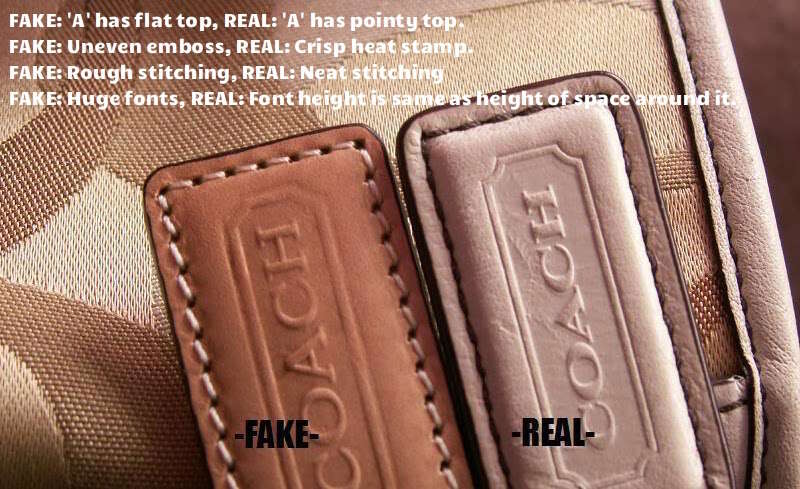
Examine the Creed Patch and Interior Label
Many Coach bags have a leather creed patch or an interior label. This patch may describe the bag’s craftsmanship and include a serial number or style information.
On many genuine bags, the creed text is:
• Centered and easy to read
• Evenly stamped into the leather
• Properly spaced
• Free from major spelling or grammar errors
• Attached neatly to the lining or leather panel
Fake bags often have lettering that is too deep, too light, uneven, or poorly spaced. Some counterfeit patches contain obvious wording errors.
Still, not every authentic Coach bag has a creed patch. Small bags, newer designs, wallets, and certain collections may use a fabric label, metal tag, or no traditional creed at all.
The interior should also match the bag’s design. Check whether the lining feels well made and whether pockets, tags, and seams look professionally finished.

Understand Coach Serial Numbers and Style Codes
Serial numbers are helpful, but they are often misunderstood. A number alone cannot prove that a Coach bag is authentic because counterfeiters can copy numbers from real bags.
Older Coach bags may have a creed patch with a serial number. Newer bags may use a style number, a small fabric tag, or another identification format. The exact format can vary by year, collection, country of manufacture, and product type.
When learning how to see if a Coach bag is real, use the number as one clue:
- Photograph the number clearly.
- Search the number with the word “Coach.”
- Compare the result with the bag’s shape, color, material, and hardware.
- Check whether the code belongs to a different product.
- Look for signs that the number was copied from another listing.
A code that leads to a completely different bag is suspicious. However, online databases are not always complete, and some numbers are difficult to search. A missing search result does not automatically mean the bag is fake.
Do not rely on claims such as “the number starts with a certain letter, so it must be real.” Coach production codes have changed over time, so rigid internet rules can create false results.

Look Closely at the Hardware
Hardware includes zippers, buckles, rings, snaps, feet, clasps, and logo plates. On many genuine Coach bags, the hardware feels solid and has a consistent finish.
Check whether:
• Zippers open smoothly
• Metal pieces feel sturdy
• The finish matches throughout the bag
• Engraved logos look clean
• Clasps close properly
• Rings and strap hooks are firmly attached
• Metal edges are not sharp or poorly coated
Coach has used different hardware colors and finishes, including gold, silver, brass, gunmetal, and mixed metals. A silver zipper is not automatically a sign of a fake bag.
The zipper brand can also vary. Some authentic Coach bags use well-known zipper hardware, while other designs may not show a visible zipper brand. Treat zipper details as supporting evidence rather than a final test.
If the hardware is very light, hollow, rough, or covered in peeling paint, inspect the rest of the bag with extra care.
Feel the Leather, Canvas, and Lining
Material quality is another important part of how to see if a Coach bag is real. Coach has used many materials, including pebbled leather, smooth leather, suede, coated canvas, nylon, fabric, and recycled materials.
Real leather can vary. It may have natural grain, small marks, or a soft scent. Some Coach leather feels firm, while other leather feels soft and flexible. A bag does not need to feel stiff to be genuine.
Watch for these warning signs:
• Strong chemical odor
• Plastic-like leather with no natural texture
• Flaking or cracking on a new-looking bag
• Thin material that cannot hold the bag’s shape
• Cheap, noisy lining
• Glue marks around the edges
Remember that outlet bags may use different materials or simplified details than full-price retail bags. That difference does not make them fake. It simply means you must compare the bag with the correct collection.
A material comparison works best when you use official product details or reliable photos of the same style number.
Compare the Bag With Reliable Product Photos
Finding the exact model is one of the most practical ways to see if a Coach bag is real. Search the style number, product name, color, and collection together.
Compare:
• Pocket placement
• Handle length
• Strap width
• Logo size
• Lining color
• Zipper shape
• Number of compartments
• Hardware finish
• Dimensions and overall shape