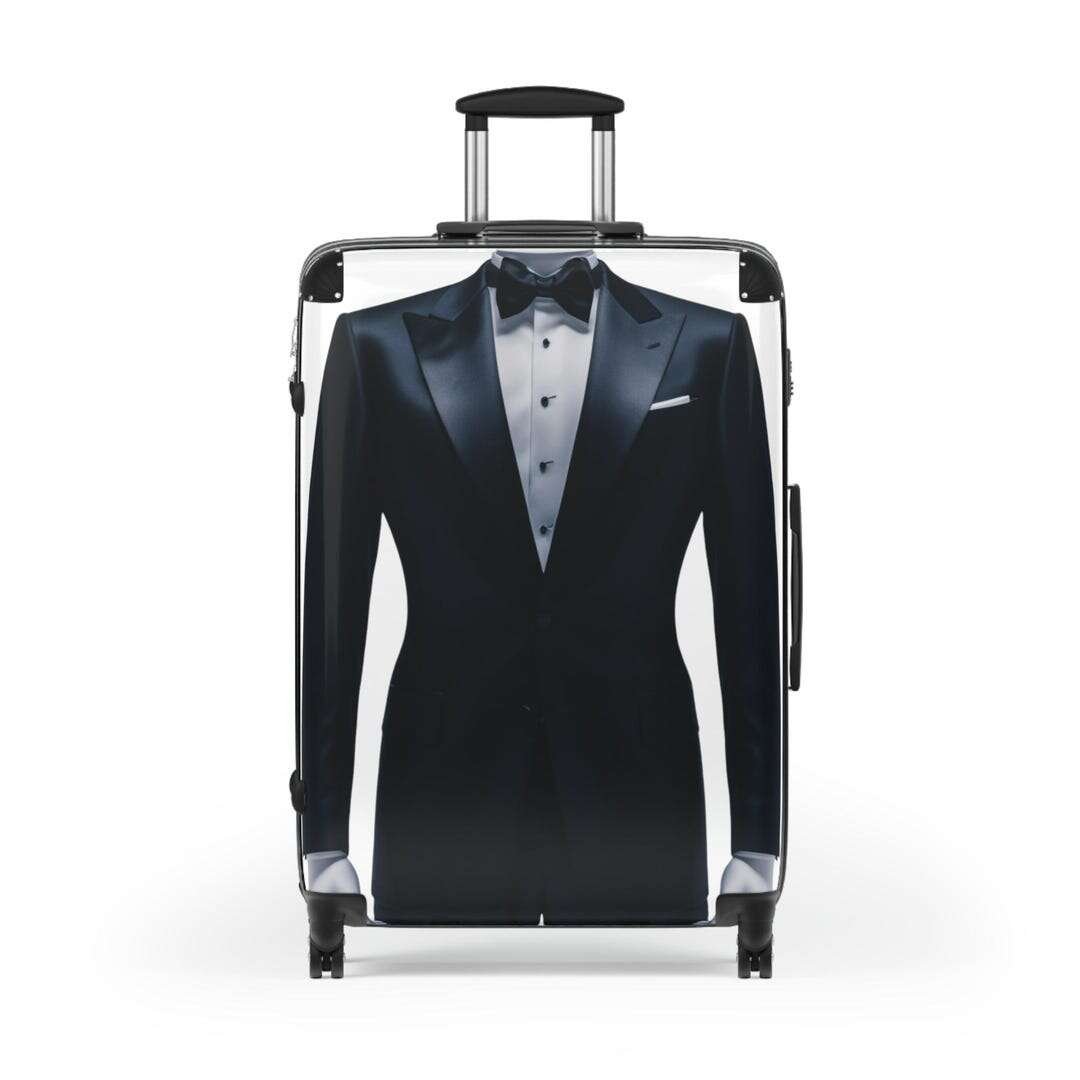
If you are flying from a U.S. airport to a wedding, gala, prom, or black-tie event, the safest way to pack a tuxedo is to keep it clean, dry, lightly folded, and protected from pressure. Use a garment bag when your airline allows one. Otherwise, fold the jacket and trousers with tissue paper, place them near the top of your suitcase, and unpack them as soon as you arrive.
A tuxedo needs more care than a casual suit. Its satin lapels, sharp creases, and structured shoulders can show wrinkles quickly. The goal is not to prevent every crease. The goal is to limit hard folds and make any light wrinkles easy to remove.

What You Need Before Packing a Tuxedo
Gather the tuxedo, a clean suitcase, tissue paper, a breathable garment bag, and a few packing aids before you start. A larger suitcase gives the jacket more room, but a compact carry-on can work if you fold with care.
Basic packing supplies
- Tuxedo jacket
- Tuxedo trousers
- Dress shirt
- Bow tie or long tie
- Cuff links and studs
- Dress shoes
- Socks
- Undershirt, if you wear one
- Breathable garment bag or suit cover
- Plain tissue paper
- Shoe bags or clean plastic bags for shoe soles
- Small accessory pouch
- Lint roller
- Stain-removal pen approved for the garment
- Portable steamer, if your luggage and airline rules allow it
Use plain white tissue paper when possible. Colored paper can transfer dye if it becomes damp. Avoid newspaper because ink can rub onto white shirts or light lining.
Check the tuxedo care label before you pack. Some tuxedos are dry-clean-only, while others have washable components. Do not place a damp garment in a suitcase. Moisture can cause odor, mildew, and color transfer.
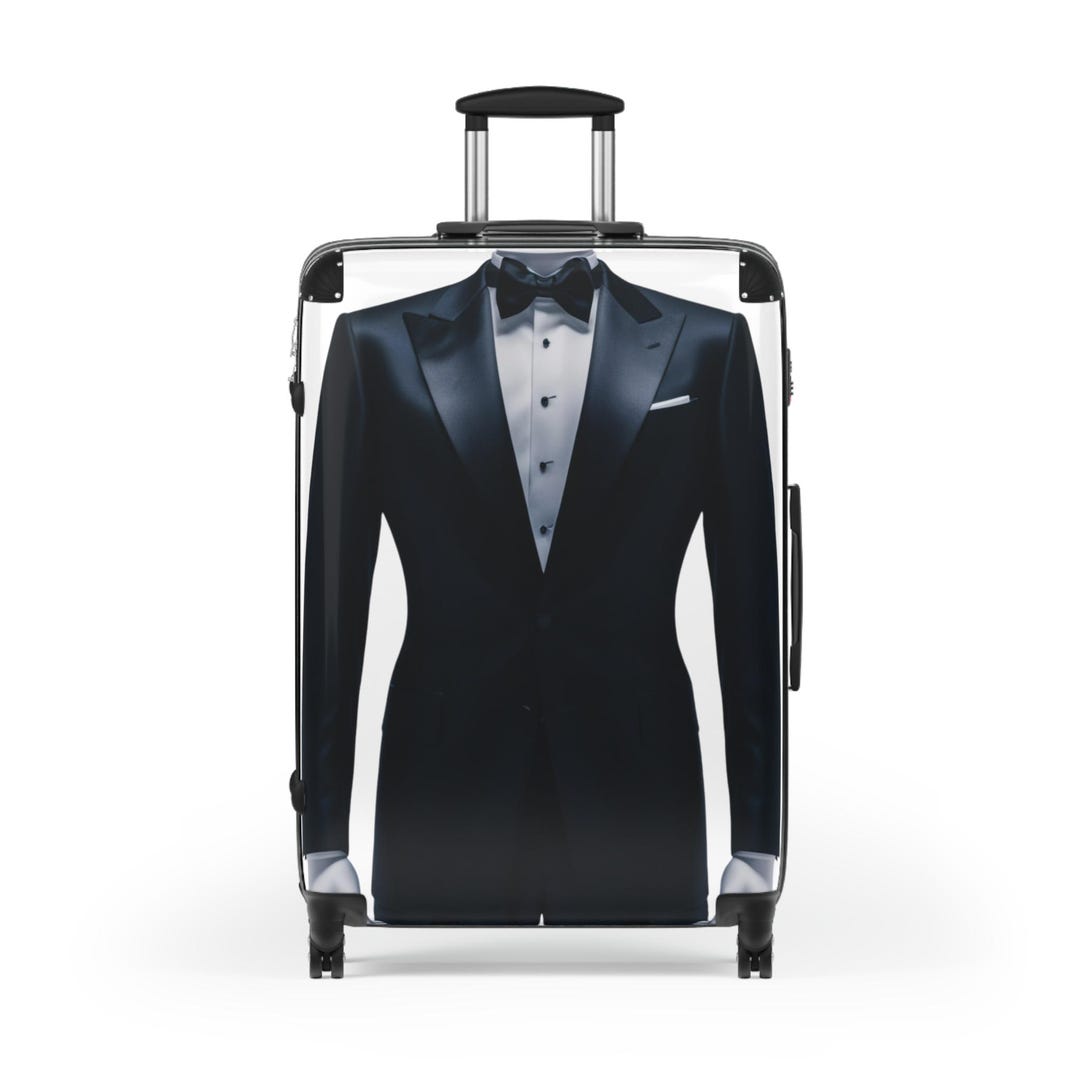
Should You Use a Garment Bag or a Suitcase?
Use a garment bag when you can keep the tuxedo hanging and your airline permits the bag as a carry-on item. Use a suitcase when you need to protect the tuxedo from crowded overhead bins, checked-bag handling, or limited closet space.
A garment bag is usually the gentlest option because the jacket stays upright. However, airlines set their own rules for garment bags. A bag that worked on one U.S. airline may not meet another airline’s size limits. Check the current carry-on policy for your airline before you leave.
A suitcase is often more practical when:
- You are also packing shoes and accessories.
- Your garment bag would need to be checked.
- You are taking a small carry-on.
- You have a hard-sided case that protects clothing from compression.
- You need to fit the tuxedo into a larger travel bag.
If you check the tuxedo, place it in a garment bag or protective sleeve inside the suitcase. Do not pack it loose among heavy items. Checked luggage can be pressed, dropped, and stored in changing temperatures.
Quick comparison
| Packing method | Best for | Main advantage | Main limitation |
|---|---|---|---|
| Garment bag | Direct travel and hanging storage | Fewest sharp folds | Airline size rules may apply |
| Carry-on suitcase | Short trips and cabin travel | Keeps the tuxedo with you | requires careful folding |
| Checked suitcase | Large luggage loads | More room for shoes and accessories | More pressure and handling |
| Tuxedo box | Formal transport or storage | Strong structure | Bulky for most trips |
Do not assume a garment bag always travels free or counts as a personal item. Confirm the airline’s current baggage rules and your ticket’s allowance.

How to Fold a Tuxedo Jacket for a Suitcase
Fold the tuxedo jacket as little as possible. The most reliable suitcase method is to protect the outside fabric, support the shoulders, and place the jacket on top of softer clothes.
Step 1: Empty and prepare the jacket
Remove everything from the jacket pockets. Empty pockets can make the jacket lie flat. Heavy objects can stretch the pocket openings and create bumps in the lining.
Button the jacket if it has one button. If it has two buttons, fasten only the top button. Close the vents only if doing so helps the jacket keep its shape. Do not force the fabric into position.
Lay the jacket face down on a clean bed or table. Smooth the fabric with your hands. Do not press hard on satin lapels.
Step 2: Fold the shoulders inward
Bring one shoulder toward the center of the back. Then tuck the other shoulder into the first shoulder, lining up the shoulder seams.
This method protects the jacket’s outer surface. It also places the shoulders inside one another, which helps reduce crushing. Keep the lapels flat and aligned.
Step 3: Fold the jacket once across the middle
Fold the jacket in half from the bottom toward the collar. Place a layer of tissue paper along the fold first. Tissue paper lets the fabric slide slightly instead of gripping itself under pressure.
If your suitcase is short, make one additional fold only when necessary. More folds create more pressure lines. A single middle fold is better than rolling the jacket.
A second method for delicate jackets
For a tuxedo with strong shoulder padding or a delicate satin shawl collar, turn the jacket inside out without pulling the sleeves fully through. Then fold it lengthwise and place tissue paper between the surfaces.
This can protect the outer fabric, but it may put pressure on the lining. Use the method that leaves the least strain on the shoulders and lapels. The jacket should lie flat without bulging or twisting.
How to place the jacket in the suitcase
Put the folded jacket on top of trousers and shirts. If the suitcase has a shallow lid compartment, use it only if the jacket is not squeezed when the case closes.
Never place shoes, toiletry kits, or electronics on top of the jacket. Hard objects can leave lasting dents in the fabric.

How to Pack Tuxedo Trousers, Shirt, and Accessories
Pack the trousers along their existing crease, then protect the shirt and small accessories from pressure. Each part needs a slightly different method.
Tuxedo trousers
- Hold the trousers by the waistband.
- Shake them gently so the legs hang straight.
- Match the inner and outer seams.
- Align the original front crease.
- Fold the trousers once at the knees or once across the middle.
- Place them flat under the jacket or on top of a soft clothing layer.
Do not roll tuxedo trousers. Rolling can disturb the crease and create rounded wrinkles along the legs.
If your trousers have a satin stripe, keep the stripe flat. Do not clamp it under a tight strap or fold it against a rough zipper.
Dress shirt
A tuxedo shirt can wrinkle at the bib, collar, and cuffs. Fold it with tissue paper between the front panels.
- Button the shirt.
- Lay it face down.
- Fold the sleeves across the back.
- Fold each side toward the center.
- Place tissue paper over the front.
- Fold the shirt once from the bottom.
Keep collar stays in place if they are removable and secure. Place studs and cuff links in a small pouch so they do not puncture the shirt.
Bow tie, studs, and cuff links
Keep small formalwear pieces together in a soft accessory pouch. Do not place metal cuff links directly against the shirt. Wrap them in tissue or put them in a small case.
If you use a pre-tied bow tie, avoid crushing the knot. A self-tie bow tie can lie flatter when loosely untied, but do not force the fabric into a sharp bend.
Dress shoes
Clean and dry the shoes before packing them. Place each shoe in a shoe bag or a clean plastic bag to keep dirt away from the tuxedo.
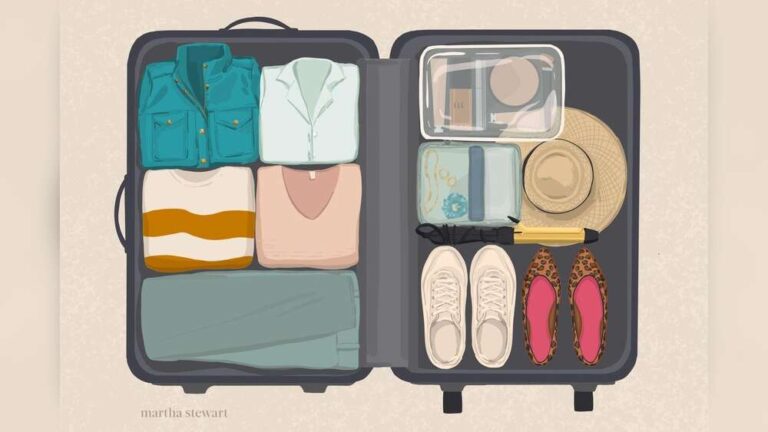
Pack shoes at the base or outer edge of the suitcase. Fill the inside with socks, a belt, or soft underwear. This helps the shoes keep their shape and uses space efficiently.
Keep the soles away from the tuxedo. If the shoes are damp, muddy, or freshly polished, let them dry before packing.

The Best Order for Packing a Tuxedo
Pack heavy and firm items first, then add the tuxedo near the top. This order reduces pressure on the jacket and keeps accessories easy to find.
- Line the suitcase. Use a clean packing cube, thin garment cover, or soft clothing layer.
- Place shoes at the bottom. Put them along the edges or near the wheel end.
- Add heavy casual clothing. Pack jeans, sweaters, and other dense items below the formalwear.
- Lay the folded trousers flat. Keep the crease straight.
- Add the folded shirt. Place tissue paper around it.
- Place accessories in a pouch. Keep the pouch near the top or in a lid pocket.
- Lay the jacket on top. Make sure the lapels and shoulders are flat.
- Cover the jacket. Use a breathable garment cover or clean tissue paper.
- Close the suitcase gently. Do not press down with your hands or kneel on the case.
- Check the case. If the zipper strains, remove an item or use a larger suitcase.
A suitcase should close without force. Pressure is one of the main causes of deep wrinkles and crushed shoulder areas.
A useful packing rule
Keep the tuxedo in one flat layer whenever possible. If you must split it between two bags, keep the jacket and trousers together. A missing trouser, bow tie, or cuff link can be harder to replace than a small wrinkle.

How to Pack a Tuxedo in a Carry-On
A carry-on suitcase can hold a tuxedo if the case is large enough and you avoid overpacking. Choose a case with a flat interior and few raised seams.
Use these steps:
- Place shoes and heavy items at the bottom.
- Fold the trousers along the crease.
- Fold the jacket with the shoulders nested together.
- Add tissue paper between folded layers.
- Put the jacket on top.
- Leave a little room around the formalwear.
- Close the case without compression.
A soft-sided carry-on may work, but its contents can shift more easily. A hard-sided case may offer better protection from pressure, though it can still crush clothing if you overfill it.
Keep the tuxedo in your carry-on when the event is important and you have no time to replace it. Checked luggage can be delayed or lost. Carry-on space is not guaranteed if the flight is full, so arrive early and follow your airline’s instructions at the gate.
For U.S. air travel, follow current Transportation Security Administration rules for liquids, aerosols, and battery-powered devices. A travel steamer, iron, or heated clothing tool may have separate airline or battery rules. Check the TSA travel guidance and your airline before packing such items.

How to Pack a Tuxedo in a Garment Bag
A garment bag is the simplest way to move a tuxedo with fewer folds. Hang the jacket and trousers on a wide hanger, then place the shirt and accessories in separate pockets.
Follow this process:
- Use a sturdy suit hanger that supports the jacket shoulders.
- Hang the jacket with the lapels flat.
- Hang the trousers from the waistband or trouser bar.
- Place the shirt on a separate hanger or fold it in the garment bag’s lower section.
- Cover the garments with a breathable suit cover.
- Zip the bag slowly so the fabric does not catch.
- Fold the garment bag only where the bag is designed to fold.
- Keep heavy items out of the garment bag.
Do not fill the garment bag with shoes, books, or toiletries. Extra weight can pull on the shoulders and cause the bag to sag.
If you carry the garment bag onto a plane, do not assume the crew will hang it in a closet. Closet space is limited and may be reserved for crew, passengers with special needs, or first-class service. Be ready to place the bag in the overhead compartment if instructed.

What to Do When You Arrive
Unpack the tuxedo as soon as you reach your destination. Hang the jacket and trousers in a well-ventilated room, away from direct heat and strong sunlight.
Use your hands to smooth light wrinkles. Give the fabric time to relax before using steam. A bathroom may provide some moisture, but do not hang the tuxedo where it can become wet from a shower.
Steaming a tuxedo
A steamer can help with light wrinkles. Keep the steamer moving and avoid pressing the nozzle against satin lapels, glued details, or delicate trim.
- Hang the jacket on a sturdy hanger.
- Test the steamer on a hidden area if the care label permits steaming.
- Steam from a short distance.
- Work from the inside when possible.
- Let the jacket dry and cool before wearing it.
Do not iron satin lapels directly. If the care label permits ironing, use a pressing cloth and low heat. For a valuable, vintage, heavily structured, or badly crushed tuxedo, use a professional cleaner or tailor rather than trying to fix it with high heat.
Do not spray perfume, deodorant, or hair products onto the tuxedo. Apply those products before dressing and let them dry. They can mark satin and dark formalwear.

Common Tuxedo Packing Mistakes
The most common mistake is treating a tuxedo like ordinary clothing. Small packing choices can create large marks on black fabric.
Avoid these errors: