

Bed bugs can live in luggage for several months, and sometimes longer when conditions are cool and sheltered.
Knowing how long can bed bugs live in luggage can help you act before a small travel problem becomes a home infestation. These insects hide in seams, pockets, zippers, and wheel wells, where they may survive unnoticed between trips. This guide explains their survival time, warning signs, safe treatment methods, and simple habits that reduce your risk after traveling.
How long can bed bugs live in luggage?
Bed bugs can live in luggage for several months without a blood meal. Adult bed bugs often survive about two to six months without feeding under normal indoor conditions. In cool, quiet places, some may live longer.
The exact answer to how long can bed bugs live in luggage depends on temperature, humidity, life stage, and access to food. A warm suitcase in a sunny car may become deadly. A suitcase stored in a cool closet may protect bed bugs for much longer.
Bed bugs do not need to feed every day. They can slow their activity when food is not available. Think of this as an insect version of “standby mode.” They hide, use less energy, and wait for a person or animal to come near.
Important survival facts include:
• Adult bed bugs may live for months without feeding.
• Nymphs usually need blood meals to grow and may die sooner than adults when food is absent.
• Bed bug eggs can hatch in about six to ten days under suitable conditions.
• Eggs may survive cleaning attempts that do not use enough heat.
• A suitcase does not need to contain many bugs to start an infestation.
This means leaving luggage untouched for a week is not a reliable solution. Bed bugs may remain alive inside the bag and emerge during your next trip or after you bring the luggage into a bedroom.

What affects bed bug survival in a suitcase?
Several conditions affect how long can bed bugs live in luggage. Temperature is one of the most important factors, but it is not the only one.
Temperature
Cold temperatures slow bed bug movement and digestion. They do not always kill the insects quickly. A suitcase in a cool basement may protect bed bugs for weeks or months.
High heat can kill bed bugs when it reaches every part of the luggage for enough time. However, the outside of a suitcase may feel hot while the inside stays cool. This is why placing luggage in the sun is not a dependable treatment.
Humidity
Bed bugs prefer moderate humidity. Very dry conditions may reduce survival, but a suitcase stored indoors can still provide enough moisture for them to live.
Life stage
Adult bed bugs are tougher than young nymphs. Eggs are especially difficult to spot and may survive a quick inspection. A single female can lay many eggs during her life, so missing one hidden egg can create a later problem.
Access to shelter
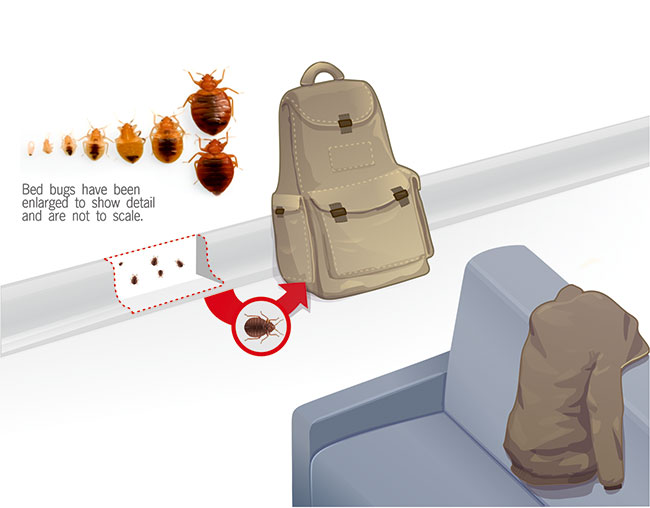
Luggage has many hiding places. Common spots include:
• Stitching and folded seams
• Zipper tracks
• Inside pockets
• Handle openings
• Wheel housings
• The area under luggage labels
• Cracks in hard-sided cases
Dark, narrow spaces make luggage feel like a small apartment building for bed bugs. The bag protects them from light, movement, and casual cleaning.
Time since travel
Time alone does not guarantee safety. If you ask how long can bed bugs live in luggage after a hotel stay, the safest answer is that they may survive until the next trip or longer. Do not assume an empty suitcase is clean simply because you have not seen an insect.
Can bed bugs live in luggage without feeding?
Yes. Bed bugs can live in luggage without feeding because they can use stored energy from earlier blood meals. Adults are particularly capable of waiting for long periods.
Still, survival without food is not unlimited. A bed bug may eventually die from dehydration, age, or poor conditions. The problem is that you cannot predict the exact death date by looking at a suitcase.
Research on bed bug survival shows wide variation. Some insects die within weeks, while others survive for many months. Cooler temperatures often extend survival, while heat and dryness can shorten it. The bag’s material also matters because thick fabric and tight seams create better shelter than a smooth, open surface.
Eggs add another concern. Bed bug eggs do not need a new blood meal before hatching. If an egg survives inside luggage, it may hatch later, and the young bug can begin searching for a host.
In practical terms, the answer to how long can bed bugs live in luggage is long enough to make delay risky. Treatment is safer than waiting.
How to tell if bed bugs are in your luggage
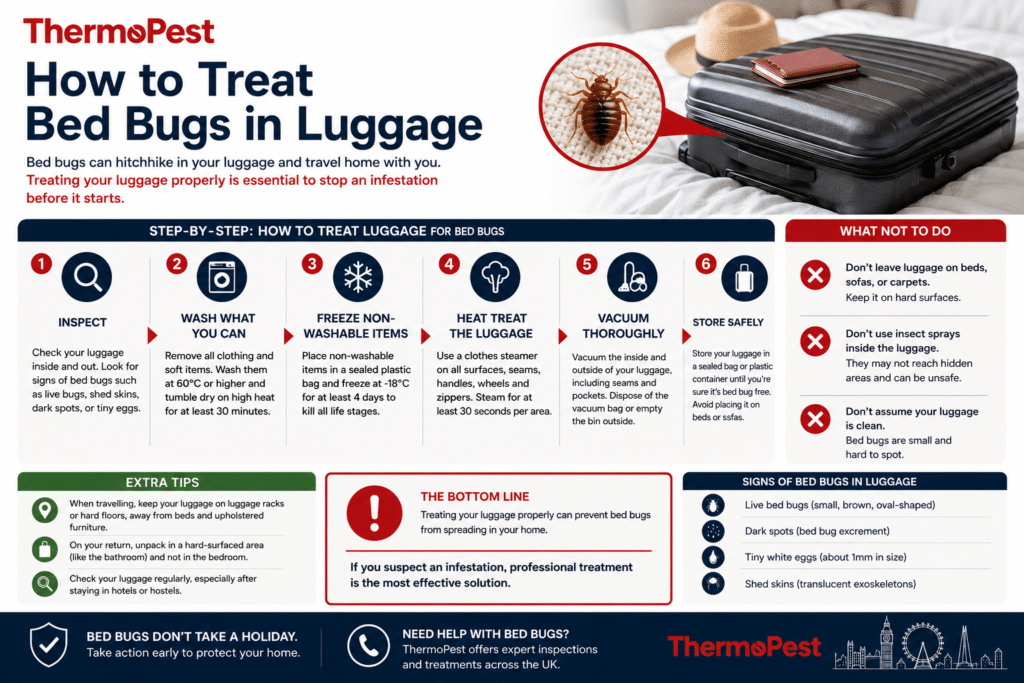
Bed bugs are small, flat, and reddish brown as adults. They are about the size of an apple seed, although young bed bugs are much smaller and pale.
Look for more than live insects. Other signs may be easier to find.
• Dark brown or black spots that look like tiny ink marks
• Pale shed skins around seams
• Small white eggs or eggshells
• Rust-colored stains from crushed bugs
• Live bugs near zippers, folds, and pockets
• A sweet, musty odor during a larger infestation
A few dark marks do not prove that you have bed bugs. Dirt, food stains, and fabric damage can look similar. When possible, collect a suspected bug in clear tape or a sealed container for professional identification.
Inspect your luggage in a bright place. A bathtub, garage, entryway, or hard floor is better than a bed or carpet. Avoid shaking the suitcase indoors, since this can dislodge bugs and spread them.
My most useful inspection lesson is simple: do not inspect only the large compartments. Bed bugs often avoid open spaces and hide where fabric folds over itself. Spend extra time on seams, wheels, handles, and zipper corners.
How to treat luggage after travel
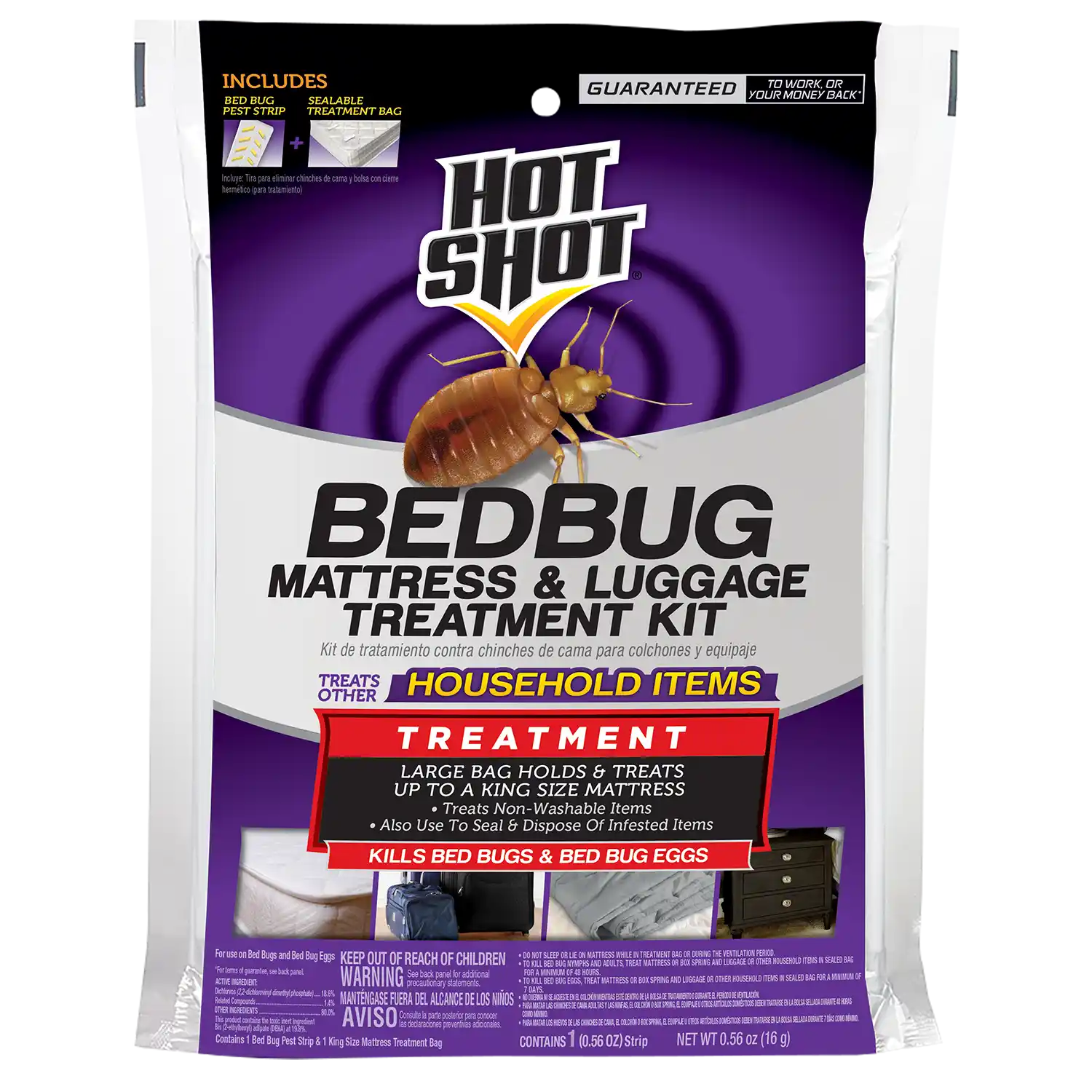
The best treatment depends on the luggage material and the items inside it. The goal is to expose every possible hiding place to a proven killing method.
Use a clothes dryer for washable items
Place clothing and fabric items in a dryer before taking them around the home. Use the highest safe heat for at least 30 minutes, following the care label when possible. Washing alone may not kill every bed bug because some wash cycles do not maintain lethal heat long enough.
Do not move clothing from the suitcase to a bed or dresser first. Put it directly into a sealed bag, then transfer it to the dryer.
Apply professional heat treatment
Professional heat treatment can kill bed bugs when the entire object reaches a lethal temperature for the required time. Trained technicians use sensors to check cold spots inside luggage and other belongings.
Do not put a suitcase in an oven, microwave, or homemade heating box. These methods can cause fires, release harmful fumes, or damage the bag.
Consider freezing carefully
Freezing may work for some small items. A freezer must reach about 0°F, or minus 18°C, and the item needs to remain at that temperature for several days after the center becomes fully cold.
Home freezers vary, and a packed suitcase may not cool evenly. For this reason, freezing is less practical for large luggage unless a pest professional confirms the method.
Vacuum the case
A vacuum can remove bugs, eggs, shed skins, and debris from seams. Use a narrow attachment and move slowly.
Immediately seal and remove the vacuum contents. If the vacuum uses a bag, place the bag in a plastic bag and dispose of it outdoors. Vacuuming helps, but it should not be the only treatment.
Use steam with care
A steamer may kill bed bugs on contact when the steam reaches the surface slowly and evenly. Move the nozzle gradually over seams and folds.
Steam can damage leather, glue, electronics, and some suitcase fabrics. It also may push bugs deeper if used too quickly. Test a hidden area first.
Avoid casual pesticide use
Do not spray clothing, bedding, or luggage with products that are not labeled for that exact use. Bug bombs and foggers often fail to reach hidden insects and can create fire or health risks.
If you see live bugs or signs in more than one room, contact a licensed pest management professional. Early help is usually easier and less costly than treating a widespread infestation.