Packing your hospital bag is both exciting and stressful. You want to be ready for your baby’s birth or hospital stay, but it is easy to forget small but important things. As someone who has been through this process, I know how a well-packed bag can make you feel calm, safe, and ready for anything.
In this guide, I will help you decide exactly what to pack, why you need it, and share some real tips you might not find elsewhere.
I’ll also share a few of my own experiences, because learning from others can save you from common problems. This article is for anyone getting ready for a hospital stay, especially if you are expecting a baby. Let’s make sure you have everything you need so you can focus on your health and your family during this important time.
Why Packing Your Hospital Bag Matters
Packing your hospital bag is more than just a checklist. It is about feeling prepared and comfortable. Hospitals provide basic items, but they do not always have what you like or need. Bringing your own things can make your stay much better.
A well-packed bag helps you:
- Stay comfortable in a new place
- Feel less stressed
- Have what you need for your baby, partner, and yourself
I remember when I packed my first hospital bag. I thought I had everything, but I forgot my phone charger. That small mistake made the first night hard, as I could not call my family or take photos. Since then, I always double-check my bag and encourage others to do the same.
When To Pack Your Hospital Bag
Most experts suggest you pack your hospital bag by the 35th week of pregnancy if you are expecting a baby. If your stay is planned for a surgery or another reason, pack at least a week before your appointment. Babies and emergencies do not always follow the schedule, so being ready early means less stress.
Some people keep their bag in the car or by the door for quick access. This is helpful if you live far from the hospital or have older children to arrange care for.
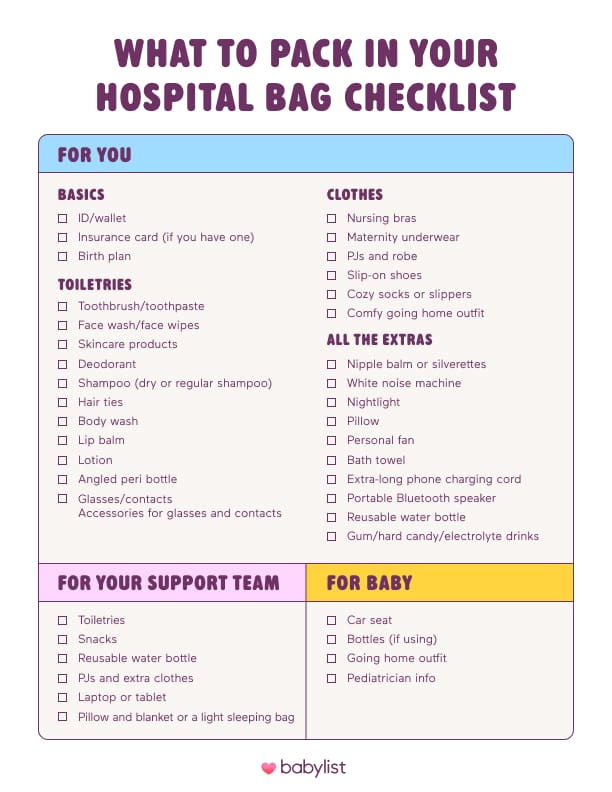
Credit: www.babylist.com
How To Choose The Right Bag
Not every bag works well for a hospital stay. Choose a bag that is:
- Big enough for several days’ items
- Easy to carry (wheels or backpack style work well)
- Has pockets to keep things organized
- Not too heavy when full
I once used a small suitcase with wheels, and it made moving from the car to my room much easier. A duffel bag can also work, but make sure you can lift it without help.
What To Pack For Yourself
Let’s start with items for you, the patient. Packing for yourself means thinking about comfort, hygiene, and entertainment.
Clothing
- Nightgown or pajamas: Bring two or three pairs. Choose ones that open in front if you plan to breastfeed.
- Robe: A soft robe is useful for walking in halls or covering up when visitors come.
- Slippers and socks: Hospitals can be cold. Warm feet make a big difference.
- Comfortable clothes to go home in: After giving birth or surgery, you’ll want loose clothes. Think about maternity leggings or sweatpants.
- Nursing bras and tank tops: If breastfeeding, these make feeding easier and more private.
- Underwear: Bring several pairs of large, comfortable underwear. Hospitals often provide mesh underwear, but you might prefer your own.
Expert tip: Choose dark colors for underwear and pants after birth. This hides stains and makes you feel less self-conscious.
Toiletries And Personal Care
- Toothbrush and toothpaste
- Hairbrush or comb
- Shampoo and conditioner (travel size)
- Deodorant
- Face wash and moisturizer
- Lip balm: Hospital air is dry; lips get chapped quickly.
- Hair ties or headband
- Body wash or soap
- Contact lens case and solution, or glasses
- Small towel and washcloth: Hospitals have them, but your own may feel softer.
I once forgot my own shampoo and used the hospital’s. It left my hair dry and tangled. Now I always pack small bottles of the brands I like.
Medical And Paperwork
- Hospital paperwork and ID: Bring your insurance card, ID, and any hospital forms.
- Birth plan (if you have one): Give a copy to your nurse.
- List of medications and allergies: Make sure your doctor knows everything you take.
- Prenatal records or medical history: Some hospitals ask for this at check-in.
Non-obvious insight: If you have special medical needs (like a CPAP machine for sleep apnea), bring it with you. Hospitals may not have these items.
Comfort And Entertainment
- Phone and charger: Bring a long charging cable; hospital plugs are often far from the bed.
- Earphones or earbuds: Good for music, calls, or watching videos.
- Book, magazine, or e-reader: Waiting can be long, so bring something to read.
- Notebook and pen: For questions, notes, or writing down baby’s feeding times.
- Snacks: Granola bars, crackers, or dried fruit keep your energy up, especially if the kitchen is closed.
Personal experience: During my stay, I brought a small pillow from home. This helped me sleep better and gave me comfort in a new place. The hospital pillows were flat and not very supportive.
Essential Extras
- Water bottle: Staying hydrated helps you heal. A bottle with a straw is easy to use while lying down.
- Small bag for dirty laundry
- Eye mask and earplugs: Hospitals are noisy. These help you rest.
- Face mask and hand sanitizer: Good for staying healthy, even after the pandemic.
What To Pack For The Baby
Babies need only a few things in the hospital. The hospital provides diapers, wipes, and blankets, but you may want to use your own items.
Clothing And Basics
- Onesies or bodysuits: Bring 2–3 in newborn size and 2–3 in 0–3 months. Babies come in all sizes!
- Sleepers or pajamas: Soft, footed sleepers keep baby warm.
- Hat: Hospitals may give you one, but extras are good for warmth.
- Mittens: Babies scratch their faces easily.
- Socks: For warmth if not using footed sleepers.
- Going-home outfit: Choose something cute and comfy. Make sure it fits your baby’s size.
- Swaddle or receiving blanket: Hospital blankets work, but your own can be softer.
Feeding Supplies
If you plan to breastfeed, you do not need to bring bottles or formula. For those who want to use formula or pump:
- Bottles and nipples: Bring 2–3 if you want to use your own.
- Formula: Check with your hospital. Some let you bring your brand; others provide it.
- Breast pump: Most hospitals have pumps, but your own may be more comfortable. Bring a pumping bra if you use one.
Non-obvious insight: Even if you plan to breastfeed, pack a small tube of nipple cream. Early feeding can make nipples sore. This helps you keep going.
Diapering And Bathing
- Diapers and wipes: Hospitals provide these, but you can bring your own if your baby has sensitive skin.
- Diaper cream: Some babies get rashes quickly.
- Baby lotion: Newborn skin is dry after birth.
Special Items
- Pacifier: If you plan to use one. Not all babies like them.
- Car seat: You cannot leave the hospital without a car seat. Install it in your car before you go.
If you are adopting or using a surrogate, pack the same items for your new baby. Bring extra paperwork if needed.
What To Pack For Your Partner Or Support Person
Your partner or support person will spend long hours with you. A few simple items can make their stay much easier.
Clothing And Personal Items
- Comfortable clothes: Bring layers. Hospital rooms can be hot or cold.
- Pajamas and extra socks
- Toiletries: Toothbrush, toothpaste, deodorant, and face wash
- Snacks and drinks: Hospital food is often only for the patient.
Entertainment
- Phone and charger
- Book or magazine
- Notebook for taking notes or recording questions
Sleeping Items
- Small pillow and blanket: Sleeping on a hospital chair is not easy.
- Eye mask and earplugs: These help your partner rest when you do.
Personal tip: My husband brought his own small blanket and said it made his sleep much better on the hospital couch.
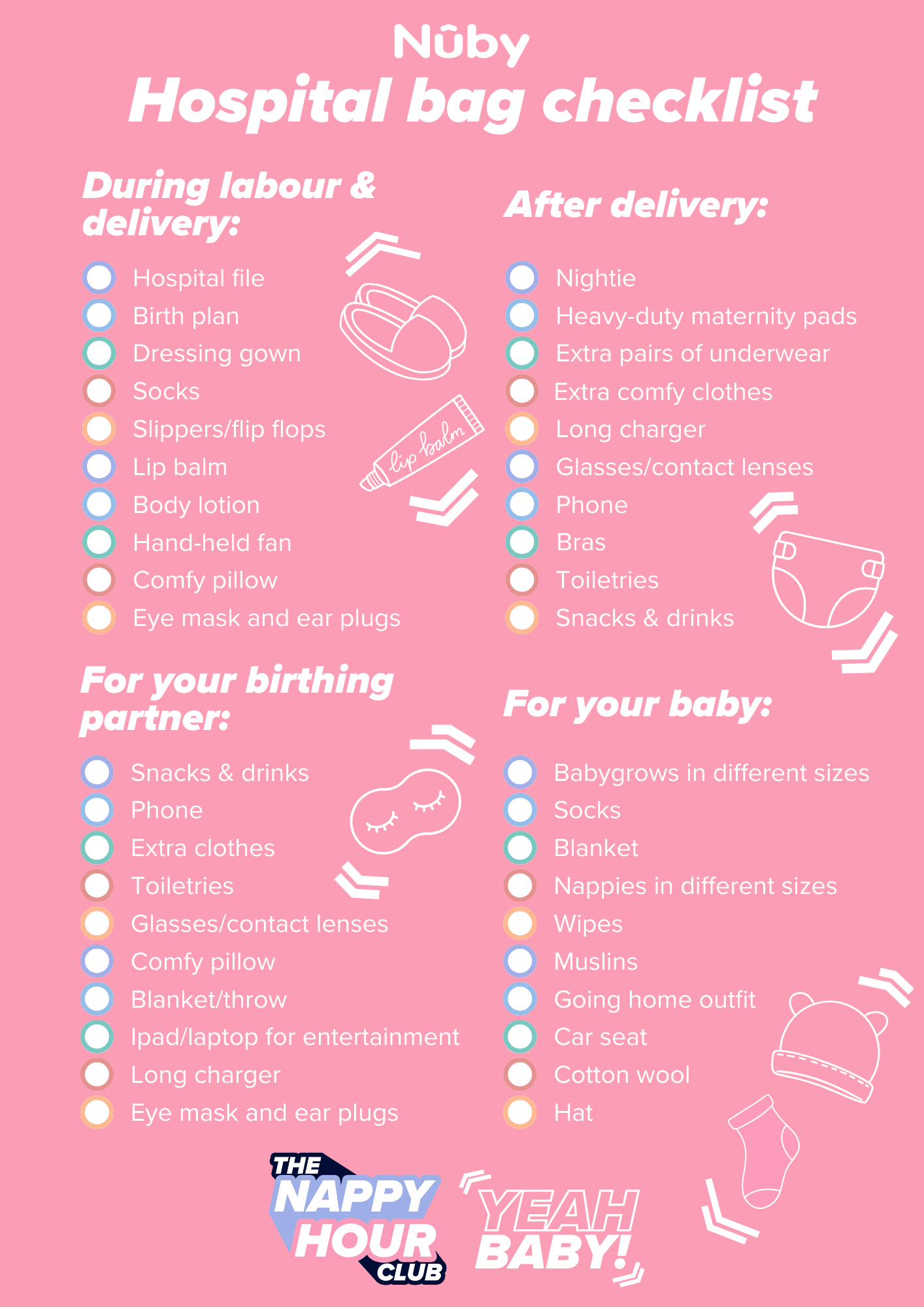
Credit: uk.nuby.com
Packing For A Planned Surgery Or Extended Stay
Not all hospital stays are for childbirth. If you are packing for surgery, treatment, or another reason, adjust your bag:
- Bring extra clothes and underwear for longer stays.
- Pack a list of your medicines, with doses and schedules.
- Bring books, puzzles, or crafts for longer recovery.
- Include comfort items like family photos or your favorite snacks.
- Ask your doctor if you will need special items, like wound care supplies or braces.
If you have a special diet, let the hospital know ahead of time, and bring safe snacks.
Items You Don’t Need To Pack
Some things are better left at home. Hospitals usually provide:
- Towels and washcloths
- Pads for after birth or surgery
- Basic toiletries (but they may not be your preferred brands)
- Baby diapers and wipes
- Hospital gowns
Leave valuables like jewelry and lots of cash at home. Bring only what you need.
Packing For Different Seasons
Think about your local weather and the season of your stay:
- In winter, pack a warm coat, hat, and gloves for going home.
- In summer, bring light clothes and a fan or cooling towel.
- Babies need hats and blankets year-round.
How To Organize Your Hospital Bag
Keeping your bag organized helps you and your partner find things quickly.
- Use small zippered bags or pouches for toiletries, snacks, and electronics.
- Pack an “essentials pouch” with ID, phone, and charger in an outside pocket.
- Put baby clothes together in one bag, and your clothes in another.
- Label everything with your name, especially if you have common items like chargers.
Practical tip: Pack one small bag for labor and one for your postpartum stay. This way, you do not have to dig through everything when you need something quickly.
Sample Packing Comparison: What Hospitals Provide Vs. What To Bring
This table shows what most hospitals offer and what you might want to bring yourself:
| Item | Hospital Provides | Should You Bring? |
|---|---|---|
| Diapers/Wipes | Yes | Optional (bring if baby has sensitive skin) |
| Blankets | Yes | Optional (your own may be softer) |
| Towels | Yes | Optional (bring for comfort) |
| Baby Clothes | No | Yes |
| Snacks | Usually No | Yes |
| Toiletries | Basic only | Yes (for comfort) |
Packing Tips Most People Miss
A few expert tips can make your hospital stay much easier:
- Bring a long phone charger. Hospital beds are far from outlets.
- Pack two bags: One for labor, one for recovery. Leave your main bag in the car until you move rooms.
- Bring copies of all paperwork. If you lose one, you have a backup.
- Label everything. Chargers, water bottles, and even blankets can get lost.
- Pack extra snacks. Labor can take hours, and partners get hungry too.
What Not To Forget
Some items are easy to overlook but make a big difference:
- Insurance card and ID
- Car seat for the baby
- Comfortable clothes for going home
- Slippers or flip-flops for the shower
- Lip balm and lotion
- A small pillow
If you forget something small, do not panic. Most hospitals have small stores or can help you get what you need.
Hospital Bag For Twins Or Multiples
If you are expecting more than one baby, pack double the baby clothes, hats, and blankets. Hospitals provide extra diapers, but bring extra outfits in different sizes. Twins are often smaller, so include preemie-size clothes if possible.
How A Good Hospital Bag Helps Your Stay
When you have everything you need, you can focus on your health and your family. A good bag means less time worrying and more time enjoying your new baby or recovering. You will feel more at home and less like a patient.
I remember after my second baby, I was tired but happy I had packed snacks and my favorite lotion. Those small comforts helped me rest and recover faster.
Common Mistakes To Avoid
- Overpacking: You do not need your whole closet. Stick to basics.
- Underpacking: Do not skip essentials like chargers, ID, or clothes.
- Forgetting your partner: They need snacks, clothes, and toiletries too.
- Ignoring weather: Pack for the season, especially for going home.
- Not checking hospital rules: Some do not allow plug-in fans or outside food. Ask ahead.
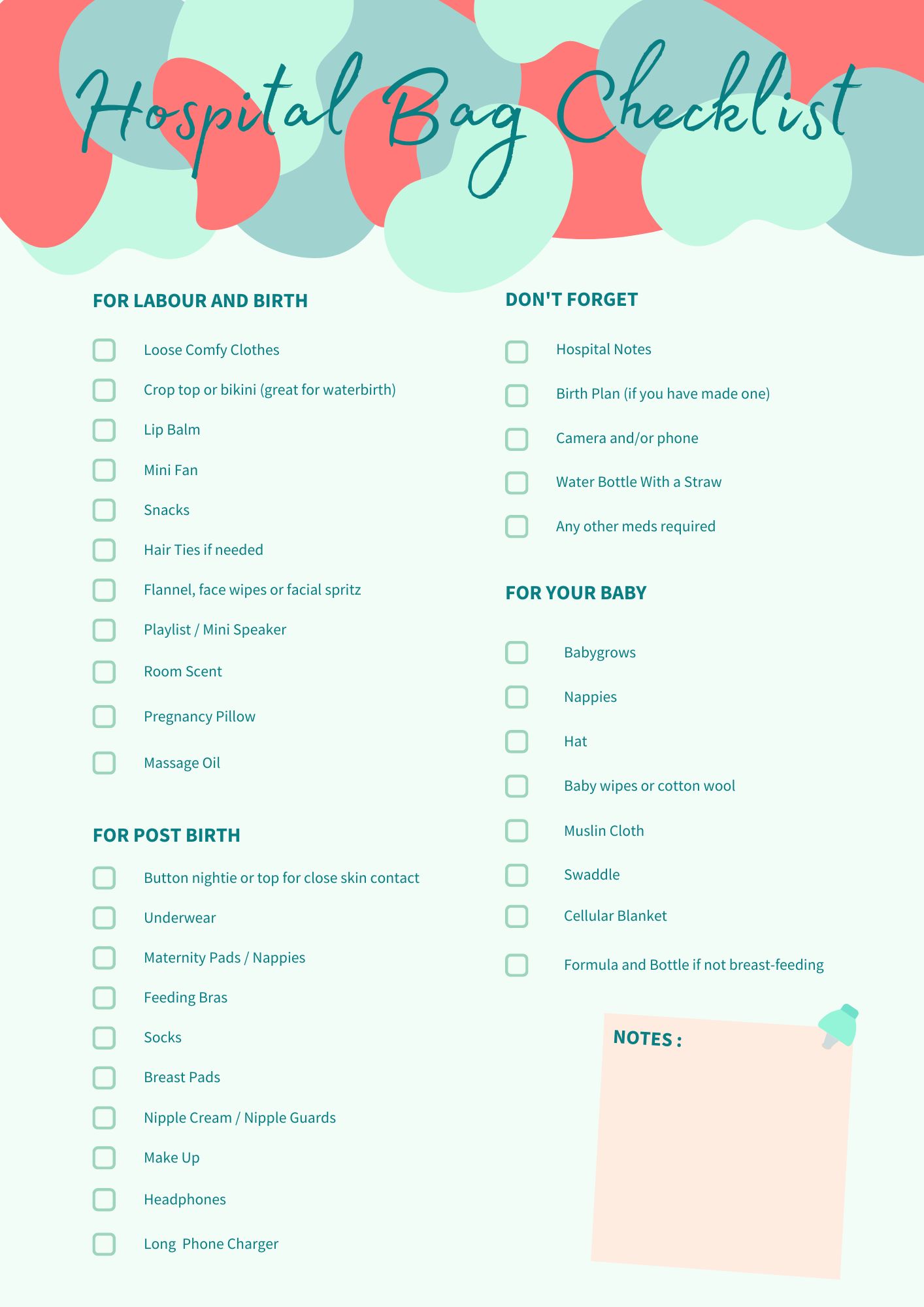
Quick Checklist For Easy Reference
For yourself:
- 2–3 pairs of pajamas
- Robe and slippers
- Socks and underwear
- Going-home clothes
- Toiletries
- Phone and charger
- Snacks
- Water bottle
- ID and paperwork
For the baby:
- 3–4 outfits (mix of sizes)
- Hat and mittens
- Socks or booties
- Blanket
- Going-home outfit
- Car seat
For your partner:
- Change of clothes
- Toiletries
- Snacks
- Phone and charger
- Small pillow and blanket
Table: Comparison Of Essential Vs. Optional Items
Here is a quick look at which items are truly essential and which are nice to have:
| Item | Essential | Optional |
|---|---|---|
| Hospital ID & Insurance | ✔️ | |
| Phone & Charger | ✔️ | |
| Comfortable Clothes | ✔️ | |
| Favorite Pillow | ✔️ | |
| Snacks | ✔️ | |
| Earplugs/Eye mask | ✔️ | |
| Baby Going-home Outfit | ✔️ | |
| Book or Magazine | ✔️ |
Credit: www.bumpsandburpees.com
Packing For Special Needs
If you or your baby have allergies, disabilities, or other needs, talk to your doctor before your stay. Bring any medical devices, medication, or feeding supplies you use at home. Label these items and tell your nurse about them when you arrive.
If you need help with language, pack a notepad for writing questions, or ask for a hospital translator.
Resources For Hospital Packing
You can find more advice and printable checklists at the March of Dimes website. Every family is different, so adjust your list to fit your needs.
Frequently Asked Questions
What Is The Best Time To Pack My Hospital Bag?
You should aim to pack your hospital bag by the 35th week of pregnancy. If you are packing for surgery or another planned stay, do it at least a week before your appointment. Being ready early means less stress if things change quickly.
How Many Outfits Should I Bring For My Baby?
Bring 2–3 outfits in newborn size and 2–3 in 0–3 months size. Babies can be smaller or bigger than you expect. Also pack a going-home outfit and a hat.
Can My Partner Stay With Me Overnight In The Hospital?
Most hospitals allow one support person to stay overnight. They may need to bring their own pillow and blanket. Check with your hospital about visitor rules before your stay.
Do I Need To Bring Diapers And Wipes?
Hospitals usually provide diapers and wipes for your baby. You can bring your own if your baby has sensitive skin or you prefer a certain brand.
What Should I Do If I Forget Something Important?
Do not panic. Most hospitals have small shops or can help you get basic items. Your partner or a friend can also bring things from home if needed. Focus on your health and your baby first.
Packing your hospital bag is a simple task that brings peace of mind during a busy time. With these tips and checklists, you’ll feel prepared, comfortable, and ready for whatever your hospital stay brings. Good luck, and remember—being prepared is the best gift you can give yourself and your family.

Zayden Halbrook is a travel enthusiast and gear researcher passionate about making every journey smoother and more enjoyable. With a keen eye for practical travel essentials and real-world tips, he helps readers choose the right gear and travel smarter. When he’s not testing travel kits or exploring new destinations, Zayden shares simple, reliable advice to make every trip stress-free.