Can You Pack Liquids In Checked Luggage?
If you’re planning a trip and want to bring liquids with you, you may wonder if it’s allowed in your checked luggage. Many travelers face this question, especially when packing gifts, cosmetics, or even food items. I’ve traveled through airports on four continents, and I’ve made my share of mistakes—like finding shampoo all over my clothes after a long flight! In this article, I’ll help you understand the rules, share real experiences, and give expert tips so you can pack liquids in checked baggage with confidence.
What Are The Basic Rules For Packing Liquids In Checked Luggage?
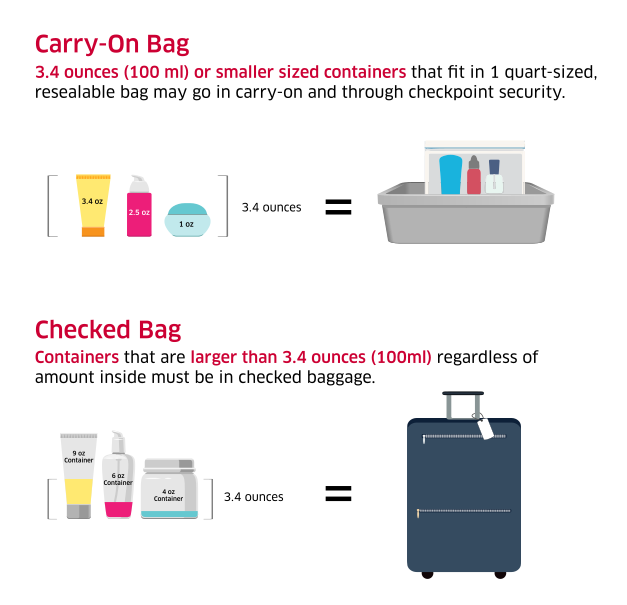
When you pack liquids in your checked bag, the rules are different from your carry-on. The main advantage is that you can bring more liquid in checked luggage, but there are still some important limits and guidelines to follow.
Most airlines and countries allow you to pack liquids in checked baggage, but there are some key restrictions:
- No limit on total liquid volume (unlike carry-on, which is usually 3.4 oz or 100 ml per container)
- Individual containers should not exceed 1 gallon (3.8 liters)
- Liquids must be securely sealed to prevent leaks
- Hazardous liquids like flammable, toxic, or corrosive substances are not allowed
For example, bringing a large bottle of shampoo or wine in your checked bag is usually fine, but bringing paint thinner or gasoline is never allowed.
I once packed a bottle of olive oil for a friend in Europe. I wrapped it in several layers of clothing and placed it in a zip-top bag. This extra care paid off, and the oil arrived safe and sound.
But another time, a poorly sealed bottle of lotion leaked everywhere—lesson learned!
Tsa And International Airline Regulations
The Transportation Security Administration (TSA) sets rules for flights departing the United States, but other countries have similar guidelines. It’s always best to check both your departure and arrival country’s regulations.
Here are the most important points for TSA and international flights:
- TSA allows liquids in checked bags if they are not hazardous
- Alcohol over 70% ABV (140 proof) is banned in checked and carry-on bags
- Duty-free liquids purchased at the airport are allowed if sealed and packed properly
Let’s compare some common airline rules for liquids in checked luggage:
| Country | Total Liquid Limit (Checked Bag) | Special Restrictions |
|---|---|---|
| USA | No total limit | Hazardous liquids banned; alcohol limit applies |
| UK | No total limit | Similar to USA; extra checks for flammable items |
| Australia | No total limit | No dangerous goods; alcohol limit enforced |
| Canada | No total limit | Hazardous liquids restricted; alcohol rules apply |
As you can see, while total quantity is not usually limited, the type of liquid is very important. Always double-check with your airline and destination country before you pack.
What Types Of Liquids Are Allowed?
You can pack most personal care products (like shampoo, conditioner, and lotion), beverages, oils, and food items in checked luggage. However, there are clear exceptions.
Allowed liquids in checked baggage:
- Shampoo, conditioner, body wash
- Perfume, cologne (under 1 gallon per bottle)
- Juice, wine, liquor (under 70% ABV)
- Sauces, oils, and honey
- Aerosols (like deodorant) if not flammable
Liquids you cannot pack in checked baggage:
- Flammable liquids (gasoline, lighter fluid)
- Strong acids or corrosive chemicals
- Explosives or oxidizers
A simple rule: If it’s safe for home use and not highly flammable or toxic, it’s usually allowed.
Alcohol And Duty-free Items
Alcohol is a special case when packing liquids. You can bring alcoholic beverages in checked luggage, but there are strict rules about quantity and strength.
- Alcohol under 24% ABV (beer, wine): No limit except airline baggage weight
- Alcohol 24–70% ABV (spirits, liquor): Up to 5 liters (1.3 gallons) per person
- Alcohol over 70% ABV: Not allowed
If you buy duty-free alcohol at the airport, it must remain sealed in the store bag with the receipt. Some countries may ask you to show proof of purchase.
Here’s a quick comparison of alcohol packing limits:
| Type of Alcohol | Allowed in Checked Bag? | Limit per Person |
|---|---|---|
| Beer, Wine (<24% ABV) | Yes | No limit (weight rules apply) |
| Spirits (24–70% ABV) | Yes | 5 liters (1.3 gallons) |
| Over 70% ABV | No | Not allowed |
It’s important to check the customs rules at your destination. Some countries charge high taxes or even confiscate alcohol if you exceed personal limits.
How To Pack Liquids Safely In Checked Baggage
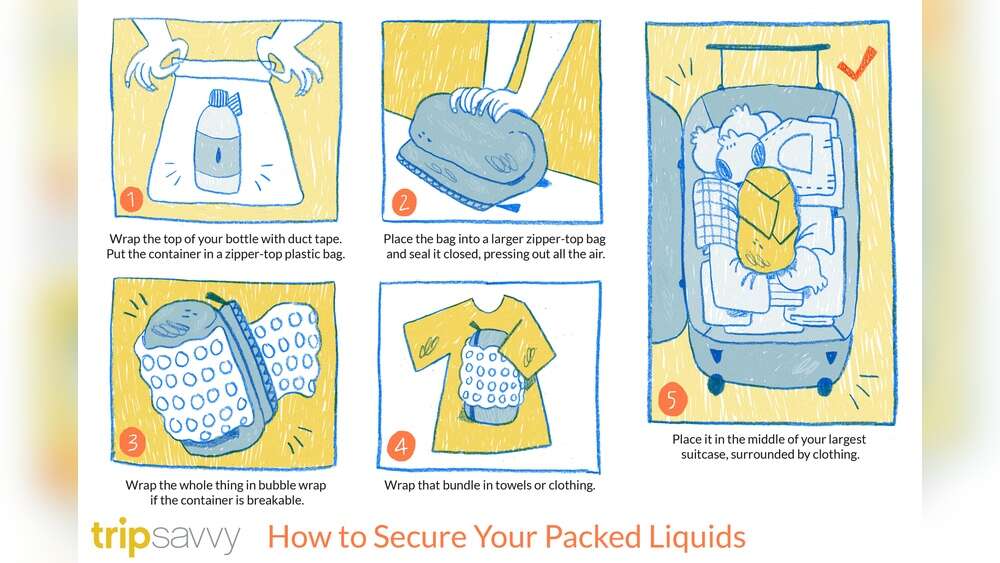
Packing liquids the right way can save you from messy accidents. I learned this the hard way on a long-haul flight from New York to Bangkok. I thought screwing the cap on tight was enough, but cabin pressure changes can cause bottles to leak or burst. Here’s what I do now and recommend to you:
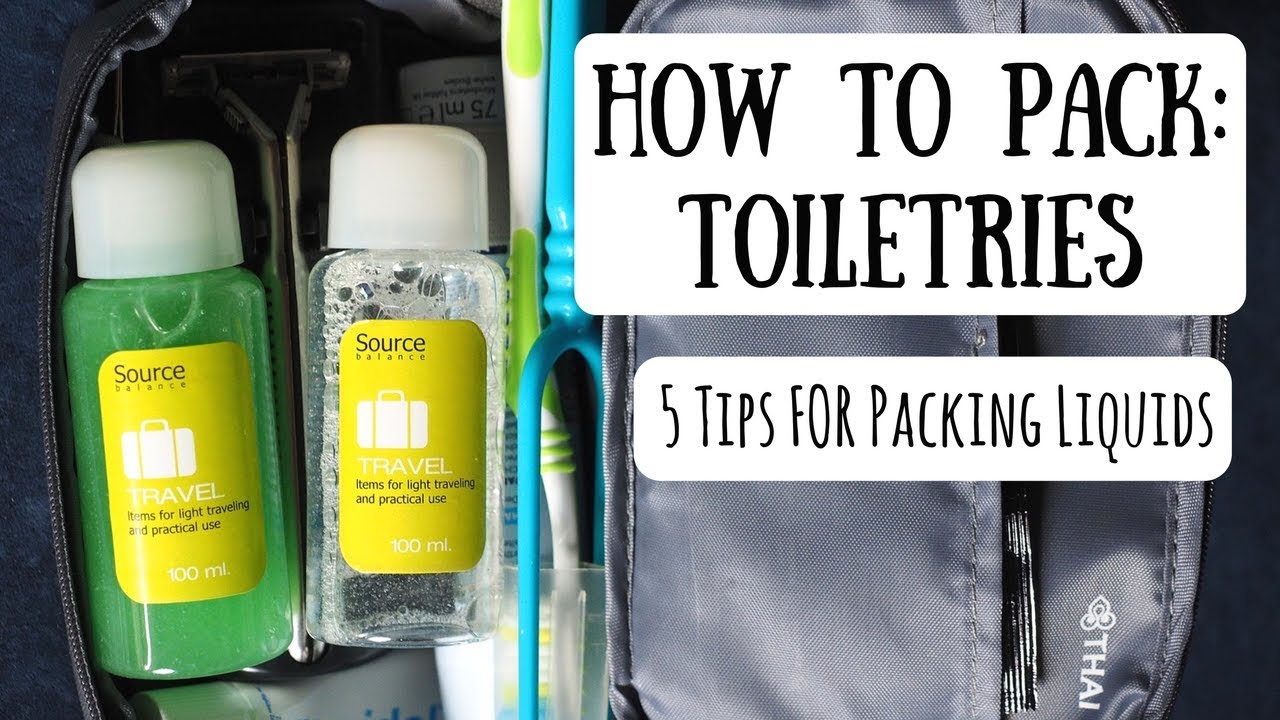
- Use leak-proof bottles: Buy travel bottles with secure lids.
- Seal bottle openings: Place a small piece of plastic wrap under the cap before closing.
- Double-bag liquids: Put each bottle in a zip-top bag, then group bags in a larger plastic bag.
- Wrap in clothing: Place liquid items in the center of your suitcase, surrounded by soft clothes.
- Keep upright: If possible, pack bottles upright to prevent leaks.
- Label bottles: Especially for homemade or decanted items, label the contents clearly.
These steps greatly reduce the risk of leaks and make it easy to clean up if an accident happens.
Special Considerations For Food And Medicine
Packing food and medicines in checked luggage is allowed, but there are extra details to keep in mind.
Food Items
Many travelers like to bring sauces, honey, or jams as gifts. These are allowed in checked bags, but customs may ask questions if you bring large amounts. In my experience, packing small jars and declaring them honestly at customs avoids problems. Some countries, like Australia and New Zealand, have strict food import rules. Always declare food items and check the country’s quarantine website.
Medicines
Liquid medicines (like cough syrup or insulin) are allowed in both checked and carry-on bags. For large quantities, keep a prescription or doctor’s note with you. If you need your medicine during the flight, always keep it in your carry-on.
Baby Items
Baby formula, breast milk, and juice for infants are allowed in reasonable amounts. If you’re traveling with a baby, you can bring more than the usual liquid limit for carry-ons, but it’s still wise to pack a backup in checked luggage.
What Happens If You Break The Rules?
If you pack a banned liquid in your checked bag, airport security may remove it. You might find a note in your suitcase saying something was confiscated. In rare cases, your bag may be delayed for extra checks.
Bringing hazardous liquids can lead to fines or even criminal charges. For example, packing lighter fluid or fireworks is illegal in almost all countries.
For non-hazardous spills, your airline is usually not responsible for damaged items inside your bag. That’s why good packing is so important.
Checking Airline And Country-specific Policies
Airlines and countries may have their own unique restrictions. Some airlines limit the total weight of liquids per bag due to safety. Certain destinations have strict rules for alcohol, food, or cosmetics.
To avoid problems, always:
- Visit your airline’s website and search for “baggage restrictions”
- Check the customs website for your destination country
- Print or save official rules for reference at the airport
For example, flying to Australia with honey is not allowed, but the same bottle is fine if you’re flying to most European countries.
Common Mistakes When Packing Liquids
Travelers often make simple mistakes that lead to big problems. Here are some to watch for:
- Forgetting pressure changes: Bottles expand and leak due to lower air pressure in the cargo hold.
- Packing glass bottles without protection: Glass can easily break if not wrapped well.
- Not using zip-top bags: One leak can ruin all your clothes.
- Ignoring customs rules: Bringing banned items can lead to fines or confiscation.
- Overpacking: Exceeding airline weight or alcohol limits can be costly.
I once brought a jar of salsa to a friend in Canada. I packed it in a towel but skipped the plastic bag. When I opened my suitcase, everything smelled like tomatoes. Since then, I never skip the zip-top bag step!
Tips For Packing Liquids Efficiently
If you want to pack liquids and avoid problems, try these expert tips:
- Decant into travel bottles: Don’t bring huge bottles if you only need a little.
- Plan for purchases: Leave space in your bag if you plan to buy liquids at your destination.
- Check bag weight: Liquids are heavy—don’t risk overweight fees.
- Use solid alternatives: Solid shampoo bars, soap, or powder drinks are easier to pack.
- Photograph your packed bag: If there’s a spill or damage, photos can help with insurance claims.
These tips have saved me time and stress on many trips.
Environmental And Safety Concerns
Packing liquids in checked luggage also has environmental and safety aspects. Leaked liquids can damage other bags or even aircraft equipment. Always use tightly sealed, reusable containers when possible.
Some airports recycle confiscated liquids, but many end up as waste. Consider the environment when choosing what and how much to pack.
Do Airlines Compensate For Leaked Or Damaged Liquids?
Most airlines do not cover damage caused by leaking liquids in checked bags. Their policies often state that they are not responsible for fragile, perishable, or spillable items unless packed properly.
If a leak damages your clothing or electronics, you may need to claim on your travel insurance—if you have it. Always read the fine print. Some policies exclude liquid damage unless you used proper packing methods.
Credit: www.youtube.com
What About Electronic Cigarettes And Vape Liquids?
Electronic cigarettes, vape pens, and their liquids have special rules. Most airlines require you to pack vape devices and batteries in your carry-on, not checked luggage. Vape liquids (e-juice) can go in checked bags, but the same leak protection steps apply.
Airlines are strict about lithium batteries in the cargo hold, so always check the latest guidance before you fly.
Final Packing Checklist For Liquids
Before you head to the airport, review this checklist:
- Are all bottles tightly closed and sealed with plastic wrap?
- Are all liquids inside zip-top bags?
- Are glass bottles wrapped in clothing or bubble wrap?
- Are you under the airline’s weight limit?
- Have you checked customs rules for your destination?
- Are prohibited liquids left at home?
A few extra minutes can save hours of hassle later.
Credit: www.tsa.gov
Frequently Asked Questions
What Is The Maximum Amount Of Liquid I Can Pack In Checked Luggage?
There is no strict limit on the total amount of liquid you can put in your checked bag, except for alcohol (5 liters of 24–70% ABV per person). However, the bottle should not be larger than 1 gallon (3. 8 liters), and you must follow airline weight limits.
Can I Pack Perfume Or Cologne In My Checked Bag?
Yes, you can pack perfume or cologne in checked luggage. Make sure each bottle is under 1 gallon (which is much larger than any normal perfume bottle), and pack it to avoid leaks or breakage.
Are There Special Rules For Packing Liquids On International Flights?
Most international flights follow similar rules: liquids are allowed in checked bags, but hazardous liquids are banned. Customs rules for food, alcohol, and medicines may vary by country. Always check both the airline and destination country’s regulations.
What Happens If My Liquid Leaks In My Suitcase?
If a liquid leaks, it can damage your clothes and other items. Airlines usually do not cover this damage. That’s why using zip-top bags and careful packing is so important.
Where Can I Find The Most Up-to-date Rules On Packing Liquids?
The best place is your airline’s official website or the TSA’s page on prohibited items. For international information, check the customs website of your destination country or visit IATA’s baggage checklist for global guidelines.
Packing liquids in checked luggage doesn’t have to be stressful. If you follow these expert tips and check the rules before you fly, you’ll avoid spills, fines, and surprises. With the right preparation, your liquids—and your clothes—will arrive safe and sound.
Safe travels!

Credit: www.wikihow.com

Zayden Halbrook is a travel enthusiast and gear researcher passionate about making every journey smoother and more enjoyable. With a keen eye for practical travel essentials and real-world tips, he helps readers choose the right gear and travel smarter. When he’s not testing travel kits or exploring new destinations, Zayden shares simple, reliable advice to make every trip stress-free.