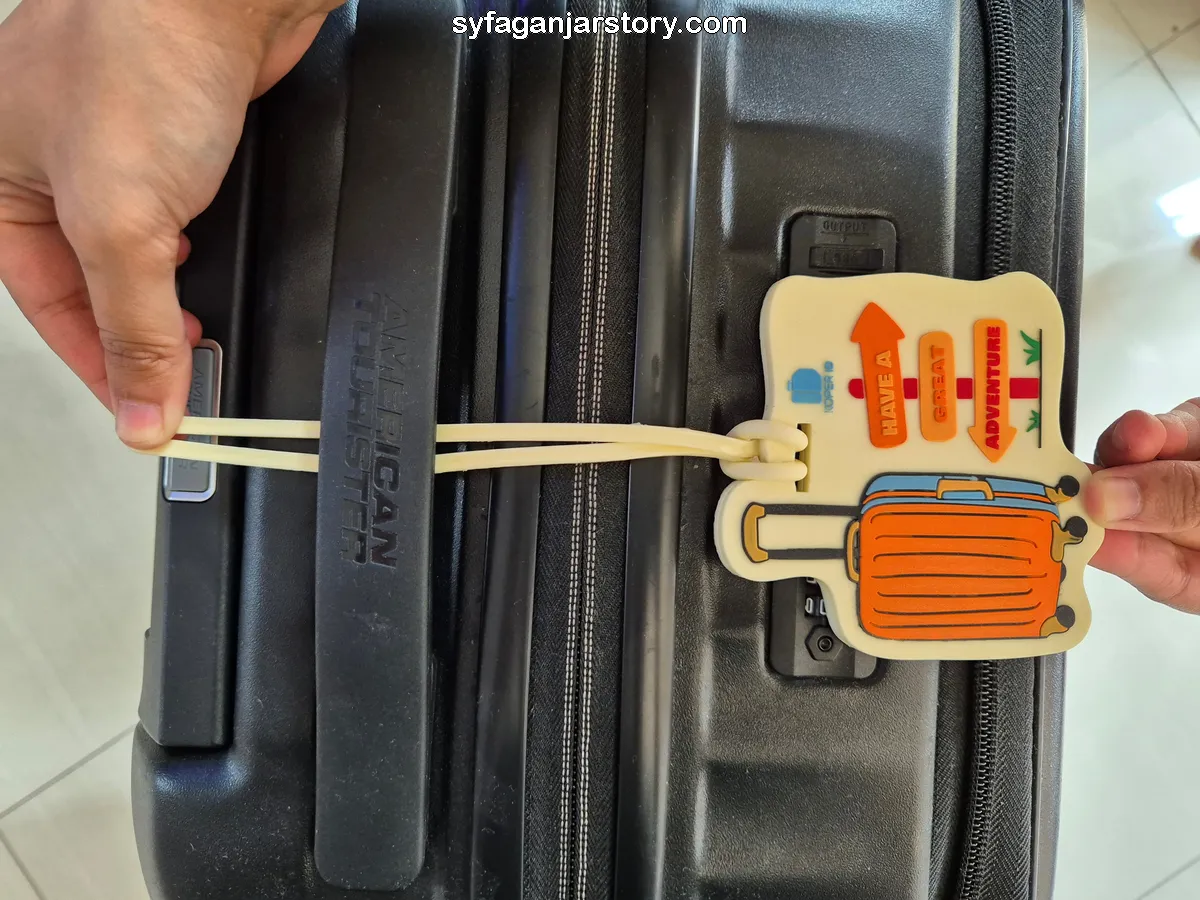
To tie a luggage tag, thread its strap or loop through the tag hole, wrap it around a fixed part of your bag handle, and fasten it with a tight knot or buckle. For travel from U.S. airports, attach the tag where airline staff can see it, but keep your private details limited to what someone needs to contact you.
A secure luggage tag helps identify your suitcase on a baggage carousel. It also gives an airline or airport worker a way to contact you if your bag is delayed or misplaced. The tag should stay attached during lifting, loading, and travel without blocking zippers, wheels, handles, or moving parts.

What You Need Before Attaching a Luggage Tag
You need a luggage tag with a strap, loop, buckle, or cord. You also need a strong attachment point on the bag, such as a fixed carry handle or a sturdy handle base.
Check the tag before you use it. Make sure:
- The tag hole is not cracked.
- The strap has no cuts or weak spots.
- The buckle closes fully.
- The cord is long enough to wrap around the handle.
- The tag cover stays shut.
- Your contact details are easy to read.
Use a fixed handle when possible. A fixed handle is less likely to move during handling than a telescoping pull handle. If you attach the tag to a retractable handle, keep it away from the release button and sliding rails.
What to write on the luggage tag
For most U.S. trips, include:
- Your full name or first initial and last name
- A mobile phone number
- An email address
- Your city and state
- A second contact number, if useful
Avoid putting your full home address on the outside of the bag. A city and state usually provide enough information for identification while exposing less personal data. You can place a fuller address inside the luggage, along with a copy of your itinerary.
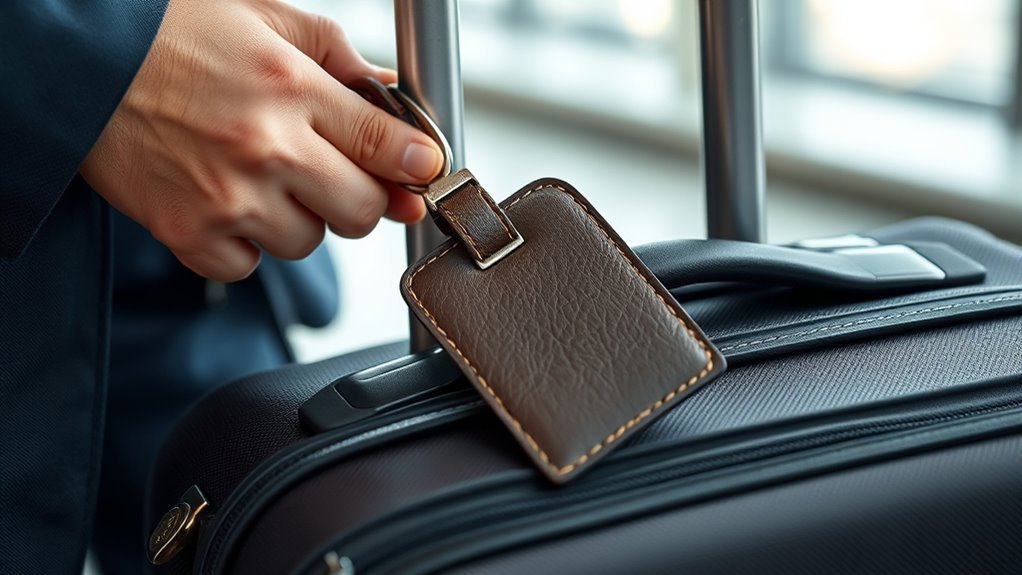
How to Tie a Luggage Tag With a Loop Strap
A loop strap is one of the easiest luggage tag attachments. Many travel tags use a thin leather, plastic, nylon, or rubber loop.
-
Open the loop.
Unscrew the connector, open the buckle, or separate the strap ends. -
Choose a fixed handle section.
Pick a strong part of the handle that does not slide, fold, or release. -
Pass the loop around the handle.
Wrap the strap around the handle base or another fixed section. Keep it clear of hinges and moving parts. -
Thread the strap through the tag.
Feed the open end through the hole or slot in the luggage tag. -
Close the loop.
Reconnect the screw, buckle, snap, or metal clasp. Tighten it until the tag sits close to the handle. -
Test the attachment.
Pull the tag in several directions with moderate force. The strap should stay closed, and the tag should not slide toward the wheels.
The loop-through method
Some luggage tags have a long loop with no buckle. Use this method:
- Push the folded loop through the hole in the tag.
- Pull enough of the loop through to make a small opening.
- Pass the entire tag and strap around the fixed handle.
- Pull the tag through the loop.
- Tighten the loop against the handle.
This creates a simple hitch around the handle. It is quick to attach and easy to remove when you reach your destination.

How to Tie a Luggage Tag With a Cord
A cord tag needs a firm knot. A double overhand knot is usually more secure than a loose single knot.
- Thread the cord through the tag hole.
- Wrap both cord ends around a fixed handle section.
- Cross the two ends.
- Tie one overhand knot.
- Tie a second overhand knot on top of the first.
- Pull both ends firmly to tighten the knot.
- Trim excess cord only if the tag maker allows it.
Do not rely on a loose bow. A bow is easy to untie and may loosen when the bag is dragged or stacked. If you want the tag to be removable, use a small buckle or a reusable cord lock instead of a weak knot.
Leave a small amount of cord after the knot. Cutting the ends flush with the knot can make it harder to untie later. Do not leave long loose ends that could catch on equipment.

How to Attach a Buckle or Snap Luggage Tag
Buckle tags do not need a traditional knot. The buckle must lock around the handle.
- Open the buckle.
- Wrap the strap around a fixed handle section.
- Feed the strap through the buckle opening.
- Pull the strap until the tag rests near the handle.
- Press or slide the buckle closed.
- Check that the strap cannot pull back through the buckle.
If the buckle has a locking tab, listen or feel for the tab to click into place. Pull the tag gently after closing it. If the buckle opens during this test, use another attachment point or replace the tag.
A snap-style tag should close completely. Do not attach it to a thick handle section if the snap barely reaches. A partly closed snap can open when the bag is handled.

Where Should You Put a Luggage Tag?
Attach the tag to a handle where it can be seen quickly but will not get caught. The best location is usually the fixed carry handle on the top or side of the suitcase.
Avoid attaching the tag to:
- A zipper pull
- A wheel axle
- A telescoping handle release
- A loose decorative strap
- A removable accessory
- A handle section that folds into the bag
- Any part close to a conveyor belt gap
For checked luggage, place the tag on an outside handle. You can also put a second contact card inside the suitcase. The outside tag helps with quick identification, while the inside card can help if the outside tag tears away.
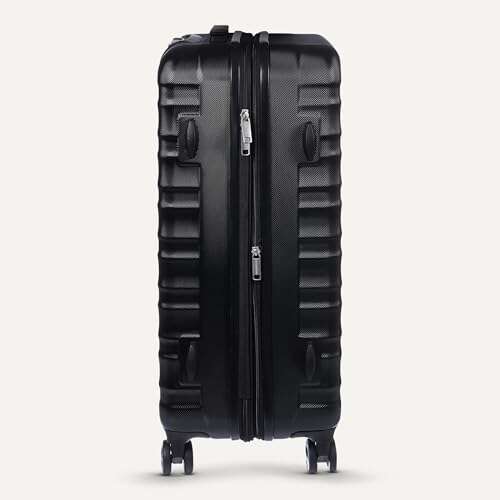
Use a bright tag, a distinctive pattern, or a small color marker to identify your suitcase. Do not depend only on color. Many bags look alike, especially black hard-shell suitcases.

How Tight Should a Luggage Tag Be?
Make the attachment snug, but do not pull it so tightly that the strap cuts into the handle. The tag should not travel freely along the handle or hang near the wheels.
Use this simple check:
- Lift the bag by its normal handle.
- Pull the tag away from the handle.
- Twist the tag gently.
- Move the handle through its normal range.
- Confirm that the tag does not touch wheels or hinges.
- Confirm that the handle still retracts or folds normally.
A little movement is normal. The goal is to stop the tag from sliding off, not to make it completely rigid.

How to Secure a Luggage Tag for Checked Bags
Checked bags face more handling than most carry-on bags. Attach the tag to a strong fixed handle and use a closed loop, locked buckle, or tight double knot.
Before checking the bag:
- Remove old airline baggage tags and claim stickers.
- Confirm that your current phone number and email are readable.
- Close the tag cover.
- Take a photo of the suitcase and tag.
- Check that no strap hangs near the wheels.
- Keep the baggage claim receipt until you collect the bag.
Airline baggage labels are separate from personal luggage tags. A luggage tag helps identify your bag, but it does not replace the airline’s tracking or claim tag. Keep any airline-issued baggage receipt until the trip is complete.
A removable tag can also help protect the tag during transport. If you use one, remove it before handing over the bag only if the airline or airport requires it. Follow the instructions given at the check-in counter.
Common Luggage Tag Problems and Fixes
| Problem | Likely cause | Fix |
|---|---|---|
| The tag keeps sliding | The loop is too loose or attached to a smooth section | Move it closer to the handle base and tighten it |
| The knot comes undone | A single loose knot or bow was used | Tie a double overhand knot or use a buckle |
| The buckle opens | It is not fully closed or is overloaded | Refasten it or replace the buckle |
| The tag touches the wheels | It is attached too low | Move it to the top or side carry handle |
| The strap will not fit | The handle section is too thick | Use a longer strap or another handle |
| The tag tears | The hole or material is weak | Replace the tag before travel |
| The information cannot be read | Small print, glare, or a closed cover | Use clear, large writing and test the cover |
If the tag fails the pull test, do not use it for checked luggage. A cheap replacement is better than trusting a weak strap on a long trip.

Should You Put Your Address on a Luggage Tag?
You usually do not need to display your full home address on the outside of a luggage tag. A phone number, email address, and city and state are often enough for someone to contact you.
A full address may be useful in some situations, such as a move or a long-term relocation. If you include it, consider placing it inside the tag cover rather than displaying it openly.
Do not include sensitive information such as:
- Your Social Security number
- Passport number
- Driver’s license number
- Home alarm details
- Financial account information
Use contact details that will work during the trip. If you are traveling internationally from the United States, an email address may be more reliable than a U.S. phone number alone.

Do You Need a Luggage Tag on a Carry-On Bag?
A carry-on bag can benefit from a luggage tag even when it stays with you. An airline may require you to check it at the gate if the flight has limited overhead space. A tag also helps if you leave the bag in an airport lounge, security area, or gate area.
Use the same secure attachment method as you would for checked luggage. A small tag works well for a carry-on because it is less likely to catch on other bags.
You can also place a contact card inside the carry-on. This gives you a second way to identify the bag if the outside tag is removed.

Key Takeaways
- Attach the tag to a fixed carry handle, not a zipper pull or moving part.
- Use a loop, locked buckle, or tight double overhand knot.
- Keep the tag close to the handle and away from wheels and hinges.
- Test the attachment before leaving for the airport.
- Use a phone number and email, but avoid displaying unnecessary private data.
- Put a second contact card inside checked luggage.
- Keep airline baggage receipts separate from your personal luggage tag.
Frequently Asked Questions
What is the best knot for a luggage tag?
A double overhand knot is a practical choice for a cord luggage tag. It is stronger than a single overhand knot and less likely to loosen than a bow. Pull both ends firmly, but do not crush or damage the cord.
Can I tie a luggage tag to a suitcase zipper?
You can, but it is not the best choice. A zipper pull can break, open, or separate from the bag. Attach the tag to a fixed handle instead.
Should I use two luggage tags?
Using one outside tag and one contact card inside the bag is sensible. Two outside tags can work, but loose tags may catch on equipment or make the bag harder to handle. If you use two, attach both securely.
How do I stop someone else from taking my suitcase?
A luggage tag helps, but it is not proof of ownership. Add a distinctive strap, sticker, or mark, and check the bag details before leaving baggage claim. Keep your airline baggage receipt until you have your suitcase.
What should I do if my luggage tag falls off?
Report a missing or delayed bag to the airline’s baggage service desk as soon as possible. Provide your baggage receipt, bag description, flight details, and contact information. A photo of the suitcase can make identification easier.
Conclusion
The safest way to tie a luggage tag is to use a closed loop, secure buckle, or double overhand knot around a fixed suitcase handle. Keep the tag visible, keep personal details limited, and test the attachment before you travel.
For your next trip, check the tag, attach it to the strongest handle, and place a second contact card inside the bag.

Zayden Halbrook is a travel enthusiast and gear researcher passionate about making every journey smoother and more enjoyable. With a keen eye for practical travel essentials and real-world tips, he helps readers choose the right gear and travel smarter. When he’s not testing travel kits or exploring new destinations, Zayden shares simple, reliable advice to make every trip stress-free.
Similar Posts
How To Unlock Delsey Luggage Forgot Code: Quick Guide
Need help with how to unlock delsey luggage forgot code? Follow safe steps to reset your lock and open your suitcase without damage.
Best Luggage For Active Travel: Top Picks For Adventure
Find the best luggage for active travel, from rugged backpacks to versatile duffels. Compare durable, lightweight options for every adventure.
Best Luggage For 1 Week Trip: Smart Buying Guide
Find the best luggage for 1 week trip with expert tips on size, features, durability, and carry-on options for stress-free travel.
How To Reset Luggage Lock TSA007: Easy Step-By-Step Guide
Learn how to reset luggage lock tsa007 quickly with simple steps, troubleshooting tips, and advice for setting a new secure combination.