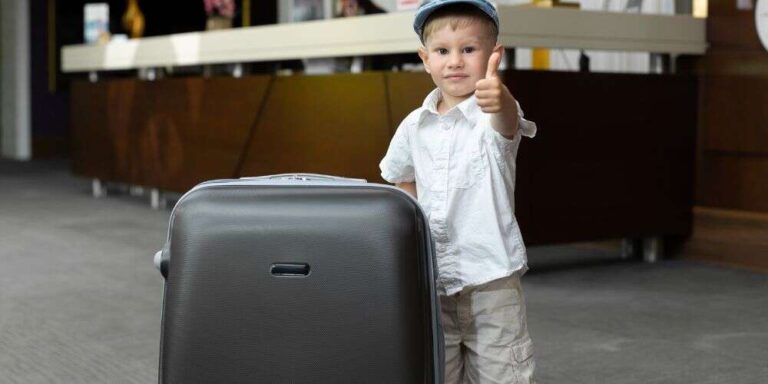
A cabin suitcase is usually a small bag designed to travel in the airplane cabin instead of the checked-bag hold. In the United States, the safest general size is 22 × 14 × 9 inches, including wheels and handles. This size fits the common carry-on limit used by many major U.S. airlines.
However, there is no single cabin suitcase size for every airline. Some carriers allow larger bags, while budget airlines may charge extra for a full-size carry-on. Always check your airline’s current baggage rules before you fly.

What is the standard cabin suitcase size in the USA?
The standard U.S. cabin suitcase size is approximately:
- Height: 22 inches
- Width: 14 inches
- Depth: 9 inches
- Measurement: Including wheels, handles, and outside pockets
This is often called a 22-inch carry-on suitcase. It is a practical choice for domestic flights because it matches the common limit used by airlines such as American Airlines, Delta Air Lines, United Airlines, JetBlue, and Alaska Airlines.
A suitcase does not have to be exactly 22 × 14 × 9 inches to work. A bag that is slightly smaller is usually easier to fit in an overhead bin. A bag that is larger may be refused at the gate, checked, or charged an additional fee.
The key point is simple: buy by the suitcase’s outside dimensions, not by its stated size name. A “20-inch suitcase” may measure more than 22 inches once you add the wheels and handle housing.
Cabin suitcase sizes at major U.S. airlines
Airline limits can change, and enforcement may vary by aircraft or route. The following table gives common published limits for major U.S. carriers. Check the airline’s official baggage page before departure.
| Airline | Common maximum carry-on size | Maximum size in centimeters |
|---|---|---|
| American Airlines | 22 × 14 × 9 in | About 56 × 36 × 23 cm |
| Delta Air Lines | 22 × 14 × 9 in | About 56 × 36 × 23 cm |
| United Airlines | 22 × 14 × 9 in | About 56 × 36 × 23 cm |
| JetBlue | 22 × 14 × 9 in | About 56 × 36 × 23 cm |
| Alaska Airlines | 22 × 14 × 9 in | About 56 × 36 × 23 cm |
| Southwest Airlines | 24 × 16 × 10 in | About 61 × 41 × 25 cm |
| Frontier Airlines | 24 × 16 × 10 in | About 61 × 41 × 25 cm |
| Spirit Airlines | 22 × 18 × 10 in | About 56 × 46 × 25 cm |
These dimensions describe the larger cabin bag, not the smaller personal item. Basic or low-cost fares may include only a personal item and may charge for an overhead-bin bag.
For the broadest airline compatibility, choose a suitcase no larger than 22 × 14 × 9 inches. For frequent travel on one airline, you may be able to use a larger case if that carrier allows it.

How are cabin suitcase dimensions measured?
Airlines generally measure the suitcase from its furthest outside points. Include:
- Wheels
- Fixed handles
- Retractable handle housings
- Side handles
- Outside pockets
- Bumpers and other protruding parts
Do not measure only the fabric or hard shell. A suitcase body that measures 21 inches may reach 23 inches when its wheels and top handle are included.
To measure your cabin suitcase:
- Stand the suitcase upright on a flat floor.
- Push the telescopic handle fully down.
- Measure from the floor to the highest fixed point.
- Measure from the widest side to the other side.
- Measure from the front to the back, including pockets and wheels.
- Compare each measurement with your airline’s limit.
Use a firm tape measure. Do not squeeze a hard-sided suitcase. For a soft-sided case, measure it when packed in the way you plan to use it.
A full outside pocket can make a soft suitcase deeper than its empty measurement. Overpacking can also prevent the bag from fitting into a sizing frame.
What is the difference between a carry-on and a personal item?
A carry-on suitcase is the larger cabin bag that normally goes in the overhead bin. A personal item is a smaller bag that fits under the seat in front of you.
Typical personal items include:
- Small backpack
- Laptop bag
- Handbag
- Briefcase
- Compact tote
Personal-item limits vary more than carry-on limits. Some airlines publish exact measurements, while others simply require the bag to fit under the seat.
A personal item is not a substitute for a carry-on suitcase if you need more packing space. On a basic economy or budget fare, though, it may be the only bag included without an extra fee.
Check both rules before booking. A ticket may allow one personal item but not an overhead-bin suitcase.

What size cabin suitcase is best for international flights?
For international travel, a suitcase measuring about 21.7 × 15.7 × 7.9 inches, or 55 × 40 × 20 centimeters, is a common compact choice. This size is popular because many international airlines use metric limits near 55 × 40 × 20 cm.
It is narrower than the common U.S. limit of 22 × 14 × 9 inches. That can make it more compatible with international aircraft and European airlines.
There is no universal international size, however. Some airlines allow 55 × 40 × 23 cm. Others use 56 × 45 × 25 cm or a different limit. The flight’s operating airline matters more than the airline that sold the ticket.
If your trip includes both U.S. and international flights, a conservative choice is:
21.7 × 14 × 7.9 inches, or smaller.
This may give you less packing room, but it reduces the chance of a size problem on a stricter international carrier.
How much can a cabin suitcase weigh?
Weight limits depend on the airline, fare, route, and frequent-flyer status. Many U.S. airlines focus mainly on size for standard carry-ons, but some airlines and international carriers set a clear weight limit.
Common international cabin-bag limits range from about 15 to 22 pounds, though the exact rule varies. Some airlines may weigh the suitcase at check-in or at the gate.
A lightweight suitcase helps in two ways:
- It leaves more of the airline’s weight allowance for clothing and other items.
- It is easier to lift into an overhead bin.
A suitcase itself can weigh between about 5 and 10 pounds, depending on its design. Check the empty weight before buying if your airline has a strict cabin-bag limit.
Do not assume that a bag is acceptable because it is small. A compact suitcase can still exceed the airline’s weight limit.

Is a 20-inch suitcase a cabin suitcase?
Usually, yes. A 20-inch suitcase is often suitable as a carry-on, but the label does not guarantee compliance.
Manufacturers may describe suitcase size by:
- Body height only
- Overall height
- Wheel-to-handle height
- Approximate rounded dimensions
For example, a suitcase sold as “20 inches” might have overall dimensions of 22 × 14 × 9 inches. Another may be 23 × 15 × 10 inches and exceed a stricter airline limit.
Read the product specification for external dimensions. Look for wording such as “including wheels and handles.” If the listing gives only the case-body size, measure the complete suitcase yourself.
A 20-inch case with total dimensions under 22 × 14 × 9 inches is usually a safer choice for U.S. domestic travel.
How many days can a cabin suitcase hold?
A cabin suitcase can usually hold clothing for about two to five days, depending on the season, clothing thickness, and how efficiently you pack.
A typical short-trip packing plan might include:
- Three or four tops
- Two pairs of pants or shorts
- Four or five sets of underwear
- Sleepwear
- One light jacket
- Small toiletries
- Shoes worn during travel
Cold-weather clothing takes more space than summer clothing. Shoes and bulky coats can reduce the available room quickly.
Packing cubes can help organize a suitcase, but they do not create extra space. Compression bags may reduce clothing volume, yet they can make the suitcase heavier or cause it to exceed its depth limit.
Leave some room if you plan to shop. A suitcase packed tightly at home may become too large when the expansion zipper is opened.
What suitcase features affect cabin-bag compliance?
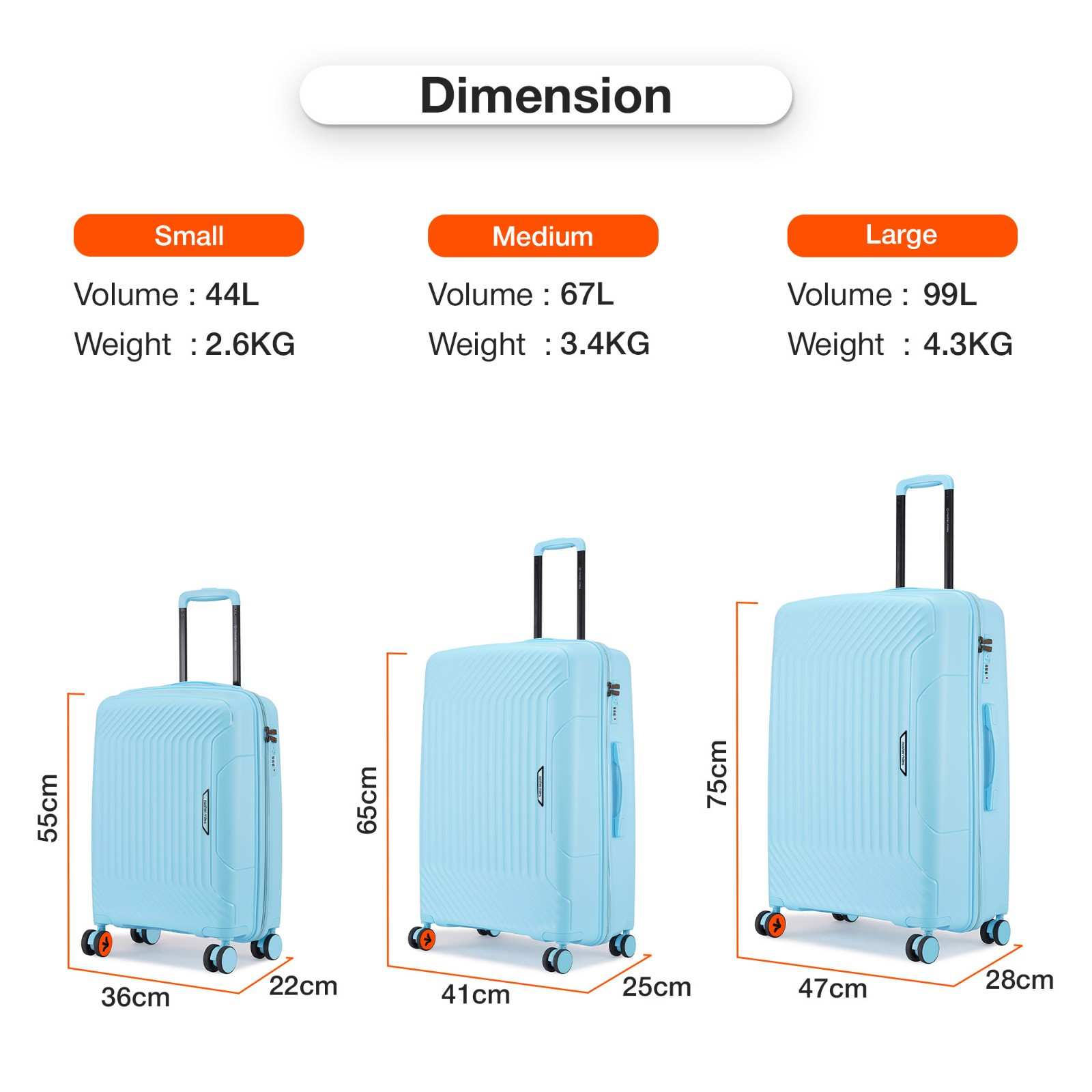
The suitcase’s design can change whether it fits the airline’s size limit.
Four wheels
Spinner wheels make the suitcase easy to move in airports. They also extend below the suitcase body and count toward the total height.
Two wheels
Two-wheel cases may offer slightly more internal space because their wheels are partly recessed. They can be less easy to move sideways through a crowded terminal.
Expandable sections
An expansion zipper adds useful space, but it can make the suitcase too deep. Do not expand the case unless the resulting dimensions still meet the airline’s limit.
Hard-sided shells
Hard cases keep their shape and cannot be compressed into a sizing frame. Their stated dimensions are often easier to check, but wheels and corner guards still count.
Soft-sided fabric
Soft cases may fit more easily when they are not full. Once packed, however, outside pockets and bulging fabric can exceed the depth limit.
External pockets
Front pockets provide quick access to documents and electronics. They also add depth, especially when filled.
For strict airline limits, a compact, non-expandable case with recessed wheels is often easier to manage than a large expandable model.
Common mistakes when choosing a cabin suitcase
The most common mistake is relying on the product name instead of the full measurements. A “carry-on” label is not a guarantee that the suitcase meets every airline’s rules.
Other frequent errors include:
- Forgetting to count wheels and handles
- Measuring an empty bag instead of a packed bag
- Assuming all airlines use the same limit
- Ignoring basic-economy baggage rules
- Treating a personal item as the same as a carry-on
- Opening an expansion panel before boarding
- Overlooking the suitcase’s empty weight
- Checking the marketing dimensions but not the airline’s rules
Airlines may use a baggage sizer at the airport. If the suitcase does not fit, staff may require you to check it. Checked-bag fees and rules may then apply.
The safest approach is to check the operating airline’s baggage page shortly before travel and measure the packed bag at home.

Cabin suitcase size: quick decision guide
Use this guide when choosing a suitcase:
| Your travel need | Suitable target size |
|---|---|
| Most U.S. domestic airlines | 22 × 14 × 9 in or smaller |
| International trips with several airlines | About 21.7 × 14 × 7.9 in or smaller |
| Airline with a larger published allowance | Follow that airline’s exact limit |
| Basic economy or budget fare | Confirm whether a carry-on is included |
| Personal item only | Use the airline’s under-seat dimensions |
| Strict weight limit | Choose a lightweight suitcase and weigh it packed |
If you want one case for many airlines, choose the smallest size that still meets your packing needs. A slightly smaller bag is usually more flexible than a larger one.