Introduction
In the United States, most plastic bags are made from polyethylene, a plastic resin produced from oil or natural gas. A factory melts small plastic pellets, pushes the melted plastic into a thin film, cuts the film to size, prints it if needed, and seals it with heat.
The exact process changes by bag type. A thin grocery bag, a heavy trash bag, and a resealable food bag may all use polyethylene, but each needs a different blend, thickness, shape, and sealing method.
What Are Plastic Bags Made Of?
Plastic bags are made mainly from polyethylene, often called PE. Polyethylene is light, flexible, water-resistant, and easy to heat and seal.
Manufacturers choose the resin based on the job the bag must do.
| Plastic type | Common uses | Main traits |
|---|---|---|
| High-density polyethylene (HDPE) | Grocery bags, produce bags, liners | Thin, stiff, and strong for its weight |
| Low-density polyethylene (LDPE) | Bread bags, freezer bags, soft packaging | Flexible, clear, and soft |
| Linear low-density polyethylene (LLDPE) | Trash bags, stretch film, shipping bags | Tough and resistant to tearing |
| Recycled polyethylene | Some retail, trash, and shipping bags | Uses recovered plastic but may vary in color and strength |
| Compostable plastic blends | Some specialty bags | Need the right composting conditions |
These names describe the structure and behavior of the plastic. They do not always appear on the finished bag.
Some bags use more than one resin. A manufacturer may blend materials to balance strength, stretch, clarity, seal strength, and cost. The blend can also include approved colorants, processing aids, and additives.
For bags that touch food, the plastic and additives must meet applicable U.S. food-contact requirements. The U.S. Food and Drug Administration explains how food-contact substances are evaluated and regulated on its Food Ingredients and Packaging page.
Virgin and recycled plastic
Virgin plastic comes from newly made resin. It tends to offer steady color, thickness, and performance.
Recycled plastic comes from plastic waste that has been sorted, cleaned, shredded, melted, and formed into pellets or flakes. It may lower the need for new resin, but its use depends on the bag’s purpose. Food-contact packaging has stricter requirements than a general trash liner.
A bag labeled “recyclable” does not always contain recycled material. It usually means the material may be accepted in some recycling systems. Local collection rules still decide what happens in practice.

How Are Plastic Bags Made in a Factory?
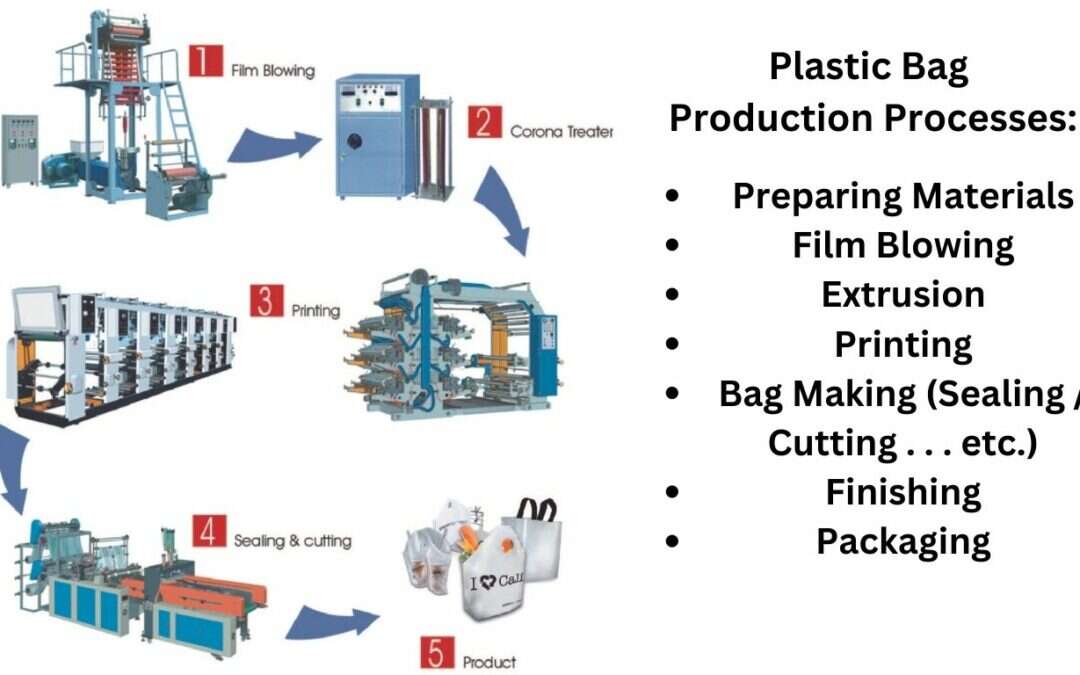
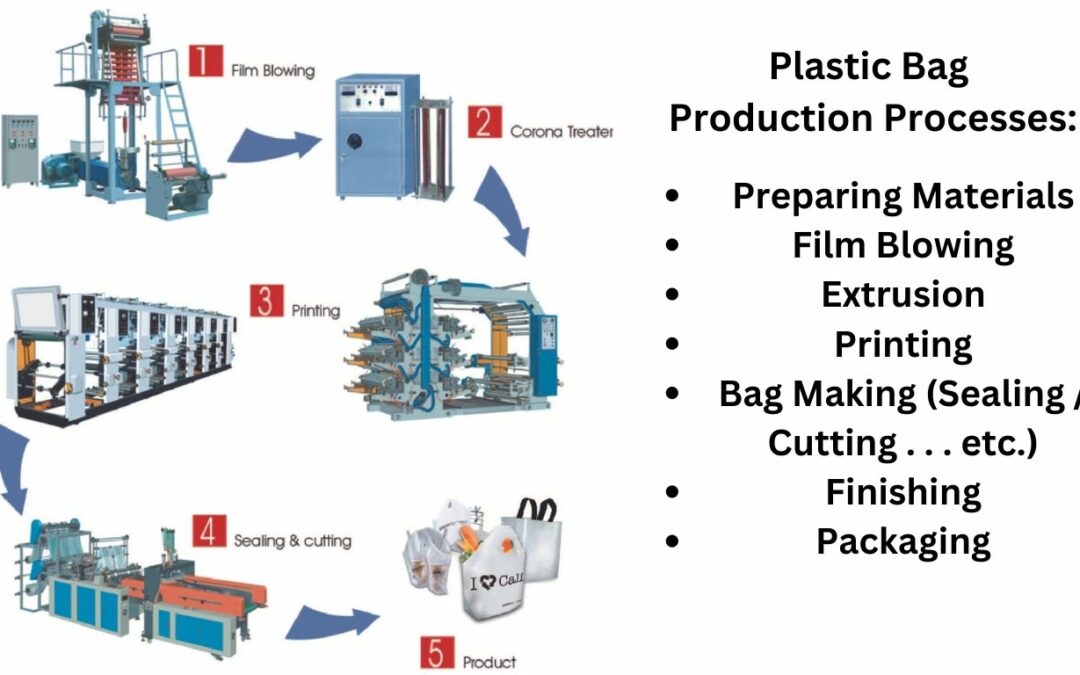
Plastic bag production usually follows seven main steps:
- The factory selects and mixes the resin.
- It melts the plastic.
- It forms the plastic into a thin film.
- It cools and winds the film.
- It prints or treats the surface.
- It cuts and seals the film.
- It checks the finished bags.
Here is how each step works.
1. Resin pellets are selected and mixed
Plastic begins as small pellets, also called resin pellets. The pellets may contain HDPE, LDPE, LLDPE, recycled resin, or a planned blend.
The factory may mix in color concentrate to create a colored bag. It may also add materials that improve slip, reduce static, protect against sunlight, or help the film release from factory equipment.
The recipe depends on the final product. A produce bag needs low weight and easy opening. A trash bag needs tear resistance and enough stretch to hold a load.
2. The plastic is melted
The pellets enter an extruder. An extruder is a machine with a heated barrel and a rotating screw.
The screw moves the pellets forward. Heat and pressure melt them into a smooth, even plastic mass. The machine must control temperature and pressure closely. Poor control can cause weak spots, cloudy areas, bubbles, or uneven thickness.
Factories use screens and filters to remove unwanted particles from the melted plastic. Recycled resin may need extra cleaning because the input material can contain more dirt or mixed plastic.
3. The melted plastic becomes film
Many bags use a process called blown-film extrusion.
The extruder pushes melted plastic through a round opening called a die. Air enters the center of the tube and inflates it into a large plastic bubble. Cooling air hardens the bubble. Rollers then flatten it into a tube or folded sheet.
This method creates two layers of film at once. The factory can later cut and seal those layers to make bags.
Some products use cast-film extrusion instead. In that process, the melted plastic leaves a flat die and lands on a chilled roller. Cast film can offer controlled thickness and a smooth surface.
4. The film is cooled and wound
After the film cools, rollers guide it through the line. The film is wound onto large rolls.
At this stage, operators or sensors check the film for:
- Uneven thickness
- Holes or pinholes
- Wrinkles
- Contamination
- Weak edges
- Poor clarity
- Incorrect width
A thin bag may look simple, but small changes in temperature, air flow, or roller speed can affect its strength and size.
5. The film may be printed
If the bag needs words, logos, warnings, or color, the factory prints the film before cutting it into individual bags.
Common printing methods include flexographic printing and other roll-to-roll processes. The ink must adhere to the film and dry or cure correctly.
The factory must also control print placement. A design that looks centered on a flat roll may shift if the film stretches or the machine loses alignment.
Some films receive a surface treatment before printing. Polyethylene has a low-energy surface, so ink may not stick well without treatment. A process such as corona treatment changes the surface so ink and adhesive can bond more reliably.
6. The film is cut and sealed
A bag-making machine pulls the film from the roll and cuts it into sections. Heat seals join parts of the film.
Heat sealing works because polyethylene softens when heated. Pressure then joins the softened layers. Once the seal cools, it forms a closed edge.
The machine may create different features, such as:
- Flat bottoms
- Gusseted sides
- Drawstring channels
- Handle holes
- Die-cut handles
- Perforations
- Resealable tracks
- Tear-off sections
A grocery bag, for example, may use a bottom seal and punched handles. A trash bag may use a star seal, flat seal, drawstring closure, or perforated roll.
7. Finished bags are inspected and packed
The final bags undergo quality checks. The factory may measure film thickness, bag length, bag width, seal strength, and handle strength.
It may also test whether the bag resists punctures, tears, leaks, and stretching. The exact tests depend on the customer’s specification and the bag’s intended use.
After inspection, the bags are counted, folded or rolled, boxed, and shipped. Some bags go to stores. Others go to restaurants, hospitals, warehouses, farms, food plants, or shipping centers.

How Different Types of Plastic Bags Are Made
The basic process stays similar, but the film design and finishing steps change.
Grocery and retail bags
Many lightweight retail bags use HDPE film. The film is thin but has good stiffness and strength for carrying moderate loads.
The factory often forms a tube, cuts the bag shape, and punches handles into the top. Some retail bags use a flat handle, while others use a loop handle.
The bag’s performance depends on more than thickness. Resin type, seal design, film orientation, and handle shape also matter.
Trash bags
Trash bags often use LDPE, LLDPE, recycled polyethylene, or a blend. LLDPE can help the film stretch and resist tearing.
A trash bag may have a flat bottom, gusseted sides, or a star seal. A star seal gathers several layers at the bottom. This can reduce the chance of leaks when the bag holds wet waste.
Manufacturers may add recycled resin to some trash bags. Recycled content can affect color and consistency, so the blend must match the required strength.
Resealable food bags
Resealable food bags usually combine flexible film with a zipper-like track. The film is extruded, printed if needed, and formed with a closure profile.
The closure must align correctly. If the track is damaged or out of position, the bag may not seal well.
Food bags require materials and manufacturing controls suitable for their intended contact with food. A general plastic bag should not be assumed to be food-safe just because it looks clean.
Produce bags
Thin produce bags are often made from flexible polyethylene film. They may be made on a perforated roll so shoppers can tear off one bag at a time.
The film must be thin enough to reduce material use but strong enough to hold produce without splitting. Some produce bags include small holes to improve airflow, but the design varies by product.
Compostable and biodegradable bags
Compostable bags are not simply ordinary polyethylene with a different label. They usually use plant-based polymers or other materials designed to break down under specific conditions.
“Biodegradable” does not tell you how fast a bag breaks down or where it will break down. “Compostable” may refer to industrial composting, home composting, or a particular certification standard.
The Federal Trade Commission provides guidance on environmental marketing claims in its Green Guides. Buyers should check the exact claim and the disposal instructions.

How Plastic Bag Manufacturers Test Quality
Factories test plastic bags because a small defect can cause a large failure. A bag may look strong but split at the seal, handle, or bottom.
Common quality checks include:
- Thickness testing: Confirms that the film stays within the target range.
- Tensile testing: Measures how much force the film can take before it breaks.
- Tear testing: Shows how easily a cut or weak point can spread.
- Puncture testing: Measures resistance to sharp objects.
- Seal testing: Checks whether heat-sealed edges stay closed.
- Leak testing: Helps find holes and poor seals.
- Handle testing: Measures how much weight a handle can carry.
- Visual inspection: Finds wrinkles, holes, dirt, color problems, and print errors.
A thicker bag is not automatically a better bag. A well-designed thin film can perform well, while a thick film with a poor seal can fail quickly.
The right test depends on use. A produce bag needs different performance from a medical-waste bag or a heavy-duty contractor bag.